
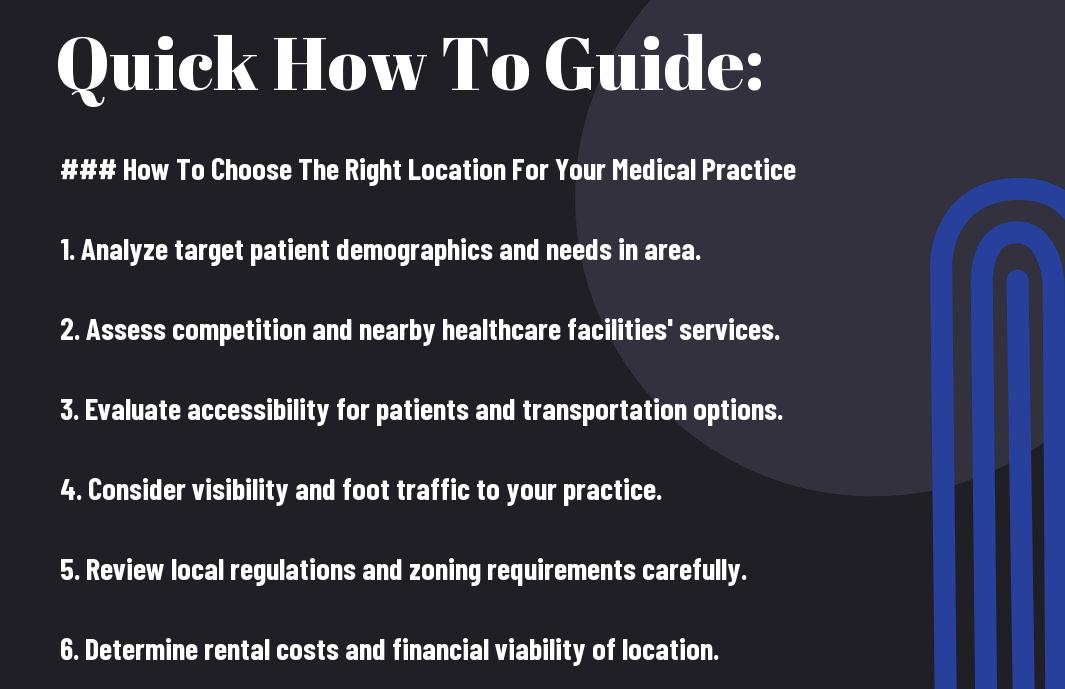
Most physicians understand that location plays a significant role in the success of their medical practice. Selecting the right site can impact patient accessibility, visibility, and overall growth. In this guide, you will explore key factors to consider, from demographics and competition to zoning regulations and lease options. Armed with practical insights, you can make an informed decision that aligns with your practice goals and serves your community effectively.
Understanding Your Target Patient Demographics
Before selecting a location for your medical practice, it’s necessary to understand your target patient demographics. Knowing who your patients are informs not only where you should set up shop but also how to tailor your services and marketing efforts to effectively reach them. Factors such as age, socioeconomic status, and health needs play a significant role in determining the ideal location for your practice.
Identifying Your Ideal Patient Profile
Now, take the time to define your ideal patient profile. Consider factors like age, lifestyle, income, and health needs. This exercise will help you pinpoint the type of patients you wish to attract and assist you in selecting the location that aligns with their preferences and requirements.
Analyzing Local Population Statistics
Understanding the demographics of the area you are considering is the next step. Analyzing local population statistics is vital to grasp the makeup of the community, which includes age distribution, income levels, and prevalent health issues. This information allows you to assess whether the local population fits your ideal patient profile.
Understanding local population statistics involves researching various data sources, including census information, community health assessments, and socioeconomic reports. These statistics will provide insights into the population’s age, gender, income levels, and educational attainment, helping you gauge the potential patient pool. Analyzing such data not only highlights areas with a higher demand for your services but also reveals gaps in healthcare provision, enabling you to position your practice where it can make a significant impact.
Evaluating Accessibility and Transportation
Clearly, the accessibility of your medical practice directly impacts your patient base. A location that is difficult to access may deter potential patients, limiting growth and hindering the success of your practice. Evaluating transportation options and accessibility should be among your top priorities when selecting a site.
Importance of Location Accessibility
Little do many physicians realize that location accessibility can influence not only patient satisfaction but also overall health outcomes. When your practice is situated in a readily accessible area, you enhance the likelihood that patients will attend appointments regularly, leading to better follow-up care and treatment compliance.
Assessing Public Transportation Options
Evaluating public transportation options in your area is vital for understanding how patients will reach your practice. The availability and frequency of buses, subways, and other transit services can significantly affect patient turnout and convenience.
For instance, if you find your potential location is near two major bus lines and a metro station, it will likely enhance accessibility for a broader range of patients. This is especially important for individuals who may rely on public transportation due to financial constraints or mobility challenges. By ensuring your practice is accessible by public transit, you not only widen your patient demographic but also improve the overall experience for those reliant on these services.
Analyzing Competition in the Area
For any physician considering a new medical practice location, it is important to analyze the competition in the area. Understanding the variety of healthcare providers nearby can help you position your practice effectively. This awareness allows you to tailor your services and marketing strategies, attracting patients while ensuring sustained growth in a competitive environment.
Identifying Competitors and Services Offered
Now that you’ve chosen a few prospective locations, you should identify the existing competitors and the services they provide. This includes not only direct competitors in your specialty but also any complementary services that could impact your patient demographics. By gaining insight into what others are offering, you can find gaps in the market and determine how your practice can stand out.
Evaluating Market Saturation
Identifying market saturation is fundamental in understanding whether your chosen location can support your medical practice. Assess the number of medical providers within your specialty in the area and the patient population’s needs. A highly saturated market may signal that it’s more challenging to attract new patients, whereas an underserved community could provide an opportunity for growth.
Understanding market saturation involves analyzing demographic data, local health statistics, and patient needs. You’ll want to gather information on the number of similar services, their patient load, and trends in local healthcare utilization. By comprehensively evaluating these factors, you can make informed decisions about whether to enter the market, modify your services, or pinpoint an underserved niche ready for your expertise.

Considering Local Amenities and Resources
All physicians should evaluate local amenities and resources when selecting a location for their medical practice. Understanding the surrounding environment can significantly impact your patient base and overall practice success. Accessible transportation, parking, and nearby facilities enhance convenience for your patients, making it easier for them to seek care. Additionally, the presence of pharmacies, laboratories, and imaging services can streamline your practice’s operations and improve patient outcomes.
Leveraging Nearby Facilities
The availability of nearby healthcare facilities, such as hospitals and specialty clinics, can greatly benefit your practice. These relationships can enhance patient referrals, provide access to advanced medical technologies, and facilitate easier collaboration with other healthcare providers. By positioning your practice close to these facilities, you can streamline patient care and foster a cohesive healthcare experience for your patients.
Importance of Community Services
Now, engaging with local community services is vital for building trust and rapport with your patient population. Strong links to community organizations, such as support groups or wellness programs, can enrich your practice by making you a go-to resource for comprehensive care. This involvement positions you as a trusted member of the community and helps you better understand the needs of your patients.
Local community services play an instrumental role in enhancing the quality of care you provide. By collaborating with social services, schools, and community health organizations, you can identify specific health trends and needs within your patient population. This connection will enable you to offer tailored resources and referrals, creating a supportive environment that addresses not just medical concerns but also socio-economic factors impacting your patients’ health. Engaging with these services reinforces your commitment to holistic health, fostering long-term relationships and loyalty among your patients.
Assessing Real Estate Options
To effectively assess real estate options for your medical practice, you should evaluate various factors such as proximity to potential patients, access to public transport, and neighboring businesses that could drive traffic to your practice. Consider zoning laws and the overall safety of the area, as these elements can significantly impact your practice’s success. Conduct a thorough analysis of the local market to ensure that you are making an informed decision that aligns with your business objectives.
Location Costs and Budgeting
One of the first steps in selecting a location is to consider the costs associated with various properties. You need to evaluate not just the rental or purchase price but also the ongoing expenses such as utilities, maintenance, and taxes. Establishing a realistic budget will help you find a location that balances affordability with quality, ensuring that your financial health remains intact as you begin on this new venture.
Understanding Lease vs. Purchase Decisions
Purchase or lease agreements can significantly affect your financial outcomes, so it’s important to weigh the options carefully.
This decision often hinges on your long-term goals and financial capabilities. Leasing provides lower upfront costs and increased flexibility, allowing you to adapt your space as your practice grows. On the other hand, purchasing property can be a sound investment that builds equity and offers stability in location. Assess factors like market trends, your practice’s projected growth, and personal preferences regarding control over the space before making your choice.
Planning for Future Growth Potential
Now that you’ve identified a location for your medical practice, it’s imperative to assess its potential for future growth. Your practice needs to be situated where you can thrive, not just survive. Look for areas with ongoing development, population influx, and potential for increased demand for your services. Consider how the community’s needs might evolve over time and whether your practice can adapt to those changes.
Anticipating Changing Demographics
Any successful medical practice must anticipate shifts in demographics, as they directly impact patient volume and the types of services that may be in demand. For example, a younger population may require different healthcare services than an aging community. Analyze population trends and forecasts to ensure your practice meets the future needs of your patient base.
Evaluating Expansion Opportunities
Now is the time to explore potential expansion opportunities for your medical practice. Investigate the surrounding area for available space that could accommodate growth, whether through new services, additional practitioners, or satellite locations. Look for partnerships with local organizations or healthcare facilities that could enhance your services and attract more patients.
A successful expansion strategy involves analyzing your current patient demographics and identifying growth trends in your community. Consider whether acquiring or partnering with other healthcare providers could streamline patient referrals and increase your practice’s visibility. Engaging local networks may also showcase your commitment to the community, which can lead to increased patient loyalty and revenue potential.
To wrap up
Drawing together all the factors discussed, choosing the right location for your medical practice is an important step in ensuring its success. You must evaluate demographics, accessibility, competition, and local regulations to find an area that aligns with your vision and patient needs. By taking the time to thoroughly research and analyze these aspects, you can create a welcoming environment that attracts and retains patients while fostering your professional growth. Your practice’s location is more than just an address; it is the foundation upon which your medical career will flourish.