Many healthcare professionals face the challenge of relocating for new job opportunities, which can be both exciting and overwhelming. To make the most of your relocation experience, it’s crucial to understand the housing landscape that caters specifically to medical staff. This blog post will guide you through practical tips and strategies to find the right housing options, ease your transition, and help you settle into your new community efficiently. Discover how to navigate this crucial aspect of your career move and maximize your overall experience.

Understanding Your Relocation Needs
Before exploring into your relocation journey, it’s crucial to identify what your specific needs are as a medical professional. Consider factors such as job location, commute times, family requirements, and lifestyle choices. Understanding these aspects will enable you to make smarter decisions, ensuring a smooth transition and optimal housing selection.
Identifying Key Considerations
For successful relocation, you need to pinpoint key factors that will impact your housing choices. Take into account your work schedule, nearby amenities, schooling options if you have children, and your preferred neighborhood environments. These considerations will guide you in narrowing down suitable areas to call home.
Assessing Housing Options
Above all, evaluating the types of housing available will significantly influence your experience. Look into various options like apartments, townhouses, and single-family homes, factoring in both short-term and long-term rentals, as well as ownership possibilities that align with your lifestyle.
Another approach to exploring your housing options is to utilize local resources and online platforms to gather information. Engage with real estate websites, consult with relocation experts, and leverage social media groups. This research can furnish you with a clearer picture of local market trends, pricing, and amenities in various neighborhoods, allowing you to make well-informed decisions tailored to your unique needs.
Finding Temporary Housing Solutions
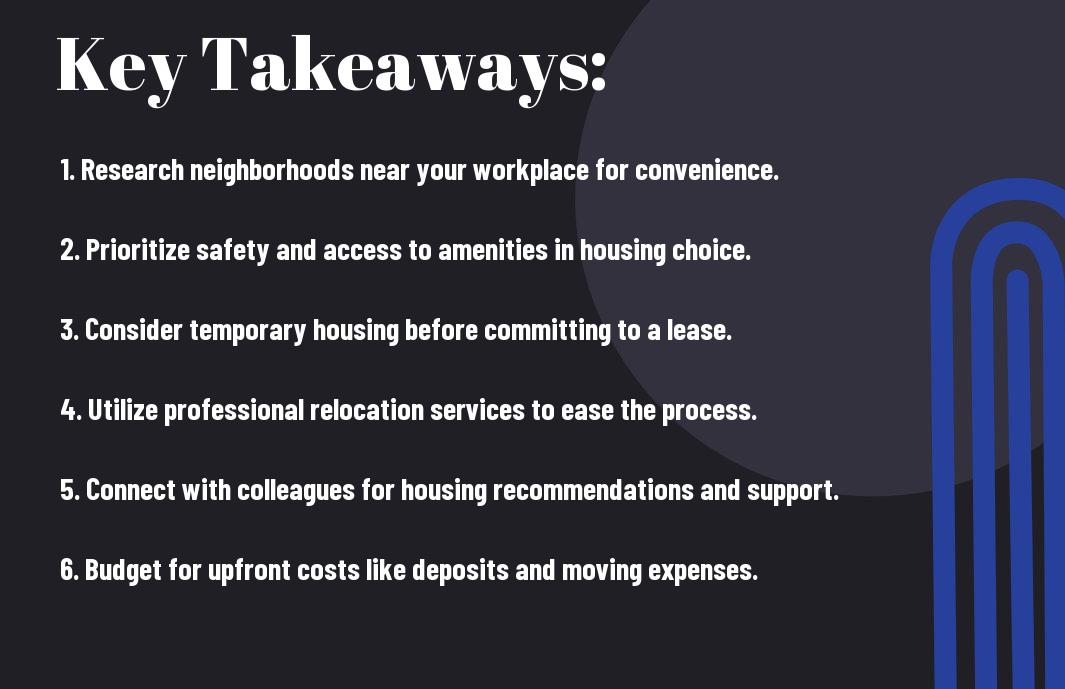
Any relocation can be an overwhelming experience, but securing temporary housing can ease the transition. As a medical staff member, you might need a flexible housing solution while settling into your new surroundings. Consider options that provide both comfort and convenience, allowing you to focus on your responsibilities without the added stress of finding a permanent residence right away.
Short-Term Rentals
Above all, short-term rentals can offer a practical solution, providing fully furnished options that cater to your needs. Websites and platforms specializing in short-term stays allow you to filter by amenities and location, ensuring you find the perfect space for you. These rentals often come with flexible lease terms, making them ideal for short-term assignments in new areas.
Corporate Housing
On the other hand, corporate housing is designed specifically for professionals on temporary assignments. These fully furnished apartments provide your home away from home, offering the comforts of a typical residence while you’re working. Corporate housing typically includes utilities, internet, and some amenities, allowing for a seamless transition to your new environment.
Consequently, corporate housing can be a smart choice, especially for those in the medical field who may require extended stays in a particular location. They provide a higher level of comfort and amenities compared to traditional hotels, allowing you to maintain a sense of normalcy. With options available in various neighborhoods, you can select a location that best suits your work schedule and lifestyle.
Long-Term Housing Strategies
All medical staff relocating to new areas need comprehensive long-term housing strategies to ensure they find a suitable residence that meets both their professional and personal needs. Understanding the local housing market, considering commute times, and knowing your budget can significantly impact how you settle into your new community. By planning carefully, you create a foundation that balances your work life and home comfort, allowing for a smoother transition during your relocation.
Renting vs. Buying
At some point, you might weigh the pros and cons of renting versus buying a home in your new location. Renting offers flexibility and less financial commitment, ideal for short-term placements or if you’re unsure about settling long-term. Conversely, buying can provide stability and potential investment growth, particularly in rapidly developing areas. Assess your long-term career trajectory and lifestyle to determine which option aligns best with your goals.
Housing Resources for Medical Staff
For medical professionals, finding appropriate housing often involves utilizing specialized resources that cater to your unique circumstances. Various websites and local agencies offer listings tailored for healthcare workers, considering their specific schedules and budgets.
Consequently, leveraging these housing resources can ease the stress of your move. Local medical associations or hospital HR departments often have information on vetted property managers or real estate agents familiar with your needs. Additionally, consider joining local online forums or social media groups where you can access shared experiences and recommendations from fellow medical staff who’ve navigated similar housing situations, encouraging a smoother transition into your new community.
Navigating Local Real Estate Markets
Despite the challenges that come with relocating, understanding your destination’s real estate market can significantly enhance your housing experience. Local conditions vary widely, and being informed about market trends, average pricing, and neighborhood dynamics can support you in finding a home that aligns with your needs and budget.
Market Research Techniques
Above all, effective market research involves utilizing online platforms, local listings, and community forums to gather data on housing prices and neighborhood amenities. You can also check social media groups dedicated to your new city or connect with fellow professionals to gain insights into the best areas for medical staff.
Working with Local Realtors
Among the many resources at your disposal, partnering with local realtors can streamline your home search process. Local experts possess invaluable knowledge about neighborhoods, market dynamics, and available properties that fit your requirements.
Estate professionals will not only help you identify suitable homes but also negotiate offers that meet your financial goals. Their familiarity with the community allows them to guide you on schools, commute times, and nearby amenities, ultimately making your relocation more manageable and enjoyable. By enlisting their services, you tap into a wealth of experience that can transform your home search from overwhelming to efficient.
Community and Lifestyle Considerations
For medical staff relocating to a new area, understanding the community and lifestyle is key to a smooth transition. You’ll want to consider factors such as local culture, recreational opportunities, and social support networks. Engaging with residents and discovering community events can greatly enhance your experience and help you feel at home sooner as you begin your new professional chapter.
Proximity to Medical Facilities
Between your work demands and personal commitments, having your residence close to medical facilities can significantly reduce travel time and stress. A shorter commute allows you to maximize your off-hours, enabling you to enjoy local attractions or unwind with family and friends. Look for neighborhoods that balance access to hospitals and clinics with the lifestyle amenities you prefer.
Safety and Amenities
A critical aspect of your new home is safety, alongside the amenities that enrich your daily life. Research local crime rates and seek neighborhoods known for being family-friendly and secure. In addition, explore what’s available nearby—parks, restaurants, gyms, and shopping—so you can fully enjoy your downtime and maintain a healthy work-life balance.
A safer neighborhood not only provides peace of mind but also contributes to your overall well-being and quality of life. You’ll want to find a place that supports your personal interests and offers crucial services within reach. Whether it’s food options, fitness centers, or recreational spaces, the amenities available can greatly influence your relocation experience, helping you settle in quickly and comfortably.
Financial Planning for Relocation
Not having a solid financial plan can lead to unnecessary stress when relocating. As a medical professional, you may have specific housing needs, and understanding your expenses upfront will help you make informed decisions. Ensure you account for all costs associated with your move, including housing, utilities, and any relocation assistance your employer may provide.
Budgeting for Housing Expenses
Budgeting for housing expenses is important to ensure you don’t overspend or face financial strain. Begin by researching average rental or housing prices in your new area to set a realistic budget. Include additional costs like security deposits, application fees, and utilities to get a comprehensive view of your expenses, allowing you to make the best housing choice for your financial situation.
Understanding Relocation Assistance
At many healthcare institutions, relocation assistance is provided to support you during your move. This can include financial aid for moving costs, temporary housing options, or even reimbursable expenses related to your transition. It is important to review your employment contract or discuss with HR to fully understand what is available to you, as this can significantly ease your financial burden.
Even if your employer has a relocation assistance program, the specifics can vary widely. Some organizations offer lump-sum payments while others may reimburse individual moving-related expenses. Make sure to inquire about mileage reimbursement for travel, storage costs, and any applicable allowances for housing searches. Fully utilizing the benefits provided can help mitigate relocation costs and allow you to settle into your new home with greater financial ease.
To wrap up
Summing up, enhancing your relocation experience as medical staff requires strategic planning and thoughtful consideration of housing options. By prioritizing your needs and preferences, you can secure a living space that not only supports your professional commitments but also contributes to your well-being. Take the time to explore the local community, seek support from colleagues, and utilize resources available to you. This proactive approach will ensure that your transition is smooth, allowing you to focus on delivering exceptional care in your new environment.