
Healthcare professionals like you understand the importance of a strategic location for your practice’s success. Relocating can be a rewarding opportunity to enhance patient access and grow your business. By considering key factors like demographics, accessibility, and competition, you can identify the ideal spot that aligns with your vision. In this guide, we’ll walk you through the necessary steps to ensure your new location supports your practice now and in the future.
Mapping the Landscape: Key Demographics to Consider
Identifying the right location for your healthcare practice requires a thorough analysis of key demographics. Understanding the population characteristics in your potential relocation area can significantly impact your practice’s success. Factors such as population density, growth rates, age distribution, and local healthcare needs will guide you in making informed decisions that align with your vision for the future.
Understanding Patient Population Size and Growth
Assessing the patient population size and anticipated growth in your chosen area provides a foundation for successful integration. Look for regions with increasing populations, as these are likely to yield a higher demand for healthcare services. For example, areas experiencing economic development typically attract new residents, which translates to a larger patient base for your practice.
Analyzing Age Distribution and Healthcare Needs
Examining the age distribution of the population is vital in tailoring your services to meet specific healthcare demands. Areas with a higher percentage of younger families may require pediatric care, while communities with a more substantial aging population will likely necessitate geriatric services and chronic disease management. Knowing the predominant age groups can help you fine-tune your offerings and marketing strategies to resonate with local needs.
For instance, if your relocation area has a significant elderly demographic, implementing specialized programs focused on senior health management could provide a distinct advantage. Seeking partnerships with local assisted living facilities or offering tailored wellness programs may enhance your appeal to aging patients. In contrast, locations with a vibrant, younger population might benefit from services such as family planning, prenatal care, or mental health support geared towards adolescents. Adapting your services based on age distribution not only positions your practice favorably but also demonstrates your commitment to the community’s health and well-being.
Economic Vitality: Assessing Financial Stability
Exploring the economic vitality of a potential relocation site plays a key role in ensuring the long-term viability of your healthcare practice. Understanding local financial stability not only influences patient demographics but also helps in forecasting potential growth. This assessment involves evaluating various economic indicators, such as local income levels and employment rates, which directly impact the healthcare needs of the community.
Evaluating Local Income Levels and Employment Rates
Analyzing local income levels and employment rates provides insight into the economic health of the area. High median incomes often correlate with a population that can afford healthcare services. Regions with stable or growing employment rates signal a robust economy, indicating that residents may not hesitate to seek necessary healthcare services, which directly benefits your practice.
Investigating Regional Healthcare Funding and Investment Opportunities
Diving deeper into regional healthcare funding and investment opportunities can uncover potential avenues for your practice’s financial growth. Understanding state and local incentives for healthcare facilities, grants for small business startups, or funding for advanced medical technologies helps you leverage available resources. By partnering with local health systems or engaging in community health initiatives, your practice can benefit from increased exposure and funding.
Health systems in regions with expanding populations often receive significant investments aimed at enhancing healthcare delivery. For instance, areas such as Austin, Texas have seen an influx of venture capital focused on innovative healthcare solutions. Actively tracking funding opportunities provided by local governmental programs or private investors can not only bolster your practice’s financial grounding but also enhance your reputation as a community-centric healthcare provider. Engaging with local economic development agencies can guide you in identifying relevant programs tailored to healthcare providers, allowing you to seize these advantageous prospects before your competitors do.
Accessibility and Infrastructure: The Lifeblood of a Practice
Accessibility and infrastructure play a vital role in determining the success of your healthcare practice relocation. A site with robust infrastructure not only supports everyday operations but also enhances patient experience. An accessible location can foster trust and loyalty, making it easier for patients to visit regularly and engage with your services. Identifying areas with well-planned infrastructure, such as roads, utilities, and nearby amenities, will help you create a practice that thrives.
Proximity to Major Transportation Hubs
Choosing a location near major transportation hubs, such as airports or rail stations, can significantly impact your patient base. Accessible facilities ensure that patients who rely on long-distance travel can reach you easily. In urban settings, being a short distance from major highways facilitates quick access for local clients as well, enhancing your practice’s appeal to a broader demographic.
Evaluating Public Transportation and Accessibility Options
Analyzing public transportation options in the area is necessary for maximizing patient access. Check the availability of bus and train services, and their frequency and coverage areas. Locations near public transit lines tend to attract a higher volume of patients, particularly from demographics who rely on these services. Furthermore, proximity to pedestrian-friendly infrastructure, like sidewalks and crosswalks, can encourage foot traffic and enhance convenience. Consider the overall commute time for your patients, as shorter travel durations can translate to higher appointment adherence.
Understanding the landscape of public transportation and accessibility options offers insights into how your potential new location aligns with patient needs. Surveying the frequency and reliability of local services allows you to gauge ease of access for both patients and staff. For instance, a practice located near a bus terminal with routes servicing underserved communities can tap into a larger patient population. Evaluating aspects like parking availability, drop-off zones, and ADA compliance will further ensure your practice accommodates various patient needs, which is instrumental for fostering long-term relationships and improving health outcomes.
Competition Analysis: Finding the Sweet Spot
Analyzing competition in your desired area provides insights that can significantly influence your relocation decision. You need to assess not only the number of healthcare providers nearby but also the type and quality of services they offer. A strategic approach will help you identify potential opportunities and challenges, ensuring your practice stands out in a crowded market.
Identifying Existing Providers and Market Saturation
Begin by mapping out existing healthcare providers within a defined radius of your potential location. Evaluate their specialties, patient loads, and proximity to your intended practice. Understanding how saturated the market is with similar providers will help you gauge the level of competition and highlight areas where you might effectively distinguish your services.
Understanding Service Gaps and Community Needs
Beyond just identifying competitors, delving into service gaps within the community is vital. Consider engaging with local community forums, surveys, or needs assessments. This will allow you to spot underrepresented medical specialties or unmet patient demands, paving the way for tailored services that resonate with the local population.
Exploring service gaps might involve conducting interviews with community leaders or even collaborating with local organizations that focus on health resources. This qualitative data can highlight pressing health issues that are not currently being addressed adequately, such as mental health services or pediatric care. For instance, if a new survey reveals a high prevalence of diabetes in the community but a lack of specialist services, you can position your practice as a crucial provider for diabetes management, thus catering directly to an identifiable need while solidifying your practice’s relevance and appeal.

Regulatory Environment: Navigating Local Healthcare Laws
In the fast-evolving healthcare landscape, being aware of the local regulatory environment can significantly influence your practice’s success. Familiarizing yourself with specific laws, including employment regulations, health codes, and patient privacy laws, is imperative. Each locality has different rules that can impact everything from staffing to operational protocols. Being proactive means you not only comply with existing regulations but also position your practice set for sustainable growth.
Understanding Zoning Laws and Licensing Requirements
Zoning laws dictate where healthcare facilities can be established, influencing foot traffic and accessibility for your patients. Each jurisdiction has specific zoning regulations that you must navigate, such as the required distance from residential areas or other medical facilities. Additionally, obtaining the necessary licenses and permits is a critical step in setting up your practice, as non-compliance can delay your opening or even lead to legal repercussions.
Analyzing Regulatory Changes and Their Impact on Future Growth
Staying alert to potential regulatory changes helps you prepare strategically for the future. Recent shifts, such as telehealth regulations or new insurance requirements, can dictate how you implement your services. Keeping an eye on expected policy trends allows you to adapt your business model accordingly. Any adjustments can mean the difference between leading in service delivery or lagging behind competitors.
One example of significant regulatory change impacting growth is the move towards value-based care, offering financial incentives linked to patient health outcomes. Practices that adapt early to these changes, like incorporating necessary technology or modifying operational strategies, can capitalize on funding opportunities and attract a broader patient base. By understanding the implications of evolving regulations, you can not only maintain compliance but also ensure your practice flourishes in a competitive landscape.
To Wrap Up
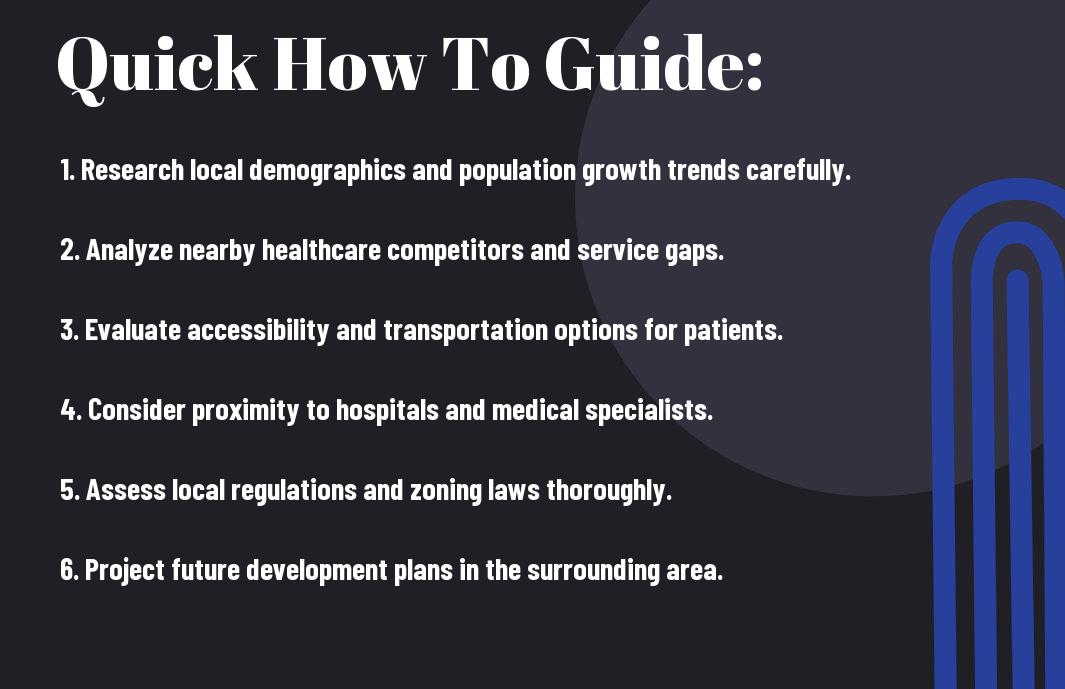
With these considerations in mind, you can make informed decisions about relocating your healthcare practice to a location that best serves your patients and supports your growth. Assess demographic trends, accessibility, and local competition to pinpoint ideal areas. Engaging with community stakeholders and utilizing data-driven analyses will further enhance your search. By taking these steps, you position your practice for long-term success and ensure you meet the evolving needs of the communities you serve.