

You may find yourself facing the significant task of choosing a new neighborhood as you relocate for your medical career. Finding the right location is imperative not only for your professional life but also for your personal well-being. In this guide, you will discover key factors such as proximity to hospitals, community amenities, safety, and the overall atmosphere of potential neighborhoods. By considering these important elements, you can ensure a smooth transition and establish a fulfilling life in your new home.

Understanding Your Needs
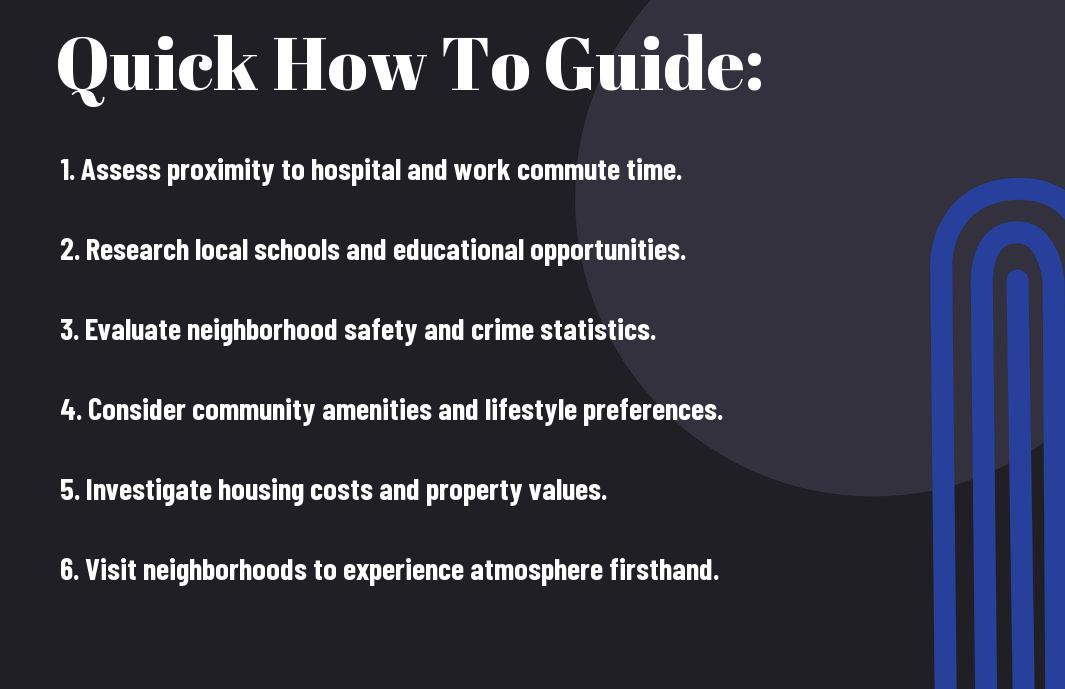
The process of choosing the right neighborhood begins with understanding your unique needs. You should take an honest assessment of what you value most in your personal and professional life. Consider factors such as proximity to work, schools, recreational areas, and community support systems that align with your lifestyle. By clarifying your needs early on, you can streamline your search and focus on neighborhoods that truly fit your requirements.
Assessing Lifestyle Preferences
With a myriad of lifestyle preferences to consider, it’s necessary to think about what activities you enjoy and how you want to spend your free time. Evaluate aspects such as nearby parks, restaurants, cultural venues, and public transportation options. Discussing these preferences with family members can also lead to a more fulfilling decision that suits everyone’s needs.
Identifying Professional Requirements
Understanding your professional requirements is a key step in the relocation process. Consider factors such as commute time to your practice, availability of residency programs, networking opportunities, and collegial support in your field. Research local healthcare facilities, patient demographics, and potential for career advancement, as these will all impact your professional satisfaction in the new location.
Preferences can vary widely when it comes to your career in medicine. You might prioritize living near a reputable hospital or clinic that aligns with your specialty, or you may seek out a community known for its patient-centered approach. Additionally, consider the local healthcare landscape, including competition, collaboration opportunities with peers, and access to continuing education and professional development resources. These factors will enhance not only your career trajectory but also your overall quality of life in your new neighborhood.
Evaluating Neighborhood Factors
It is necessary to thoroughly evaluate neighborhood factors before making a move. Consider aspects that significantly impact your daily life and well-being, including:
- Safety and crime rates
- Quality of schools and healthcare
- Proximity to work and amenities
- Community vibe and culture
Assume that prioritizing these factors will enhance your overall living experience and satisfaction in your new home.
Safety and Crime Rates
For many families and professionals, safety is a top priority when relocating. You can research local crime statistics, talk to forensics experts, or consult with local law enforcement to get a better understanding of the area’s safety record. It might be helpful to visit the neighborhood during different times of the day to gauge the overall sense of safety.
Quality of Schools and Healthcare
Little should be overlooked when assessing the quality of schools and healthcare facilities in your potential neighborhood. Strong schools not only boost property values but also contribute to your children’s development and future success.
To ensure you make an informed choice, explore school district ratings and their extracurricular offerings, as well as hospital rankings and accessibility. Look into the availability of specialized care and the convenience of healthcare facilities nearby. Engaging with local parents and residents can provide valuable insights into educational experiences and healthcare resources, guiding you toward neighborhoods that best suit your family’s needs.
Accessibility and Commute
To ensure a smooth transition when relocating, evaluating accessibility and commute options is vital. Look for neighborhoods that provide convenient routes to your workplace, vital services, and recreational areas. A well-connected neighborhood not only improves your daily routine but also enhances your overall quality of life.
Proximity to Work
You should prioritize finding a neighborhood that is within a reasonable distance from your workplace. Consider how long you are willing to commute each day, as a shorter commute can lead to increased personal time and lower stress levels. A nearby location can also enhance your professional networking opportunities and help maintain a healthy work-life balance.
Public Transportation Options
Assuming you rely on public transportation, check the availability of buses, trains, or subways in the area you’re considering. Having reliable public transit options can significantly enrich your commuting experience and widen your lifestyle choices.
This can be particularly beneficial if you plan to travel for work or social events. Evaluating local transport schedules, routes, and coverage will assist you in understanding how easily you can navigate the city. Accessibility to public transportation can not only provide a cost-effective solution to commuting but also reduce the need for a personal vehicle, thereby saving on expenses related to maintenance and parking.
Community and Culture
Now that you’ve identified crucial factors like proximity to work and schools, it’s pivotal to probe into the community and culture. Understanding the local vibe ensures that your new neighborhood aligns with your lifestyle and values. Take the time to explore local traditions, community values, and the general atmosphere. A welcoming and vibrant community can enhance your overall experience while settling into a new place.
Local Amenities and Services
Any neighborhood worth considering should offer an array of local amenities and services that cater to your needs. Look for grocery stores, pharmacies, healthcare facilities, recreational centers, and public transportation options. Accessibility to these crucials can greatly affect your daily living experience and overall convenience.
Social Engagement Opportunities
Local community events, clubs, and organizations can provide meaningful ways to connect with your neighbors. These opportunities are vital for building relationships and creating a support network in your new setting. Engaging in local activities fosters a sense of belonging and can enrich both your personal and professional life.
Engagement in social opportunities is not just about leisure; it’s about creating connections that can strengthen your ties within the community. Look for events like farmers’ markets, local fairs, and volunteer programs that can bring you closer to your neighbors. Joining professional organizations or attending health fairs can also broaden your network, critical for both your personal growth and career development as a physician. Consider exploring local classes, clubs, or sports leagues that match your interests — fostering community ties is key to a successful relocation.
Budget Considerations
Once again, understanding your financial situation is imperative when selecting the right neighborhood. You should consider not only the cost of housing but also other expenses such as property taxes, utilities, and local amenities. Analyzing your budget will help you narrow down your options, ensuring you find a location that aligns with your financial goals while providing the lifestyle you seek.
Cost of Living Comparisons
You can effectively evaluate potential neighborhoods by comparing the cost of living in each area. Below is a quick overview of imperative expenses you should consider:
| Expense Type | Average Cost |
|---|---|
| Housing (monthly rent) | $2,500 |
| Utilities | $150 |
| Groceries | $500 |
| Transportation | $150 |
Housing Market Insights
Any savvy buyer knows the importance of understanding the housing market before making a move. Evaluating trends such as average home prices, inventory levels, and the time properties spend on the market can help you make informed decisions about where to relocate.
It’s vital to analyze these housing market insights thoroughly. Look for areas with steady appreciation rates, as these neighborhoods may offer good investment potential. Keep an eye on new developments and infrastructure projects, as these can significantly impact property values. Engaging with local real estate experts can provide you with additional context and forecasts, enabling you to choose a neighborhood that meets both your immediate needs and long-term objectives.
Researching Potential Neighborhoods
For a successful relocation, you need to invest time in researching potential neighborhoods. Dive deep into community demographics, schools, local amenities, and crime rates to ensure the area aligns with your lifestyle and professional needs. Utilize various resources to gauge the overall vibe and priorities of the neighborhoods you are considering. This groundwork will empower you to make an informed choice that enhances both your professional and personal life.
Online Resources and Tools
Resources such as neighborhood comparison websites, community forums, and local government pages provide valuable insights into the safety, schools, and amenities of potential areas. Real estate platforms often include detailed reports and reviews, allowing you to compare different neighborhoods side by side. By leveraging these digital tools, you can gain a clearer picture of which locations might best suit your needs.
Visiting Communities
With firsthand experience being invaluable, visiting potential communities allows you to absorb the atmosphere and interact with current residents. Walking through neighborhoods, observing local businesses, and checking out parks can help you envision your life in that area. It’s an excellent opportunity to assess if the community feels like a good fit for you and your lifestyle.
It’s best to go beyond online research by visiting the neighborhoods in person. Schedule visits throughout different times of the day to gauge activity levels, traffic patterns, and overall livability. Engaging with residents during your visits can provide insights that online reviews may not capture. By experiencing the community firsthand, you’ll enhance your understanding of what daily life would really be like in that area, helping you make a well-rounded decision.
Final Words
As a reminder, choosing the right neighborhood is crucial for your relocation as a physician. You should prioritize factors such as proximity to hospitals, quality of schools, and the overall community vibe that aligns with your lifestyle. Take time to research, visit potential areas, and consider your personal and professional needs to ensure a smooth transition. By following these guidelines and reflecting on what matters most to you, you can make an informed decision that enhances both your career and personal life.