
Just when you think you’ve mastered the complexities of your current practice, the prospect of moving to a new one can feel daunting. This comprehensive checklist is designed specifically for you, the medical professional, to streamline the transition and ensure all bases are covered. From reviewing your contract and understanding local regulations to setting up your clinical space and engaging with the community, you will find practical steps to make your move as efficient and stress-free as possible. Let’s commence on this journey equipped with the right tools and knowledge.
The Emotional Landscape of Transitioning Practices
Transitioning to a new practice can provoke a range of emotions, from excitement about new opportunities to anxiety about fitting into a different environment. Navigating this emotional landscape is vital for both your personal and professional well-being. As you adapt to new colleagues, different workflows, and the culture of a new practice, implanting self-awareness and managing your emotional responses will enable you to transition more smoothly and set a solid foundation for your future success.
Identifying Common Psychological Challenges
Isolation, uncertainty, and fear of inadequate performance often surface during a practice transition. Many medical professionals experience self-doubt or question their competencies in a new setting. Adapting to new protocols and building rapport with staff can also create pressure. Identifying these psychological hurdles is the first step toward effectively managing them as you adjust to your new practice.
Strategies for Managing Stress and Anxiety
Implementing structured coping mechanisms can significantly reduce stress and anxiety during your transition. Techniques like mindfulness meditation, regular exercise, and maintaining a consistent sleep schedule help create resilience. Establishing a support network with colleagues, family, or mentors fosters a sense of community, while setting realistic goals and celebrating small achievements builds confidence in your capabilities.
Consider scheduling short breaks throughout your day to practice deep breathing or engage in brief physical activity, as these moments can provide necessary relief from the intensity of your transition. Additionally, keeping a journal to track your feelings and experiences can help you reflect on your growth and identify patterns that influence your emotional state. Investing time in developing your coping strategies prepares you for better adjustment and adaptation, ultimately enhancing your performance in your new role.
Key Legal and Compliance Considerations
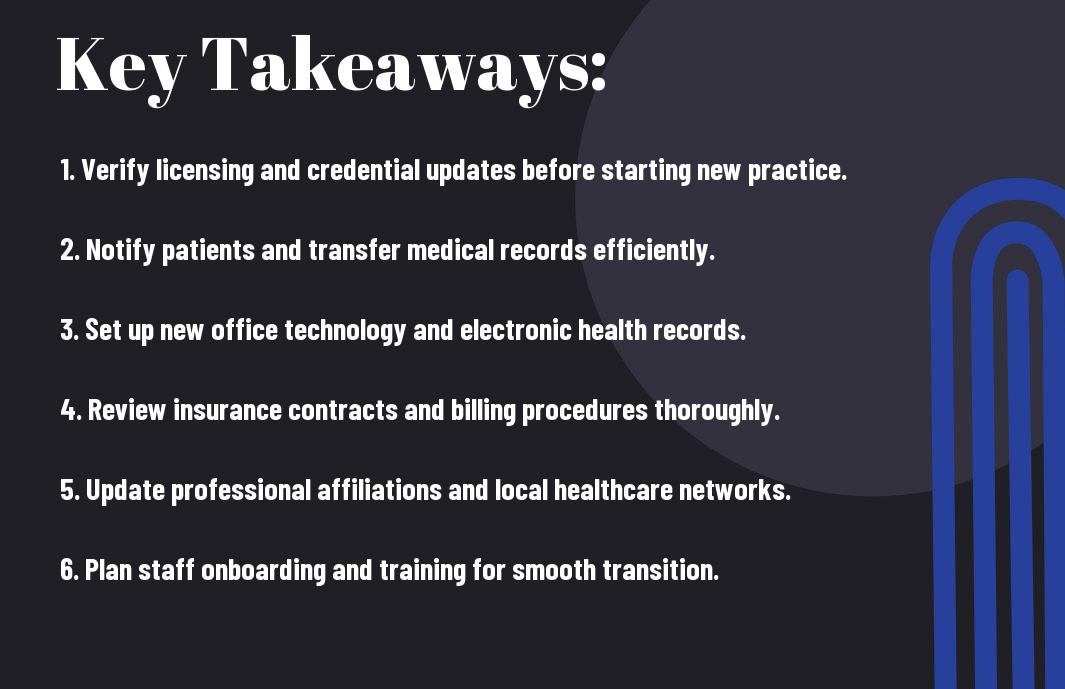
Navigating the legal landscape when moving to a new practice involves careful attention to many regulatory and compliance aspects. Various factors, from medical licensing to malpractice insurance, need to be meticulously managed to ensure a seamless transition. Overlooking any of these critical areas can lead to disruptions in your practice and potentially impact your patients. A comprehensive understanding of these considerations helps you safeguard your professional credibility and responsibilities as a healthcare provider.
Licensing and Credential Verification
It’s necessary to ensure that your medical license is up to date and valid in the new practice location. This involves verifying your credentials with the appropriate state medical boards and ensuring that there are no outstanding issues that could hinder your ability to practice. Additionally, if you’re moving between states, be aware of their specific licensure requirements to avoid any compliance issues.
Navigating Malpractice Insurance Changes
Transitions in practice demand a thorough review of your malpractice insurance policy. You’ll want to confirm that your current insurance coverage is adequate for your new role and that it complies with the specific requirements of the new practice environment. Additionally, consider whether your existing insurer covers you during the transition period and for any existing cases.
In some cases, you may need to switch insurance providers entirely, particularly if the new practice has a preferred vendor or specific coverage limitations that your current policy does not meet. Take the time to consult with your insurance representative to conduct a comparative analysis of different policies and understand any potential gaps in coverage. Furthermore, be aware of any tail coverage options that may be necessary to protect you from future claims associated with your previous practice. By laying this groundwork, you secure your professional interests and ensure that you are fully protected as you launch on your new chapter.
Financial Factors to Weigh Before Making the Jump
Evaluating your financial situation can significantly impact your decision to transition practices. Consider various elements such as compensation packages, benefits, relocation costs, and your financial goals. Key factors might include:
- Current salary versus the new practice’s compensation
- Bonuses and incentives offered
- Health insurance and retirement benefits
- Cost of living adjustments
- Relocation reimbursements
The financial implications of moving can be substantial.
Evaluating Compensation Packages
Analyzing compensation packages requires attention to detail. Look beyond the base salary; factor in bonuses, benefits like malpractice insurance, and retirement plans. Compare these elements to your current package. A higher salary might seem appealing, yet if the benefits don’t match your needs, the offer may not provide the financial security you seek.
Assessing Relocation Costs and Benefits
Relocating involves more than just packing boxes. Identify the costs associated with the move, including moving expenses, temporary housing, and potential travel costs for home visits. Weigh these expenses against the potential benefits of the new role, such as higher livability or job satisfaction.
Calculating relocation costs often requires assembling all associated expenses to form a complete picture. Typical costs might include movers’ fees, utility deposits, and changes in living expenses, such as housing prices in your new area. In contrast, benefits may include salary increases, better job security, or access to specialized training. Explore any relocation assistance the new practice may offer, as these can ease the financial strain associated with your move, making the ultimate transition less daunting. The balance of these factors will help you make a more informed decision.

Building a Productive Professional Network
Creating a robust professional network is imperative for your success in a new practice. This network not only serves as a valuable resource for information and support but also opens doors to collaborative opportunities that can enhance your career. Connect with colleagues, mentors, and local medical communities to strengthen your professional presence and share knowledge that can benefit your practice.
Strategies for Connecting with Colleagues
Engaging with colleagues starts with proactive outreach. Attend team meetings, introduce yourself, and show genuine interest in their roles within the practice. Utilize social media platforms like LinkedIn to follow their work, share relevant articles, and participate in discussions. Organizing informal coffee chats or lunch breaks can foster deeper relationships and encourage collaboration in patient care.
Engaging with Local Medical Communities
Participation in local medical communities enhances your professional reputation and fosters collaboration. Many areas have medical societies that host events, seminars, and networking opportunities that can help you connect with fellow practitioners. By joining these organizations, you not only gain access to valuable resources and continuing education but also establish relationships with others who share common professional goals.
Engaging with local medical communities involves more than just attending meetings; it requires active participation. Volunteering for committees, leading workshops, or speaking at conferences can help you establish a reputation as a knowledgeable and involved member of the healthcare community. Building relationships with peers through these platforms allows you to share best practices and gain insights into local healthcare trends, ultimately enriching your practice experience and patient outcomes.
Practical Steps for a Smooth Physical Move
Embarking on a physical move requires a systematic approach to ensure all aspects of the transition are addressed efficiently. Coordinating logistics, understanding space requirements, and considering the timing of the move are key factors in achieving a seamless relocation. You need a detailed plan that includes inventorying your current equipment, assessing the layout of your new space, and forecasting the needs of both your practice and your patients during the move. Having a well-organized strategy in place minimizes disruptions and enables you to focus on providing care throughout the transition.
Creating a Comprehensive Moving Timeline
A detailed moving timeline is crucial for keeping your relocation on track. Start by establishing a date for the move and then work backward to outline crucial milestones, such as when to notify patients, when to obtain necessary permits, and when to begin packing. Breaking down the timeline into manageable weekly tasks ensures you stay organized and reduces the likelihood of last-minute scrambles.
Organizing Your Medical Equipment and Supplies
Proper organization of your medical equipment and supplies can streamline the transition and enhance operational efficiency in your new practice. Start by cataloging every piece of equipment, from diagnostic tools to office supplies, and group them based on their respective categories, such as urgent versus non-urgent items. This organized roster will simplify the packing process, minimize the chances of misplacing critical items, and facilitate a quick setup in your new location.
As you catalog your medical equipment, consider labeling boxes clearly according to their contents and the room where they will be used in the new office. Adopting a color-coded system can help differentiate supplies by type or urgency, making it easier to prioritize unpacking. Additionally, conduct an inventory check to identify any items that need repair or replacement before the move. By organizing everything thoughtfully, not only do you ease your transition, but you also set a professional tone in your new practice from day one.
Final Words
With these considerations, you can ensure a smoother transition to your new practice. Evaluating your professional goals, understanding the culture of your new workplace, and efficiently managing logistical aspects will set the foundation for your success. Embrace the opportunity to build relationships with new colleagues and adapt to your new environment, as these steps will significantly enhance your career satisfaction and effectiveness in the long run.