

There’s a unique set of challenges that physicians face when searching for the ideal home close to their workplace. Balancing long hours and demanding schedules, it’s important to streamline your home-buying process. This post will guide you through effective real estate strategies tailored specifically for physicians, ensuring you find a property that meets your needs while minimizing stress. You’ll discover tips on neighborhood selection, financial considerations, and ways to leverage professional connections in the housing market, allowing you to focus more on your patients and less on home-hunting.
Navigating the Unique Housing Market for Physicians
Understanding the specific demands of the housing market for physicians requires a tailored approach. Relying on your professional schedule, which often consists of erratic hours and on-call duties, necessitates living in neighborhoods with appealing amenities, excellent schools, and proximity to healthcare facilities. Additionally, knowing the ideal neighborhoods that cater to healthcare professionals can significantly enhance your lifestyle, allowing you to meet both career obligations and family needs efficiently.
Understanding Demand in Proximity to Healthcare Facilities
Housing demand near healthcare facilities typically remains high due to your constant need for accessibility. Buyers, particularly physicians and healthcare workers, prioritize homes that minimize commute times, often gravitating towards neighborhoods adjacent to hospitals or clinics. This creates a competitive marketplace, which can drive up prices, making research into local school districts, walkability, and recreational options necessary for a well-rounded living experience.
Assessing Market Trends: Timing Your Purchase Strategically
Identifying market trends enables you to make informed decisions during your home-buying process. Tracking seasonal fluctuations, such as increased inventory in spring or summer, can position you to leverage more favorable prices. Moreover, understanding economic indicators, like interest rate shifts or local job growth related to healthcare facilities, can yield insights into future market performance, influencing your purchasing timing effectively.
For instance, if you notice a surge in local job creation within the healthcare sector, it’s likely that housing demand will follow suit. Similarly, observing that home prices steadily decline at the end of summer may present an opportune window to buy. Regularly consulting real estate reports and working with seasoned agents who are attuned to both market fluctuations and the unique needs of healthcare professionals ensures that you secure a strategic advantage in your home search.
Prioritizing Work-Life Balance in Your Home Selection
Your home should be a sanctuary that allows you to unwind and recharge after long hours at work. Selecting a residence that promotes work-life balance means considering factors such as noise levels, outdoor spaces, and proximity to leisure activities. A thoughtfully chosen abode can enhance your overall well-being, leading to improved focus and satisfaction in both your personal and professional life.
The Importance of Location: Commute Times and Accessibility
Selecting a home with a strategic location can significantly reduce both commute times and stress. Investing in a property within a short drive or a quick public transport ride to your workplace allows you to maximize time for personal pursuits. Coupled with easy access to major highways and multiple routes, this proximity can be a game-changer for your daily routine.
Choosing Family-Friendly Neighborhoods: Amenities that Matter
Family-friendly neighborhoods often come packed with amenities that cater to the needs of your household. Parks, playgrounds, and recreational facilities encourage outdoor activities while shops, schools, and healthcare services provide convenience. When your community supports family life, it not only benefits your children’s upbringing but also creates a supportive network for you and your family, enhancing your quality of life.
Look for neighborhoods that have quality schools, community centers, and libraries, which will not only give your children a solid foundation but also offer you a vibrant community network. Close proximity to family-friendly cafes and grocery stores makes your daily routine easier and keeps you connected. Additionally, parks with walking trails or sports facilities support an active lifestyle, promoting health and wellness for your entire family. With these amenities at your doorstep, you’ll likely find a more fulfilling balance between career and family life.
Financing Tactics for Physician Homebuyers
Successfully financing your new home involves understanding various options tailored to your profession. Physicians often benefit from specific lending programs that recognize your unique financial situation, allowing for more favorable terms and lower barriers to entry. By leveraging these tactics, you can optimize your purchasing power while ensuring long-term benefits for your financial health.
Leveraging Physician Loan Programs: Unpacking Benefits
Physician loan programs have become a game-changer for many in the medical field. These specialized loans typically offer 100% financing options with no private mortgage insurance (PMI), enabling you to purchase a home without the hefty down payment that usually accompanies conventional loans. Often, these programs provide flexibility with higher debt-to-income ratios, allowing you to secure financing even if your student debt is substantial.
The Role of Down Payments: Strategies to Minimize Financial Strain
Reducing the strain of down payments can significantly impact your financial stability. Take advantage of physician loan programs, which frequently require little to no down payment, allowing you to preserve cash for emergencies or investments. In cases where a down payment is imperative, consider leveraging gifts from family, negotiating with sellers for assistance, or utilizing local programs designed to help first-time homebuyers.
For instance, if you’re facing a standard requirement of 20% for a conventional loan, a program with a reduced down payment of 3% can open new opportunities for you. This can lead to considerable savings, as a $500,000 home would require actually $100,000 upfront instead of just $15,000. Additionally, presenting an appealing offer with minimized down payment can make your bid more competitive in a tight market, giving you an edge over other buyers while also alleviating immediate financial pressure.
Evaluating Property Features for Long-Term Satisfaction
Assessing property features goes beyond aesthetics to ensure your home serves your lifestyle and supports your well-being. Consider how factors like layout, natural light, and outdoor space contribute to a relaxing atmosphere after long shifts at the hospital. Evaluate the proximity to amenities, schools, and recreational areas, as these elements not only enhance personal life but also play a role in daily convenience. By prioritizing these features, you can create a comfortable retreat that meets your needs now and into the future.
Essential Home Features: What Physicians Need for Comfort and Convenience
Focus on layouts that allow for privacy and separation from communal spaces, ensuring a peaceful environment where you can unwind. Features such as a home office, spacious kitchen for meal prep, and potentially a dedicated area for exercise or hobbies are vital. Consider proximity to your workplace and important amenities like grocery stores, gyms, and healthcare facilities. Realizing these must-haves creates a living space that suits your demanding schedule and supports your lifestyle.
Future-Proofing Your Investment: Anticipating Changes in Personal and Professional Life
Planning for the future is important when purchasing a home, particularly in a dynamic profession like medicine. As your career progresses or family grows, the home you choose should adapt with you. Evaluate options that allow for expansion, such as extra bedrooms or room for a home office. Trends in technology and healthcare can also impact your living needs; properties equipped with smart home features can enhance your day-to-day routines.
Investing in a property with potential for upgrades or renovations can save you from the stress of moving as circumstances evolve. Find homes in desirable neighborhoods with strong resale potential, even if you don’t plan to move soon. A flexible space that accommodates various life stages—whether it’s starting a family or establishing a telehealth practice—can support your professional ambitions while providing a comfortable home base. Consider consulting a real estate professional familiar with these dynamics to ensure your investment can grow alongside your career and personal life.

Collaborating with Experts: Your Dream Team for Real Estate
Building a strong team of professionals can streamline your home-buying process and ensure you find the perfect fit near your workplace. Collaborating with experts such as a specialized real estate agent, a seasoned mortgage broker, and a knowledgeable real estate attorney can save you time, reduce stress, and lead to better negotiation outcomes. This dream team will guide you through the sometimes complex landscape of the housing market, ensuring you make informed decisions that align with your unique needs as a physician.
Finding a Real Estate Agent Specializing in Physician Needs
Choosing a real estate agent who understands the unique challenges and demands faced by physicians can significantly impact your home-buying experience. Look for an agent with experience in serving medical professionals, as they will be familiar with the housing market dynamics around hospitals and healthcare facilities, as well as local neighborhoods that offer benefits specific to your work schedule and lifestyle.
The Importance of Legal Assistance in Your Real Estate Journey
Engaging legal assistance during your real estate journey protects your interests and ensures compliance with local regulations. A qualified real estate attorney can navigate complex contracts, understand zoning laws, and address any contingencies that may arise during the buying process, which is especially relevant in high-demand markets.
Without legal guidance, you may overlook critical details in purchase agreements or unknowingly commit to unfavorable terms. A real estate attorney can help you identify red flags, mitigate risks, and negotiate favorable terms on your behalf. This level of protection becomes invaluable, particularly when uncertainties arise or when you encounter issues that necessitate legal intervention. Their expertise ensures that your home buying experience is not only smooth but also aligns with your financial and personal goals as a physician.
Conclusion
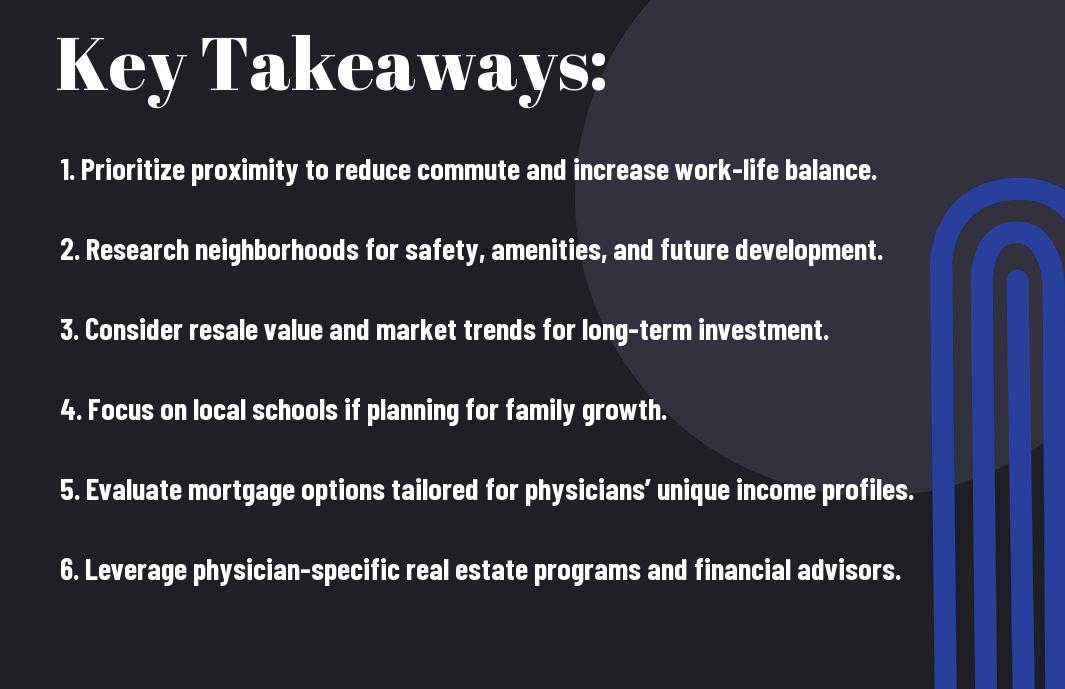
On the whole, employing effective real estate strategies can significantly enhance your search for the perfect home near your workplace. By understanding your needs and leveraging local resources, you can make informed decisions that align with your lifestyle and professional commitments. Prioritizing location and amenities tailored to your requirements will not only boost your overall satisfaction but also improve your work-life balance. With these insights, you’re well-equipped to navigate the real estate market and find a home that truly resonates with your professional journey.