
Strategies for maintaining work-life balance during your relocation can significantly enhance your transition experience as a physician. Whether you’re moving for a new position, a change in scenery, or to accommodate family needs, it’s vital to prioritize both your professional responsibilities and personal well-being. This blog post will explore effective approaches to help you navigate the complexities of moving while ensuring that your work-life balance remains intact, allowing you to settle in smoothly and thrive in your new environment.
Understanding Work-Life Balance
The concept of work-life balance refers to the ability to effectively manage your professional responsibilities while enjoying a fulfilling personal life. For physicians, who often face demanding schedules and significant stress, achieving this balance is necessary for overall well-being and job satisfaction. Establishing boundaries between work and home life allows you to recharge and maintain a healthy lifestyle, ultimately enhancing your performance and fulfillment in both areas.
Defining Work-Life Balance for Physicians
Around the medical profession, work-life balance encompasses your ability to harmonize your career with your personal health, relationships, and passions. This balance is particularly vital for physicians, who face unique pressures that can easily spill over into their personal lives. Finding this equilibrium helps you stay engaged and resilient in both your professional and personal endeavors.
The Impact of Relocation on Work-Life Balance
Above all, relocation can significantly affect your work-life balance by introducing new challenges and stressors. As you transition to a new workplace and community, your routines, support systems, and familiar environments may change, leading to potential disruptions in your personal and professional life. This shift can impact your well-being and productivity if not managed carefully.
Considering the complexities of relocating, it’s necessary to develop strategies to mitigate its effects on your work-life balance. You may need to establish new connections in both your personal and professional circles, adapt to different workplace cultures, and reassess your priorities. By proactively addressing these challenges, you can create a balanced lifestyle that supports both your career aspirations and personal happiness during this transitional phase.

Strategic Planning for Relocation
It is necessary to approach your relocation with a well-structured plan that considers both your professional and personal life. Strategic planning allows you to set clear goals, streamline the moving process, and minimize the disruption that can arise during this significant transition. By identifying key factors that need attention, you can create a roadmap that prioritizes both your career and individual well-being, ultimately helping you to maintain a healthy work-life balance during this change.
Assessing Professional Opportunities
Professional opportunities should be at the forefront of your decision-making process when relocating. Evaluate potential job markets, networking options, and the availability of resources that can enhance your practice. Research local healthcare facilities, community needs, and professional development opportunities that align with your career goals, ensuring that your new location supports your aspirations and professional growth.
Evaluating Personal Needs and Supports
The evaluation of your personal needs and support systems is just as vital as assessing professional opportunities. This stage includes reflecting on your family’s requirements, social connections, and recreational resources in your prospective new locale, which can significantly impact your overall happiness and wellness.
Another important aspect of evaluating personal needs includes considering the availability of schools, healthcare services, and recreational facilities that cater to both you and your family. Assessing your support systems involves identifying friends, relatives, or community groups that can provide emotional or logistical assistance during your transition. This comprehensive evaluation allows you to create a nurturing environment, making it easier to adapt to your new surroundings while balancing both work and personal life effectively.
Time Management Techniques
Despite the challenges that come with relocating, effective time management techniques can help you maintain your work-life balance. By prioritizing vital tasks and scheduling your time wisely, you can navigate through the transition with relative ease. Engaging in these practices not only helps you manage your workload but also ensures you have time for personal commitments and self-care.
Prioritizing Responsibilities
Beside tackling daily tasks, it’s vital to assess your responsibilities and prioritize them effectively. Focus on what needs immediate attention and what can be delegated or postponed. This strategic approach allows you to concentrate on high-impact activities, reducing stress and preventing overwhelm during this transitional phase.
Creating a Structured Schedule
Before exploring into the chaos of moving, taking the time to create a structured schedule can significantly enhance your organization and productivity. By outlining designated time slots for professional duties, family obligations, and personal time, you create a clearer roadmap of your day-to-day life.
It is beneficial to incorporate both work-related tasks and personal activities into your structured schedule, ensuring that neither area is neglected. Block out time for vital meetings, relocation logistics, and even breaks for relaxation. Utilize digital tools or planners to keep track of your commitments, as visualizing your day can reduce anxiety and boost your efficiency. A well-structured schedule provides you with a sense of control over your time, allowing you to adapt seamlessly to your new environment while still fulfilling your roles as a physician and a family member.
Building Support Networks
After relocating, building a network of support is vital to maintaining your work-life balance. Surrounding yourself with colleagues and friends can provide you with the emotional and professional backing you need as you transition into your new environment. By actively seeking connections, you can foster relationships that will not only help ease the stress of relocating but also enrich both your personal and professional life.
Engaging with Local Healthcare Communities
Engaging with local healthcare communities helps you develop professional contacts and gain insight into the regional medical landscape. Attending conferences, joining professional organizations, or participating in local events will allow you to meet fellow healthcare providers and integrate into your new practice environment. These connections can also lead to collaborative opportunities and a greater understanding of community health needs.
Establishing Personal Support Systems
With a new relocation, establishing personal support systems is important for your emotional well-being. Building friendships and connecting with your family will provide you with a sense of belonging and stability. You can create these networks by exploring local groups, joining recreational clubs, or participating in activities that interest you. Such efforts will enhance your quality of life and help you adapt more easily to your new surroundings.
At the same time, consider reaching out to your existing support networks, like family and friends, to maintain those connections while you settle in. Regular calls or video chats can help you stay connected and share your experiences. Additionally, look for online forums or local meetups tailored to physicians in your area, as these platforms can introduce you to individuals with similar challenges and aspirations. You’ll find that shared experiences foster deeper connections and support as you navigate your new environment.
Self-Care Practices
All physicians facing relocation can benefit greatly from establishing a self-care routine that prioritizes both mental and physical wellbeing. Incorporating intentional practices into your daily life not only enhances your personal health but also contributes to your professional effectiveness. Take time to explore activities that nourish your body and mind, allowing you to transition more smoothly during this challenging period.
Importance of Mental and Physical Wellbeing
After making the decision to relocate, it is imperative to acknowledge the importance of maintaining your mental and physical wellbeing. Changes in your surroundings and work environment can lead to stress and anxiety, which may impact your overall performance. Prioritizing self-care strategies will ensure you remain resilient and effectively manage the challenges that come with this transition.
Implementing Mindfulness and Stress Reduction Techniques
Between the demands of your medical practice and the logistics of moving, it’s easy to overlook the need for mindfulness and stress reduction techniques. By integrating these practices into your daily routine, you can cultivate a greater sense of awareness and calmness amidst the chaos. Mindfulness activities, such as meditation or deep-breathing exercises, provide the opportunity to refocus and recharge your mental state, which is particularly beneficial during times of change.
Practices such as journaling, guided imagery, or yoga can significantly enhance your emotional resilience. Allocating even a few minutes daily to these techniques allows you to observe your thoughts non-judgmentally, promoting a sense of clarity and peace. Establishing a routine that includes these mindfulness exercises not only helps you cope with the stress of relocation but also prepares you to embrace the new opportunities that lie ahead in your career.
Resources for Physicians
Now that you are navigating the challenges of relocation, leveraging the right resources can significantly enhance your work-life balance. Several tools and organizations can support you in this transition, ensuring that you maintain your professional integrity and personal well-being while moving to a new environment.
Professional Organizations and Online Platforms
Organizations such as the American Medical Association (AMA) and the American College of Physicians (ACP) offer invaluable resources for physicians like you. These groups provide networking opportunities, relocation guidance, and access to forums where you can share insights and experiences with fellow medical professionals, helping you feel supported in your journey.
Wellness Programs and Workshops
Resources dedicated to wellness are crucial for your transition. Engaging in targeted wellness programs and workshops allows you to focus on personal health while adapting to a new professional landscape. These initiatives often cover stress reduction, work-life balance, and coping strategies, tailored specifically for physicians who are in transition.
It’s beneficial to actively seek out wellness programs and workshops that not only focus on professional development but also emphasize personal well-being. Many local medical associations and healthcare facilities host events that promote mindfulness, resilience, and stress management techniques aimed at physicians faced with relocation challenges. Participating in these programs can provide you with valuable coping strategies and a supportive community during this significant life change.
Final Words
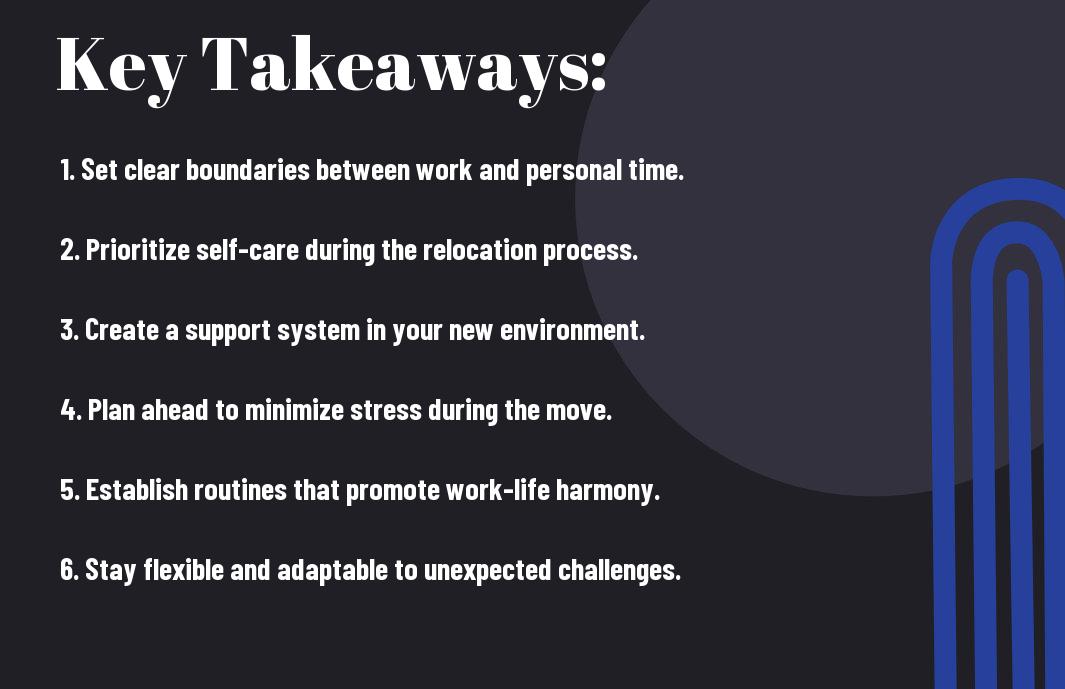
The strategies outlined in this guide empower you to effectively navigate the challenges of relocation while maintaining a healthy work-life balance. By prioritizing self-care, setting clear boundaries, and fostering connections in your new community, you can transition smoothly without sacrificing your professional and personal well-being. Embracing these practices will not only enhance your productivity but also enrich your personal life, ensuring that your move is a positive and fulfilling experience.