
Physician housing needs can be as unique as your medical specialty, making it important to find the right home that perfectly aligns with your practice. This guide will provide you with valuable insights and practical tips to navigate the often complex housing market, ensuring you secure the ideal space that supports both your professional and personal life. From understanding financing options to exploring the best locations, you’ll gain the confidence needed to make informed decisions about your housing needs as a physician.
Understanding Physician Housing Support
As a physician, finding suitable housing that meets both your personal and professional needs can be challenging. Physician housing support encompasses various programs and resources designed to assist healthcare professionals in locating and securing the right home. Familiarizing yourself with these options can help simplify the process and ensure you find a space that aligns with your practice’s demands and your lifestyle.
Types of Physician Housing Support
Assuming you’re new to housing assistance, here’s a breakdown of the types of support available:
| Type | Description |
| Relocation Assistance | Help with moving expenses and logistics |
| Rental Assistance | Support for finding rental properties |
| Home Buying Programs | Programs that facilitate home purchase |
| Mortgage Assistance | Guidance on financing your home |
| Local Resources | Connections to local housing services |
Assume that you utilize these resources to streamline your housing search.
Factors to Consider When Choosing Housing
Clearly, selecting the right housing is more than just finding a nice place to live. It involves several factors that can impact your lifestyle and work-life balance:
- Proximity to your workplace
- School districts if you have children
- Access to amenities like shopping and healthcare
- Neighborhood safety and suitability
- Your budget and financial considerations
Assume that you evaluate these factors thoroughly to make the best choice for your situation.
Understanding these factors is crucial for securing housing that supports your needs. For instance, being close to your practice can significantly reduce commute times, allowing for a better balance between work and home life. Additionally, neighborhoods with good schools or family-friendly amenities can enhance your family’s quality of life. Consider also the financial impact of your housing decisions, ensuring your choice aligns with your budgetary constraints.
- Evaluate your commute to work
- Research school options in the area
- Look into local amenities available
- Prioritize safety in your neighborhood
- Assess your financial capabilities before deciding
Assume that by taking these steps, you are setting yourself up for long-term satisfaction in your new home.
The Ultimate Guide To Physician Housing Support – Finding The Right Home For Your Practice
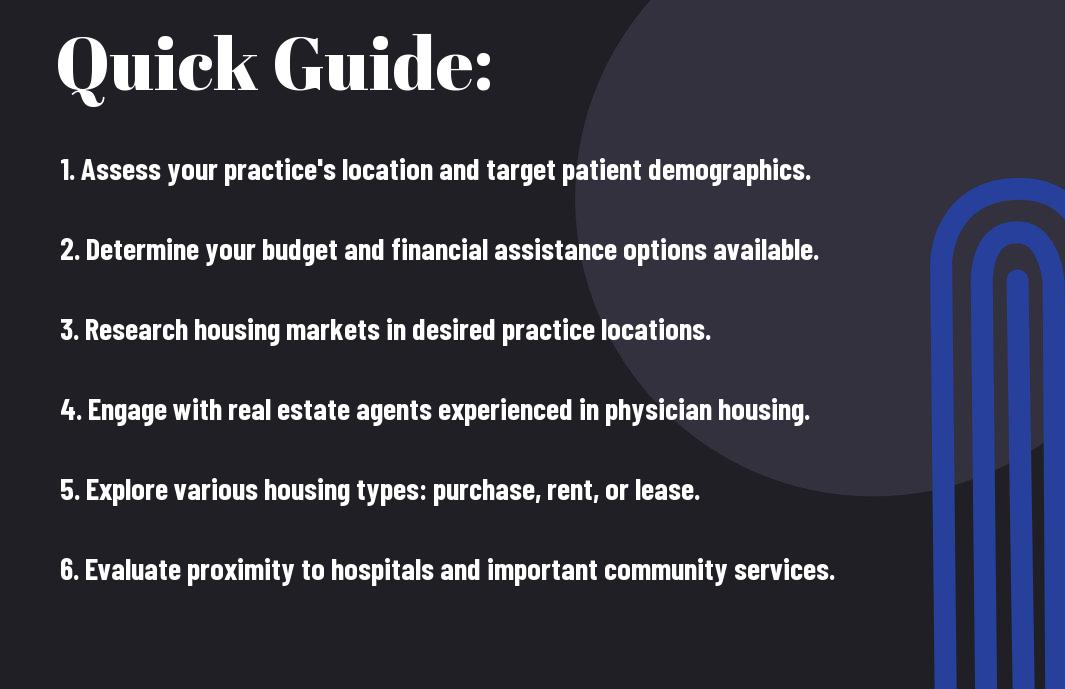
While searching for the ideal home for your medical practice, it’s necessary to follow a systematic approach. Begin by identifying your specific needs, then explore potential housing options, evaluate each choice, and finally, make a well-informed decision. Here’s a step-by-step guide to simplify your search:
| Step | Action |
| 1 | Assess your needs |
| 2 | Research potential housing options |
| 3 | Evaluate choices |
| 4 | Make your decision |
Assessing Your Needs
Little questions can guide you in determining the right home for your practice. Consider factors such as location, space requirements, accessibility, and proximity to hospitals or clinics. By pinpointing these necessarys, you will create a foundation for your search and ensure your new space meets your professional and personal needs.
Researching Potential Housing Options
An necessary part of finding your ideal home is researching available options tailored to your practice. Start by consulting online resources, working with real estate agents, or engaging with local physician networks to discover properties that match your requirements.
Right research involves examining a variety of housing options in terms of budget, specifications, and location dynamics. Prioritize homes that offer the necessary amenities and space but align with your financial plan. Don’t hesitate to visit potential properties in person, as this can give you a better feel for the environment and its suitability for your practice. Engage with local communities to gain insights into neighborhood dynamics and resources that could benefit you and your practice.
Tips for Securing the Best Housing Arrangement
For successful housing arrangements, consider these key tips to ensure you find the right fit for your practice:
- Assess your budget and requirements before beginning your search.
- Research neighborhoods with proximity to your practice and amenities.
- Consult with local real estate experts familiar with physician housing.
- Be flexible about your needs to expand your options.
Assume that thorough preparation can lead to an advantageous housing strategy.
Negotiating Lease Terms
On initiating negotiations for lease terms, prioritize understanding your needs and those of your landlord. Highlight your professional standing and stability, which can help create a favorable negotiation climate. Don’t hesitate to ask for concessions, such as lower rent or a longer lease duration, to ensure your agreement meets your operational goals.
Working with Relocation Services
Any transition can be simplified through professional relocation services that specialize in finding housing for healthcare providers. These services often provide tailored support, from identifying suitable neighborhoods to negotiating lease agreements on your behalf.
Plus, working with relocation experts can save you time and reduce stress during the moving process. They are familiar with local markets and can help you navigate the complexities of leasing arrangements, which is especially beneficial if you are unfamiliar with the area. Their guidance can lead to better housing outcomes that match your unique practice needs.
Pros and Cons of Various Housing Options
Many factors affect your decision when choosing where to live, especially as a physician. Evaluating the pros and cons of diverse housing options can help you make an informed decision that aligns with your professional and personal needs.
| Pros | Cons |
|---|---|
| Convenience of location | Higher cost of living |
| Access to amenities | Noise and congestion |
| Potential for investment growth | Maintenance responsibilities |
| Flexibility with renting | Lack of stability |
| Community involvement opportunities | May sacrifice space for location |
Renting vs. Purchasing
Even as a physician, you must weigh the advantages and disadvantages of renting versus purchasing a home. Renting offers flexibility, allowing you to relocate without the hassle of selling a property, while purchasing can be seen as a long-term investment that builds equity over time. Assess your financial situation and lifestyle to find the option that best fits your needs.
Urban vs. Suburban Locations
For many physicians, the choice between urban and suburban locations can significantly influence your lifestyle and practice. Urban areas often provide immediate access to hospitals, specialized medical facilities, and networking opportunities within your field, whereas suburban locations may offer a quieter environment, larger homes, and a different community dynamic.
For instance, if you choose an urban setting, you may enjoy the convenience of being close to your workplace, but you might face challenges such as higher housing costs and increased traffic. Conversely, a suburban location could give you access to spacious living arrangements and a family-friendly environment, yet it might require a longer commute to your practice. Balancing these aspects is key to finding a home that suits your professional and personal lifestyle.
Additional Resources for Physicians
Not only do you have access to various housing support programs for physicians, but additional resources are available to help you navigate your home-buying journey. Exploring these resources can provide valuable insights and assistance as you seek the perfect property to complement your practice.
Professional Organizations
An excellent way to enhance your search is through professional organizations that cater specifically to physicians. These organizations often provide resources, networking opportunities, and educational materials that can guide you in finding your ideal home and understanding the housing market tailored to your needs.
Online Platforms and Tools
Any information you gather can be enhanced by utilizing online platforms and tools designed for real estate and physician housing. These resources streamline the process, allowing you to compare neighborhoods, homes, and financial options effectively.
Resources such as specialized real estate websites and mobile apps can help you filter properties based on your preferences, budget, and desired location. Online communities, forums, and social media groups also provide a space for you to connect and share experiences with fellow physicians, allowing you to learn from their insights and advice in finding your perfect home. Harnessing these technologies can turn an often overwhelming task into a manageable and enjoyable venture.

Common Pitfalls to Avoid
Despite the desire to find the perfect home for your medical practice, many physicians fall into common traps that can lead to frustration and financial strain. Awareness of these pitfalls will empower you to make informed decisions throughout your housing journey.
Misunderstanding Financial Implications
Some physicians overlook the hidden costs associated with purchasing or leasing a medical office property. It’s crucial to fully understand not just the upfront expenses, but also ongoing maintenance costs, property taxes, and potential market fluctuations. Lack of clarity on these financial implications can strain your budget and impact the future of your practice.
Ignoring Local Community Factors
With the right location, your practice can flourish, but overlooking local community factors can hinder your success. Assessing aspects such as demographics, patient needs, and competition can significantly influence your practice’s growth. Here are key considerations:
- Population density and trends
- Accessibility and transportation options
- Local economic conditions
- Proximity to other healthcare facilities
Perceiving these community factors might provide insight into how well your practice will thrive in a particular area.
Avoid making decisions without thoroughly researching the local community. Knowing who your potential patients are is vital for tailoring your services and marketing. Consider the following points:
- Local health needs and preferences
- Community reputation and values
- Networking opportunities with other healthcare providers
- Availability of resources to support your practice
Perceiving these factors can shape your practice’s alignment with the community, leading to stronger patient relationships.
Summing up
Taking this into account, navigating the intricacies of finding the right home for your practice can be streamlined with the right guidance. By understanding your unique needs and leveraging available resources, you can effectively discover physician housing support tailored to your situation. Prioritize key factors such as location, amenities, and financing options to ensure your new home enhances both your personal and professional life. With the right approach, you can create a harmonious environment that fosters your practice’s growth and success.