
Insights into the complexities of medical practice relocation can significantly streamline your transition. As you plan this important move, understanding key strategies will help you address various challenges effectively. This article will guide you through imperative steps, from assessing your current situation to ensuring a smooth transition for your patients and staff. By applying these actionable strategies, you can minimize disruption and maximize efficiency during your practice relocation, ultimately enhancing your operations and patient care.
Assessing the Need for Relocation
Your decision to relocate a medical practice should stem from a thorough assessment of various factors impacting your operations and growth potential. Evaluating your current situation will highlight whether a move is genuinely beneficial or merely a reaction to temporary challenges. Key factors to consider include location attractiveness, patient demographics, competition, and facility capabilities, alongside operational efficiency and revenue generation opportunities in prospective areas.
Identifying Key Factors
With a focus on success, it’s imperative to identify the key factors that motivate a relocation. Consider the following:
- Patient access and convenience
- Proximity to hospitals or specialists
- Market competition and saturation
- Real estate costs
- Potential for future growth
Knowing these elements will empower you to make an informed choice regarding your practice’s next steps.
Evaluating Current Practice Metrics
At this stage, analyzing current practice metrics will give you a clearer picture of both strengths and weaknesses. These metrics include patient volume, revenue streams, overhead costs, and patient demographics. This data will provide insights into your practice’s performance and may indicate if relocation can help address existing issues or leverage new opportunities.
Factors influencing your metrics will vary, so it’s vital to drill down into specifics such as appointment cancellation rates, patient satisfaction scores, and referral patterns. Understanding these metrics can uncover potential inefficiencies and highlight areas for improvement, guiding your decision-making process effectively. Whether your goal is to expand or consolidate, comprehensive evaluation of current practice metrics is an imperative step towards a successful relocation strategy.
Strategic Planning for Relocation
Assuming you are considering a medical practice relocation, strategic planning is important for a smooth transition. This involves assessing your current situation, understanding the new location’s demographics, and aligning your goals with the relocation process. A well-thought-out strategy will guide your decisions and help you avoid pitfalls throughout the journey.
Setting Clear Objectives
Behind every successful relocation lies a set of clear objectives. Define what you want to achieve from the move, whether it’s enhancing patient access, improving operational efficiency, or expanding your practice. Clear objectives will help you stay focused and measure your success throughout the process.
Creating a Detailed Timeline
Before you begin the relocation process, it’s vital to create a detailed timeline. This will serve as a roadmap, outlining each step from planning to execution, ensuring you stay on track and meet all deadlines associated with your move.
Another important aspect of creating a detailed timeline is identifying key milestones and deadlines for each stage of the relocation process. Break down your plan into manageable segments, such as securing financing, finalizing the new space, and notifying patients, and assign target dates to keep your team accountable. This approach helps avoid last-minute rushes and ensures each aspect of the move is completed efficiently, resulting in a smoother transition for both staff and patients.
Financial Considerations
All aspects of relocating your medical practice hinge on financial planning. You must assess costs such as leasing, renovations, equipment transportation, and employee adjustments. Additionally, account for potential disruptions in revenue during the transition. By establishing a solid financial framework, you ensure that your move strengthens your practice’s foundation for growth and sustainability.
Budgeting for the Move
About setting a realistic budget for your relocation is crucial. Begin by itemizing all predicted expenses, from moving logistics to potential downtime. Include contingencies to cover unexpected costs along the way. A clear financial roadmap not only guides your spending but also helps maintain operational stability during the transition.
Financial Impact Analysis
Considerations should include a thorough analysis of how your relocation will affect your financial health. Assess factors like operational costs at the new site, potential for increased clientele, and any expected changes in revenue streams.
Consequently, conducting a financial impact analysis allows you to weigh the long-term benefits of the new location against any immediate expenses or losses. It helps you quantify revenue changes, evaluate operational efficiencies, and forecast how the move aligns with your practice’s goals. By meticulously analyzing these elements, you empower yourself to make informed decisions that support sustained growth and stability.
Location Selection
Now that you’ve made the decision to relocate your medical practice, focusing on location selection is important for maximizing your new space’s potential. Your practice’s proximity to patients and your ability to serve their needs effectively rely heavily on where you decide to establish your new facility. Analyzing surrounding areas, evaluating competition, and understanding local demographics will play pivotal roles in ensuring your relocation aligns with your strategic goals.
Target Demographics
Before stepping into the logistics of your relocation, it’s vital to consider the demographics of your target patient base. Assessing the age, income levels, and specific healthcare needs of the population in potential locations will enable you to choose a site that will attract and retain patients effectively. This foundational understanding will ensure your new practice can cater to the community’s unique needs.
Accessibility and Amenities
One of the key factors in choosing your new location is ensuring it offers excellent accessibility and amenities. Your practice should be easily reachable by public transport and have ample parking to accommodate your patients’ needs. Consider nearby services, restaurants, and attractions that may enhance the overall experience for patients visiting your practice.
Target areas where healthcare facilities, schools, or business districts are prevalent, as this can provide the traffic and exposure necessary for your practice’s growth. Additionally, accessibility extends to digital means; ensuring that your facility is conducive to telehealth services can enhance convenience for patients. You want your location to offer a welcoming environment that encourages return visits, thereby boosting your long-term success.
Communication and Marketing Strategies
To successfully navigate a medical practice relocation, developing effective communication and marketing strategies is vital. You need to keep your patients informed and engaged throughout the process, ensuring they feel valued and connected to your practice’s new location. By adopting a proactive approach, you can minimize disruption and maintain patient loyalty while growing your practice.
Informing Patients
One of the most effective methods to keep your patients informed is through direct communication. You should consider sending out personalized letters or emails, detailing the move and providing important information such as the new address, contact details, and the reasons for the relocation. Additionally, leveraging your social media platforms can help you reach a broader audience and keep your patients updated on the transition.
Promoting the New Location
Above all, promoting your new location is key to attracting both existing and new patients. Utilize various channels, such as social media, local advertisements, and your website, to announce your relocation. Consider offering special promotions or events to celebrate the opening of your new space, which can generate excitement and encourage patient visits.
Another effective way to promote your new location is by engaging with the local community. Attending local health fairs, sponsoring local events, or collaborating with nearby businesses can enhance your visibility. Additionally, consider hosting an open house or informational session at your new practice to invite patients and showcase the improvements. These strategies can create buzz around your move, ultimately contributing to a successful practice relocation.

Implementation and Logistics
Once again, achieving a smooth medical practice relocation hinges on meticulous planning and execution. It’s vital to outline a detailed timeline that assigns tasks and responsibilities while ensuring that all logistics are in place, from relocating equipment to managing utilities. This phase requires frequent communication with your team and vendors to mitigate any potential challenges that may arise, thus paving the way for a successful transition.
Coordinating the Move
Along with the logistical details, coordinating the actual move requires careful organization and collaboration among all parties involved. You should engage with moving specialists who understand the unique needs of medical equipment and ensure that your new space is fully compliant with health regulations before the transition occurs.
Managing Staff Transition
Any transition can be emotionally challenging for your staff, and handling this effectively will determine how smoothly your practice adapts to its new location. It is vital to keep communication transparent and to involve staff in the process to minimize anxiety and ensure everyone feels valued and heard.
Another important aspect of managing staff transition is providing ample training and resources for your team to adapt to the new environment. Create opportunities for team-building activities in the new setting, and address any concerns they may have about changes. By offering support and fostering open dialogues, you can facilitate a more seamless transition, allowing your practice to thrive in its new location.
To wrap up
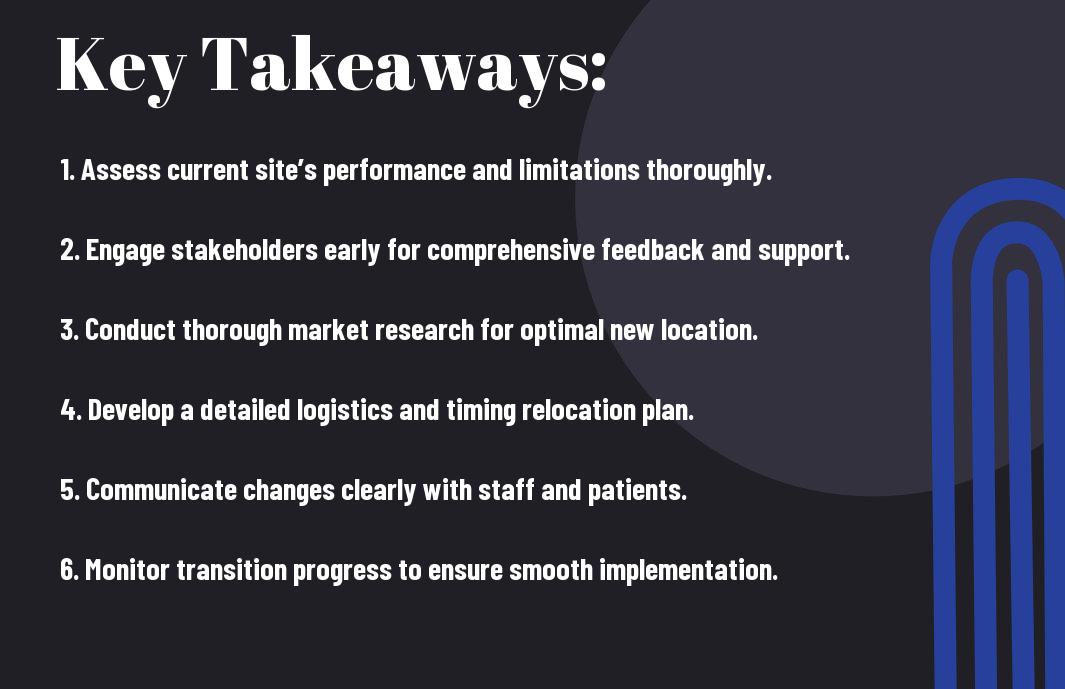
Presently, executing a successful medical practice relocation requires a strategic approach that encompasses thorough planning and effective execution. You should focus on understanding your needs, assessing potential locations, and ensuring a seamless transition for your staff and patients. By prioritizing communication and leveraging technology, you can minimize disruptions and enhance patient care during the move. Ultimately, these key strategies will empower you to establish a well-functioning practice in your new location, setting the stage for continued growth and success.