
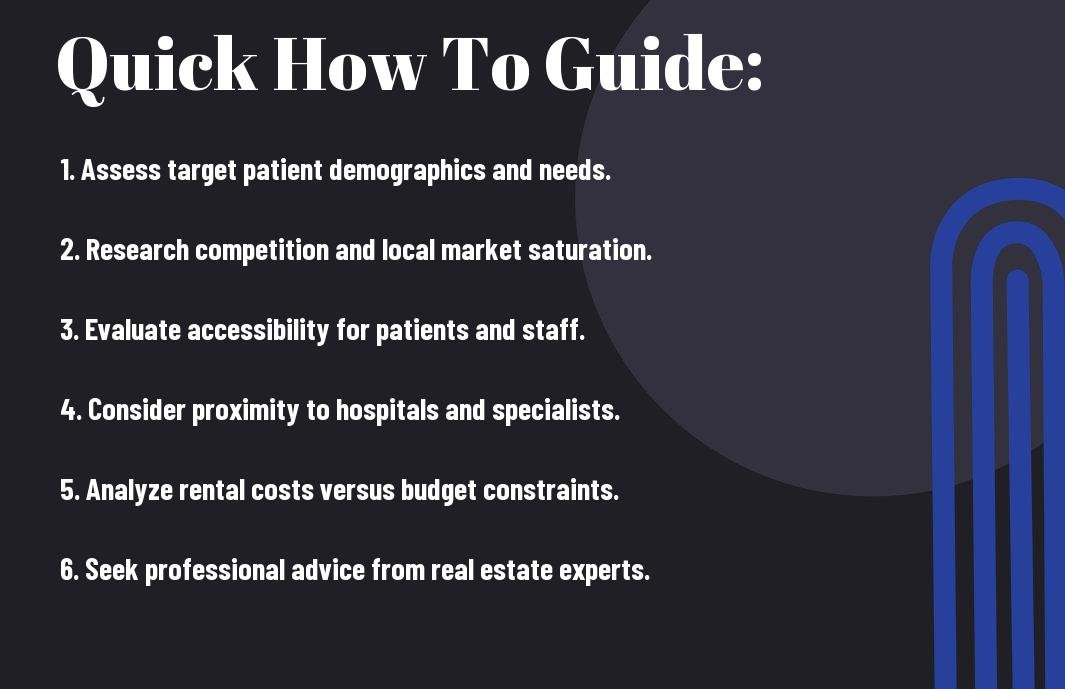
As you consider relocating your medical practice, you face a significant decision that will impact your business’s success. You need a location that supports your growth, is accessible to your patients, and aligns with your practice’s unique needs. You will evaluate factors such as demographics, competition, and local regulations to find the ideal spot. By following a thoughtful approach, you can make an informed decision and set your practice up for long-term success in its new location.
Understanding Key Factors in Location Selection
Your medical practice’s success relies on careful location selection. Consider:
-
- Accessibility
- Demographics
- Local regulations
Thou shall prioritize these factors to ensure a thriving practice.
Identifying Target Patient Population
Whilst selecting a location, you need to consider the population density and demographics to ensure your practice aligns with the local community’s needs.
Analyzing Competition and Market Demand
You must assess the competition and market demand in your desired location to determine the viability of your practice.
Market analysis is vital to understanding the demand for medical services in your desired location. You will need to assess the number of existing medical practices, their specialties, and the population’s healthcare needs to identify gaps in the market and potential opportunities for your practice to thrive. By conducting thorough market research, you can make informed decisions about your practice’s location and increase your chances of success.
Evaluating Accessibility and Visibility
One of the key factors to consider when choosing a location for your medical practice is its accessibility and visibility to your patients. You want to ensure that your practice is easily accessible and visible to attract and retain patients.
Proximity to Hospitals and Medical Facilities
Facilities such as hospitals, pharmacies, and laboratories are imperative for a medical practice, and being close to them can be beneficial for your patients. You should consider the proximity of your practice to these facilities when making your decision.
Accessibility by Public Transportation
For patients who rely on public transportation, having a practice that is easily accessible by bus or train is vital. You should consider the public transportation options available in the area and how they will affect your patients’ ability to visit your practice.
Evaluating the accessibility of your practice by public transportation involves checking the route options, frequency of services, and proximity of stops to your practice. You can use online mapping tools or visit the location in person to get a better understanding of the public transportation options available, and how they will impact your patients’ experience and your practice’s overall success.
Assessing Financial and Operational Considerations
Clearly, when relocating your medical practice, you need to consider the financial and operational aspects of your new location. You should evaluate costs, such as rent, utilities, and equipment, to ensure they fit within your budget. This assessment will help you make an informed decision about your new practice location.
Lease vs. Purchase Options for Medical Offices
Evaluating your options for leasing or purchasing a medical office space is imperative. You should consider factors such as long-term costs, flexibility, and control over the property when making your decision. This will help you choose the best option for your practice’s needs.
Budgeting for Renovations and Equipment
To create a comprehensive budget for renovations and equipment, you will need to assess your specific needs and priorities. You should consider the type of equipment and technology required for your practice, as well as any necessary renovations to ensure compliance with medical regulations and accessibility standards. By doing so, you can ensure a smooth transition to your new location and provide the best possible care for your patients.
Considering Regulatory and Compliance Issues
Keep in mind that regulatory and compliance issues can significantly impact your medical practice’s success. You must consider various factors, including zoning laws, healthcare regulations, and HIPAA compliance, to ensure a smooth relocation.
Zoning Laws and Healthcare Regulations
Typically, you will need to verify that your new location complies with local zoning laws and healthcare regulations, which can vary by state and municipality, affecting your practice’s operations and patient care.
Ensuring HIPAA Compliance
Regulatory requirements, such as HIPAA, must be met to protect patient data and maintain confidentiality, and you should assess your new location’s ability to support these standards.
HIPAA compliance is fundamental to your medical practice’s reputation and patient trust, and you will need to evaluate your new location’s physical and technical infrastructure to ensure it supports secure data storage, transmission, and access, allowing you to maintain the highest standards of patient care and confidentiality.
Weighing Quality of Life Factors
All aspects of your life will be impacted by your medical practice’s location. Consider:
-
- Cost of living
- Access to amenities
Any decision you make will affect your overall quality of life.
Lifestyle Considerations for You and Your Staff
Assuming you want the best for your staff, consider their lifestyle needs, such as commute time and access to recreational activities, when choosing a location for your medical practice.
Local Schools and Community Amenities
Your family’s needs, including local schools and community amenities, should be a top priority when relocating your medical practice.
Amenities such as parks, grocery stores, and restaurants can greatly impact your daily life and overall satisfaction with your new location, so you should thoroughly research the area to ensure it meets your needs and the needs of your staff and their families.

Effective Tips for a Smooth Relocation
Once again, planning is key to a successful relocation. You will want to consider the following:
-
-
- assessing your practice’s needs
- evaluating potential locations
-
. Perceiving the relocation process as an opportunity for growth will help you navigate the challenges that come with it.
Creating a Relocation Timeline
Timing is everything when relocating your medical practice. You should establish a clear timeline, set milestones, and prioritize tasks to ensure a seamless transition, allowing you to focus on your patients and your business.
Managing Patient Transitions and Record Keeping
There’s a lot to consider when managing patient transitions and record keeping during a relocation. You will need to ensure that all patient records are transferred securely and efficiently, and that your patients are informed about the relocation.
Transitions can be challenging for your patients, so it’s imperative that you communicate clearly and regularly with them throughout the relocation process. You should inform them about the new location, updated contact information, and any changes to your practice’s services or hours of operation, ensuring that they feel supported and informed every step of the way.
Conclusion
Taking this into account, you will be well-equipped to choose the perfect location for your medical practice. You should consider factors like accessibility, competition, and local demographics to ensure your practice thrives. By weighing your options carefully, you can make an informed decision that supports the growth and success of your business, ultimately benefiting your patients and your career as a medical professional. You will set your practice up for long-term success by choosing a location that meets your needs.
FAQ
Q: What are the key factors to consider when selecting a new location for my medical practice?
A: When relocating your medical practice, it’s important to consider several factors, including accessibility, demographics, and competition. Accessibility refers to the ease with which patients can reach your practice, including factors such as parking, public transportation, and proximity to other healthcare services. Demographics involve understanding the age, income, and health needs of the local population to ensure your practice can provide relevant services. Additionally, assessing the competition in the area will help you determine if there’s a need for your specialty and if you can effectively market your practice to attract patients.
Q: How do I evaluate the local healthcare market and identify areas of need?
A: To evaluate the local healthcare market, start by researching the area’s healthcare landscape, including the number of existing medical practices, hospitals, and specialty services. You can use online directories, such as the American Medical Association’s DoctorFinder, to get an idea of the number of physicians in the area and their specialties. Additionally, review local health statistics, such as disease prevalence and health outcomes, to identify areas of need. You can also network with other healthcare professionals, attend local medical meetings, and participate in community events to gain insight into the local healthcare market and identify gaps in services that your practice can fill.
Q: What role does zoning and regulatory compliance play in choosing a location for my medical practice?
A: Zoning and regulatory compliance are vital considerations when selecting a location for your medical practice. You’ll need to ensure that the location is zoned for medical use and complies with local regulations, such as those related to signage, parking, and accessibility. You’ll also need to obtain any necessary permits and licenses to operate a medical practice in the area. It’s a good idea to consult with a commercial real estate agent or attorney who is familiar with local zoning and regulatory requirements to ensure that your chosen location meets all the necessary criteria, avoiding potential delays or costly modifications to the property.