Many individuals face the daunting task of relocating for medical reasons, whether it’s for treatment or to be closer to specialized facilities. Having professional support during this process not only eases logistical challenges but also ensures your focus remains on health and well-being. Understanding how to navigate the complexities of medical relocation can help you avoid common pitfalls and streamline your move, enabling you to transition smoothly and get the care you need without unnecessary stress. Discover why enlisting expert assistance can make all the difference in your relocation journey.
Understanding Medical Relocation
For many, medical relocation involves moving to a new location specifically for healthcare services or treatment. This process often includes transitioning not only your home but also your healthcare providers, insurance needs, and even the way you manage your medical records. Understanding the nuances of medical relocation can greatly impact your overall experience, making it necessary to approach the process with clarity and professionalism.
Definition and Scope
After defining medical relocation, it’s important to recognize that it encompasses various aspects, including the logistics of moving, the continuity of care, and adapting to a new healthcare environment. It can involve relocating for specialized treatments, long-term care accommodations, or even routine check-ups in a more accessible location, making it a complex but necessary endeavor for many individuals.
Common Challenges Faced
At times, you may encounter various challenges during your medical relocation journey. Issues regarding insurance coverage, finding new healthcare providers, and managing medical records can be overwhelming. You might also struggle with the emotional stress of leaving familiar surroundings while adapting to new facilities and healthcare systems.
Relocation often presents emotional and logistical hurdles. You may find it difficult to navigate the insurance implications of your move, decipher the local healthcare options, and ensure continuity of your care. Additionally, transitioning medical records to new providers can be a time-consuming process that adds to your stress. Adapting to a new community, including understanding the local healthcare landscape and finding the right support networks, can also pose challenges. A well-structured plan and professional support can significantly ease these burdens, allowing you to focus on your health instead of the complexities of relocation.
The Role of Professional Support
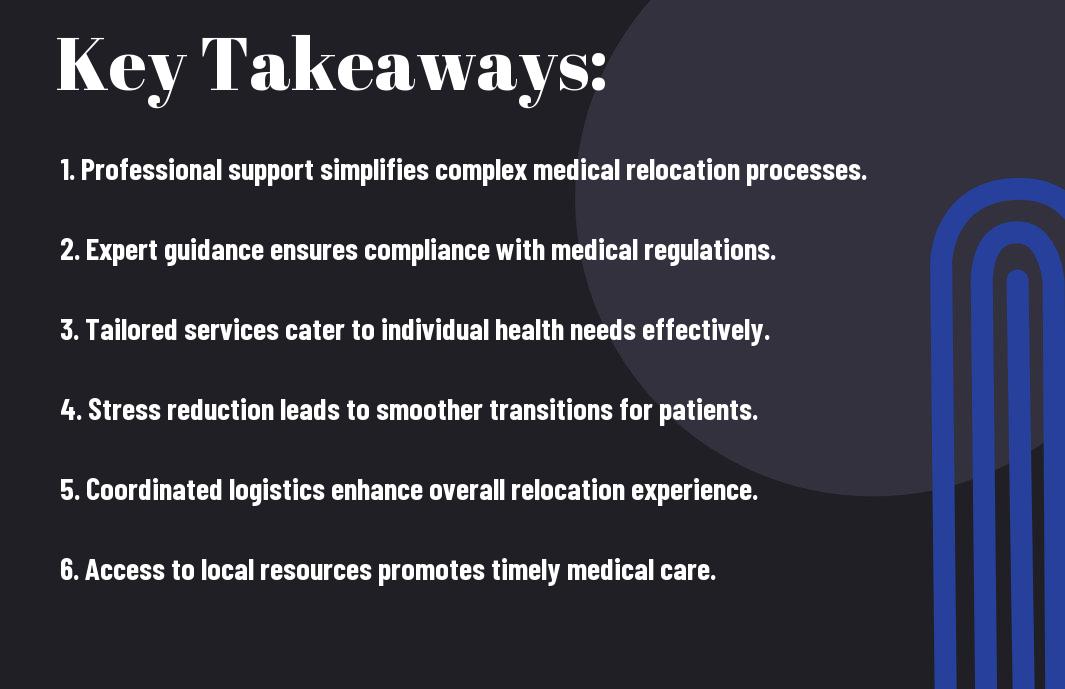
If you’re considering a medical relocation, professional support can significantly ease the process. Experts in this field can provide tailored assistance that caters specifically to your needs, ensuring a smoother transition. With their in-depth knowledge and resources, you can focus on your wellness while they manage the logistics of your move.
Types of Professional Services
Beside planning your move, various services are available to streamline the process:
| Type of Service | Description |
|---|---|
| Medical Coordination | Arranging appointments and referrals in your new location. |
| Logistical Support | Managing transportation and packing of medical equipment. |
| Housing Assistance | Helping find suitable accommodations near medical facilities. |
| Legal Guidance | Assisting with paperwork related to healthcare access. |
| Follow-Up Services | Ensuring continuous support post-move. |
Thou can feel confident knowing each aspect of your relocation is handled by skilled professionals.
Benefits of Engaging Experts
Behind the convenience and expertise of professional support lies the significant advantage of tailored assistance that meets your unique needs. Engaging experts not only saves you time but also alleviates stress; they handle complex tasks that allow you to focus on your health and recovery during this transitional phase.
To further understand the benefits, consider that professionals have established networks and systems in place to tackle any challenges that may arise. Whether it’s communication with healthcare providers or securing necessary resources, these experts carry the responsibility, allowing you to maintain peace of mind. Their involvement usually results in a much smoother, more efficient relocation process, empowering you to prioritize your well-being every step of the way.

Planning Your Medical Move
After deciding to relocate for medical reasons, the planning phase is imperative to ensure a smooth transition. It’s important to consider all aspects of your move, from finding suitable medical facilities to coordinating transportation and housing. Organizing your tasks methodically will alleviate stress, allowing you to focus on your health and well-being during this pivotal time.
Creating a Comprehensive Checklist
Among the best strategies for an efficient move is to create a comprehensive checklist. This list should include all tasks, such as researching new medical providers, arranging transportation, packing your belongings, and notifying your current healthcare providers. By having a detailed checklist, you can track your progress and ensure nothing is overlooked, leading to a smoother relocation experience.
Timelines and Scheduling
An effective timeline is key to managing your medical move. This means setting realistic deadlines for each task and prioritizing your goals based on urgency. Your move should balance the timing of medical appointments with logistical arrangements to meet your needs adequately.
But developing a timeline requires careful consideration of various factors, such as when to begin your search for new healthcare providers, scheduling moving dates, and allowing time for necessary medical check-ups before your departure. A well-structured timeline will help you avoid unnecessary delays and ensure you have ample time for imperative medical appointments, ultimately leading to a hassle-free relocation process.
Legal Considerations
All aspects of medical relocation require careful consideration of legal matters, including contracts, insurance, and immigration requirements. Engaging professional support can help you navigate these complexities, ensuring that you fulfill all necessary obligations and understand your rights throughout the relocation process. Having a knowledgeable advocate on your side will provide peace of mind and help you avoid potential pitfalls.
Navigating Regulatory Requirements
Below, you will find vital insights on navigating the complex regulatory landscape associated with medical relocation. Each region may have unique rules governing healthcare services, medical licensing, and patient rights. Seeking expert assistance will enable you to comprehend these regulations and comply with them effectively, ensuring a smooth transition.
Ensuring Compliance with Health Standards
With your focus on relocating, ensuring compliance with health standards is vital to protecting yourself and your wellbeing during the move. This involves familiarizing yourself with the health regulations set forth by both your destination and your current location.
Regulatory bodies often establish comprehensive health standards that must be adhered to during your relocation. You should take the time to research requirements around medical facilities, patient care, and emergency procedures in your new environment. Partnering with professionals who specialize in medical relocation can guide you in ensuring that all standards are met, preventing potential issues that may arise due to noncompliance, and ensuring a safe relocation process for you and your family.
Emotional and Psychological Aspects
Unlike traditional moves, medical relocations often come with heightened emotional and psychological challenges. The uncertainty of unfamiliar surroundings, coupled with the pressure of managing health-related issues, can lead to increased anxiety and stress. Recognizing these emotions is a vital step in navigating your move successfully, as it allows you to address them proactively and seek the necessary support for a smoother transition.
Coping with the Stress of Relocation
After relocating for medical reasons, it’s necessary to acknowledge the stress that may accompany this significant life change. It can be overwhelming to adapt to a new environment while juggling health considerations. Establishing a routine, practicing mindfulness, and utilizing relaxation techniques can help mitigate stress and facilitate a smoother adjustment process.
Support Networks and Resources
Behind every successful relocation is a robust support network that can make a significant difference in your experience. Engaging friends, family, and professional services can provide you with emotional backing and practical assistance throughout your move. Having trusted individuals around you can alleviate feelings of isolation and bolster your confidence as you navigate your new surroundings.
Understanding the resources available to you can amplify your relocation experience. Local support groups, counseling services, and community organizations offer invaluable connections and services tailored to those undergoing medical relocations. Engaging with these resources not only provides necessary logistical assistance but also fosters a sense of belonging, helping you to maintain emotional well-being as you adapt to your new environment.
Case Studies and Success Stories
Many individuals have benefitted from professional support during their medical relocations. Here are some compelling case studies that showcase the transformative impact of expert assistance:
- Client A: Relocated from Chicago to Los Angeles, resulting in a seamless transition and a 25% reduction in relocation stress.
- Client B: Moved internationally from London to Sydney, achieving a 30% faster integration into a new healthcare system.
- Client C: Shifted their medical practice from New York to Miami, leading to a 15% increase in patient retention within the first three months.
- Client D: Successfully navigated regulatory complexities in a relocation from Toronto to Vancouver, avoiding potential setbacks in the process.
Real-Life Examples of Successful Moves
About these case studies, they highlight tangible results, such as improved logistical coordination and enhanced adaptability during the transition process. Each story illustrates how professional support can lead to smoother relocations and significant personal and professional enhancements.
Lessons Learned from Challenges
Below, you will find insights from those who faced obstacles during their medical relocations. Understanding these challenges can empower you to better prepare for potential issues.
Successful relocations often come with unforeseen challenges, such as delays in paperwork or difficulties in establishing a new support network. These experiences underscored the importance of proactive planning and having a dedicated team on your side to navigate complexities. By learning from past moves, you can implement strategies that help mitigate similar issues in your future relocation, ensuring a smoother experience overall.
To wrap up
The importance of professional support in medical relocation cannot be overstated. Engaging experts can streamline your move, providing you with the guidance necessary to navigate complex logistics, paperwork, and healthcare arrangements. By relying on professionals, you ensure that your transition is as efficient and stress-free as possible, allowing you to focus on your health and well-being. Ultimately, securing the right support means you can relocate with confidence, knowing that every detail is handled with expertise and care.