
Over the course of your medical practice move, ensuring seamless patient care is vital to maintaining your practice’s reputation and trust. Transitioning to a new location doesn’t have to disrupt your services or negatively impact your patients’ experiences. In this blog post, you’ll discover effective strategies to facilitate smooth transitions, minimize patient inconvenience, and keep your operations running seamlessly. Implementing these insights will not only enhance your patients’ experience but also strengthen their loyalty during this significant change.
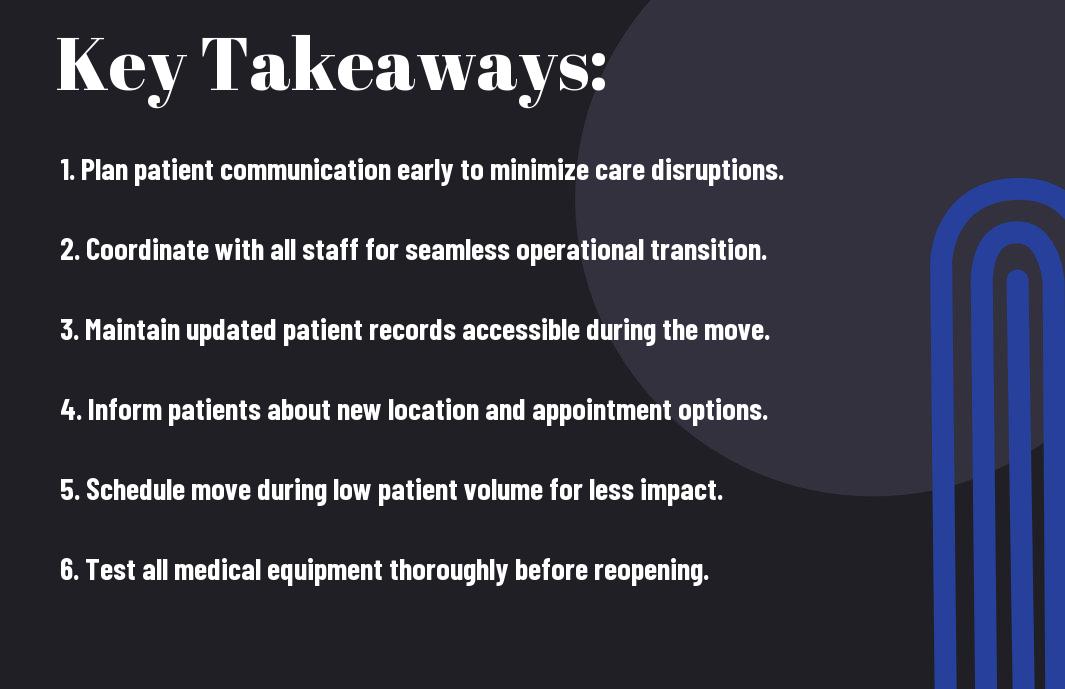
Crafting a Comprehensive Transition Plan
A well-structured transition plan is necessary to maintain continuity of care during your medical practice move. This document should outline every step of the process, from notifying patients to establishing new practices at your new location. Ensuring that all aspects of the move are planned and communicated effectively minimizes disruptions and helps maintain trust with your patients and staff alike.
Identifying Key Stakeholders and Responsibilities
Identifying who will play pivotal roles in the transition can streamline your move significantly. Assign responsibilities to key stakeholders, such as administrative staff, healthcare providers, and IT professionals, ensuring that everyone understands their tasks. Regular meetings can keep your team aligned and aware of each phase of the planning and execution process.
Timeline Development for a Seamless Move
Developing a detailed timeline is necessary for orchestrating a smooth transition. Start by breaking down the overall move into manageable phases, each with specific deadlines. Include key milestones such as patient notification, the physical move date, and the setup of new facilities. This timeline serves as a guide, ensuring that necessary actions are completed on time.
Effective timeline development involves creating a Gantt chart or checklist that outlines each task required for the move, from hiring movers to setting up equipment at the new site. Engaging your team in this process allows for realistic estimations, encouraging accountability as everyone tracks their progress. For instance, if you allocate two weeks for IT setup, monitor the completion of necessary installations to avoid delays that could disrupt patient services. By visualizing your timeline, you gain clarity on overlapping tasks, resource allocation, and critical deadlines, ultimately fostering a structured approach to your practice relocation.

Communication Strategies to Ease Patient Anxiety
Addressing patient anxiety during your practice move requires effective communication strategies. Keeping your patients informed consistently eases uncertainty and fosters trust. Transparency about the move’s timeline, reasons, and benefits will help to alleviate any concerns they may have regarding continuity of care. Use a combination of direct communication and modern technologies to ensure your patients receive timely updates and feel valued throughout the transition process.
Proactive Patient Notifications and Updates
Stay ahead of patient worries by sending out proactive notifications about the move. Utilize email newsletters, text alerts, and social media updates to keep your patients informed about the timeline, new location, and any changes in appointment scheduling. A well-timed message can convey reassurance and help patients mentally prepare for the transition to your new practice location.
Utilizing Digital Platforms for Transparency
Digital platforms are vital tools for enhancing transparency during your move. Creating a dedicated page on your practice’s website that outlines pertinent information about the relocation can streamline communication. Use videos, FAQs, and detailed maps to guide patients through the transition. Encourage interaction by implementing feedback forms, allowing them to voice any concerns which you can promptly address. Engaging patients through technology not only keeps them informed but fosters a sense of community and continuity during your transition.
Minimizing Disruption through Strategic Scheduling
Implementing a strategic scheduling system during your move is necessary for maintaining a steady flow of patient care. By carefully planning your transition timeline and establishing clear communication with your staff and patients, you can minimize disruptions. This may involve appointing dedicated staff members to manage the scheduling process, ensuring that existing appointments are honored while also accommodating new patients in a manner that keeps service interruptions to a minimum.
Phased Relocation to Alleviate Patient Load
Adopting a phased relocation approach allows you to spread the move over several stages, effectively reducing your patient load during the transition. This can mean moving one department at a time, which ensures necessary services remain operational throughout the process. As a result, your staff can focus on providing high-quality care without overwhelming them during a singular, large-scale relocation event.
Flexible Appointment Systems During Transition
Incorporating flexible appointment systems can further ease the burden on both your staff and patients during the transition phase. Utilizing online booking tools that allow patients to reschedule appointments easily can reduce the number of missed or overlapping appointments. This adaptability not only maintains patient satisfaction but also keeps your operations running smoothly as you navigate the complexities of moving. Additionally, consider offering telehealth options for certain consultations, which can help you manage patient flow more effectively.
Streamlining Operations with Technology Solutions
Implementing technology solutions can significantly enhance the operational efficiency of your practice during the transition. Utilizing the right tools streamlines workflows, enabling your team to focus on patient care rather than administrative tasks. From scheduling to billing, technology aids in minimizing disruptions, ensuring that patient services continue seamlessly despite any relocation challenges.
Leveraging EHR Systems for Continuity of Care
EHR systems play a pivotal role in maintaining continuity of care during a practice move. These platforms store comprehensive patient records, allowing you and your staff to access critical information in real time. Transitioning your data efficiently ensures that all patient histories, treatments, and necessary follow-ups are preserved, which can significantly contribute to patient satisfaction and outcomes.
Integrating Telehealth Options to Maintain Accessibility
Telehealth solutions provide an effective way to engage patients during your move. By offering remote consultations, you can alleviate any concerns regarding access to care while minimizing disruption. This flexibility allows you to maintain regular contact with patients, ensuring they receive timely advice and support throughout the transition period.
Integrating telehealth not only caters to patients who may find it challenging to visit your new location but also expands your reach to a broader audience. By offering virtual visit options, you accommodate the needs of those with mobility issues, hectic schedules, or residing in remote areas. Additionally, telehealth visits can help address non-urgent issues promptly, thus preventing overcrowding and ensuring your practice runs smoothly. This dual approach—face-to-face care coupled with virtual options—not only preserves relationships with existing patients but can also attract new ones who appreciate the convenience and accessibility of comprehensive care.
Preparing Your Team for Change
Transitioning into a new facility involves more than just moving furniture; it requires full engagement from your team. Prepare your staff by clearly communicating the vision behind the move and the benefits it offers, alleviating concerns about job security and role changes. Involve them in the process to foster a sense of ownership and commitment to the new environment, which will facilitate a smoother transition for everyone involved.
Training and Orientation for New Facilities
Effective training is vital for ensuring that your team is familiar with the new space and its resources. Conduct orientation sessions to introduce staff to the new layout, including key areas like exam rooms, break areas, and emergency exits. Incorporating hands-on training activities will build confidence and enhance efficiency as employees acclimate to their new surroundings.
Enhancing Team Cohesion During Transitions
Fostering team cohesion during a move can significantly impact morale and collaboration. Organize team-building activities that encourage bonding, such as group outings or shared meals in the new facility. These experiences help establish new connections among staff members as they navigate the challenges of change together, ultimately fostering a supportive culture in the workplace.
Team-building activities, such as collaborative workshops or informal gatherings, promote open communication and camaraderie. Consider setting up regular check-ins, where team members discuss their feelings about the transition and voice their insights. Establishing a buddy system can also help experienced staff support those who may feel uncertain in the new setup. Strengthening these interpersonal relationships contributes to a resilient, cohesive team prepared to deliver exceptional patient care amidst change.
Final Words
With these considerations, you can ensure that your medical practice move is as seamless as possible while prioritizing patient care. By planning each step carefully, communicating effectively with your team and patients, and utilizing technology to streamline processes, you can maintain continuity in your services. Focus on fostering relationships and reassuring your patients throughout the transition. This proactive approach will not only facilitate a smoother relocation but also strengthen trust and loyalty within your practice.