
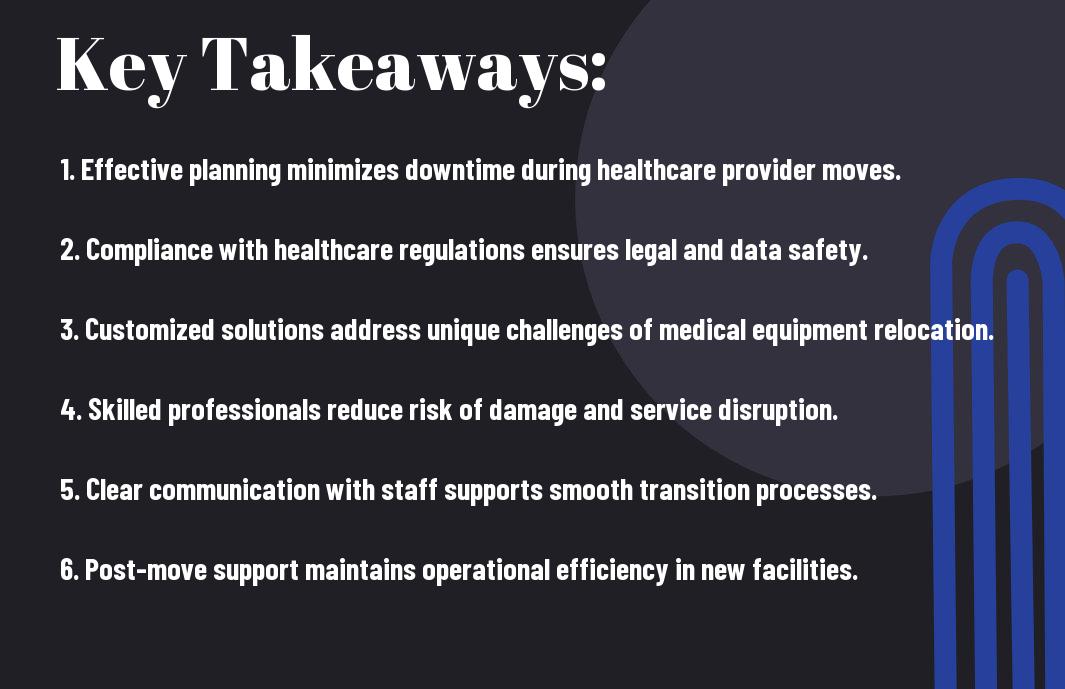
Solutions for healthcare provider moving can be intricate and overwhelming, but understanding the key elements can simplify the process for you. As you initiate on this journey, it’s vital to grasp what factors influence a successful relocation, from logistics and regulatory requirements to the impact on patient care. In this blog post, you will gain insights and practical tips to ensure that your move is efficient and addresses the unique challenges faced by healthcare providers. Let’s examine into the vital steps to facilitate a seamless transition that meets your needs.

Understanding Healthcare Provider Moving Solutions
As the healthcare industry continually evolves, understanding the intricacies of healthcare provider moving solutions becomes crucial for ensuring seamless transitions. These solutions cater specifically to the needs of medical professionals and facilities, addressing everything from equipment relocation to staff coordination. By familiarizing yourself with these services, you can significantly enhance the efficiency of your moving process, preventing disruption in patient care and services during transitions.
Types of Moving Solutions
There are various types of moving solutions tailored for healthcare providers, each serving distinct purposes and requirements. These include:
- Complete facility relocations
- Specialized medical equipment handling
- Temporary storage solutions
- Staff training and support during transitions
- Sustainable disposal of old equipment
Assume that having a clear understanding of these options will help you determine which solutions best suit your specific needs.
| Type of Solution | Description |
| Complete Facility Relocation | Involves moving entire healthcare facilities to new locations. |
| Specialized Equipment Handling | Focuses on safely transport and setup of medical equipment. |
| Temporary Storage Solutions | Provides secure storage for equipment and supplies during the move. |
| Staff Support | Offers assistance in training staff for new systems and setups. |
| Sustainable Disposal | Ensures safe and eco-friendly disposal of outdated equipment. |
Key Considerations for Providers
Solutions for navigating the complexities of healthcare provider moving should focus on specific needs and potential challenges. You must assess the scope of your move, including timelines, specialized equipment, and patient care continuity. Effective communication with all stakeholders is fundamental, ensuring that everyone involved is on the same page throughout the process. Additionally, adapting to new regulations and maintaining compliance should be top priorities as you strategize your relocation.
Types of moving solutions can significantly impact your relocation’s success. By evaluating your requirements against available options, you can choose the best fit for your situation. Engaging with experienced professionals who understand the healthcare sector will help you anticipate challenges, leverage practical solutions, and ensure compliance with industry regulations. Prioritize detailed planning and involve all necessary parties for a smooth transition.
Challenges in the Movement of Healthcare Providers
Clearly, the movement of healthcare providers presents several challenges that can significantly impact the efficiency and continuity of patient care. From navigating regulatory landscapes to managing logistical hurdles, you must be well-versed in these complexities to ensure a smooth transition. Addressing these challenges effectively not only safeguards your professional responsibilities but also enhances the experience for both employees and patients alike.
Regulatory Compliance
After considering the logistical aspects, you must also prioritize understanding the regulatory requirements relevant to healthcare provider movements. Different jurisdictions have varying accreditation standards and legal obligations, so it’s important to ensure that your organization complies with all local, state, and federal regulations. This proactive approach protects your practice and ensures seamless service delivery during the transition.
Logistics and Timing
Between managing schedules and resource allocations, logistics and timing are significant factors in moving healthcare providers smoothly. The need for effective communication and strategic planning cannot be understated, as missteps in this area can lead to disruptions in operations and patient care.
This is where careful planning and coordination come into play. You should develop a comprehensive timeline, taking into account not only the physical moving of providers but also the timing of patient appointments and staff availability. Having a well-organized logistics plan helps to minimize downtime and ensures that all necessary resources are in place for a swift transition. Consider utilizing project management tools to keep everything on track and communicate regularly with your team to address any potential issues proactively.
Best Practices for Executing a Move
All healthcare providers should approach the moving process with a well-structured plan to minimize disruption. By adhering to best practices, you can ensure a smooth transition and maintain quality care. Prioritizing communication, timeline adherence, and stakeholder involvement will help you avoid common pitfalls during the relocation process.
Pre-Move Planning
Best practices begin with extensive pre-move planning. You should identify key personnel, establish a moving timeline, and create a detailed inventory of equipment and supplies. Involving your team in the planning process not only fosters collaboration but also addresses any challenges proactively.
Post-Move Integration
For a successful transition, focus on post-move integration. Evaluating your systems and processes in the new location is imperative for maintaining productivity and effectiveness. Ensuring staff training and setting up efficient workflows will help you reestablish normal operations swiftly.
In addition, you should prioritize feedback from your team during the post-move phase. Engaging them in discussions about the relocation experience can uncover valuable insights that may enhance operations. Assessing technology functioning and addressing any logistical issues will help you refine processes, enabling a seamless integration into your new space.
Impact of Technology on Moving Solutions
Despite the traditional challenges associated with healthcare provider moving solutions, technology has drastically transformed the process. Innovative tools and platforms streamline logistics, enhance communication, and facilitate seamless transitions, making your relocation smoother and more efficient. By integrating technology, you can minimize downtime and maintain a high standard of patient care during the move.
Digital Tools and Software
Digital solutions are reshaping the way healthcare providers manage their moving logistics. Software designed for inventory tracking, scheduling, and project management allows you to stay organized and informed throughout the relocation process. By utilizing these digital tools, you can enhance collaboration among your team and ensure that every step of your move is meticulously planned and executed.
Virtual Coordination
Among the various advancements in technology, virtual coordination stands out as a game changer for healthcare provider relocations. This approach enables different stakeholders to collaborate remotely, ensuring that communication flows seamlessly throughout the project. With virtual coordination tools, you can easily connect with team members, vendors, and other parties involved in the move, all while maintaining the operational efficiency necessary in a healthcare environment.
Impact of virtual coordination extends beyond just communication; it also helps maintain flexibility during the move. You can schedule virtual meetings and updates to address any concerns or changes in plans promptly. This real-time interaction not only promotes transparency but also empowers you to make timely decisions that can significantly influence the success of your relocation. By embracing virtual coordination, you enhance teamwork and streamline the moving process, allowing for a swift adjustment to any unexpected challenges that may arise.
Case Studies: Successful Healthcare Moves
Unlike many sectors, healthcare provider relocations require meticulous planning and execution. Here are some exemplary case studies highlighting successful moves:
- Case Study 1: A 300-bed hospital increased patient satisfaction by 25% after relocating to a state-of-the-art facility within 8 months.
- Case Study 2: A multi-specialty clinic reduced downtime by 40% through a phased move strategy, maintaining patient care continuity.
- Case Study 3: An outpatient center improved operational efficiency by 30% by integrating advanced technology during its relocation.
- Case Study 4: A small practice successfully relocated to a larger space, doubling its patient intake over the following year.
Strategies That Worked
Successful healthcare moves necessitated dedicated strategies like comprehensive communication plans, phased relocation processes, and staff engagement initiatives, ensuring minimal disruption while maximizing efficiency.
Lessons Learned
Around many successful relocations, challenges surfaced that provided valuable insights for future moves. Effective preparation was key in mitigating risks and ensuring that everything went smoothly.
Hence, understanding the importance of stakeholder involvement became evident, as collaboration among staff and leadership led to enhanced communication and problem resolution. Additionally, investing in technology and keeping an open line of feedback contributed to refining strategies for subsequent moves. The journey highlighted the necessity of adaptability, allowing healthcare providers to respond dynamically to unforeseen challenges and incorporate lessons into future operations.
Resources and Support for Healthcare Providers
Now that you understand the complexities of healthcare provider moving solutions, it’s crucial to explore available resources and support. These can streamline your transition, providing guidance that is specifically tailored to your unique needs. Utilizing the right tools and networks can significantly ease the process, helping you make informed decisions for a successful relocation.
Consulting Services
Among the most effective resources are consulting services that specialize in healthcare provider transitions. These professionals offer valuable insights, strategies, and hands-on support to navigate the intricacies of your move. Engaging an expert can help you identify potential challenges, mitigate risks, and create a comprehensive plan tailored to your organization.
Industry Associations
Around the healthcare sector, various industry associations serve as vital resources. These organizations offer networking opportunities, educational materials, and industry-specific best practices that can inform your moving strategy. Joining these associations not only expands your knowledge but also connects you with peers facing similar challenges.
At many industry associations, you can access educational programs, webinars, and resources designed to address the specific concerns of healthcare providers during transitions. They often provide up-to-date information on regulations and standards that can influence your move. Additionally, being part of such an association allows you to engage in discussions, share experiences, and seek advice, fostering a sense of community as you navigate your relocation journey.
Final Words
To wrap up, navigating the complexities of healthcare provider moving solutions requires you to be well-informed and proactive. You should assess your specific needs, understand the logistics involved, and explore various providers to find the best fit for your situation. By doing thorough research and asking the right questions, you can streamline the moving process and ensure a smooth transition for your healthcare practice. Ultimately, your preparation will play a significant role in achieving a successful relocation.