

Just assess provider credentials, insist on clear contracts, coordinate housing and licensure timelines, and use dedicated case managers so you get predictable costs, minimized downtime, and swift practice setup.
Identifying Specialized Physician Requirements
When you document specialty privileges, equipment and technology needs, call schedules, and onboarding milestones, relocation teams can tailor logistics to align clinical readiness with credentialing and patient care expectations.
Aligning clinical start dates with move logistics
Plan clinical start dates around licensing, privileging, and housing timelines so you avoid coverage gaps; have relocation providers coordinate temporary housing and equipment staging to match your orientation and credential completion.
Prioritizing family and lifestyle preferences
Consider family schooling, partner career needs, commute tolerance, and community amenities so you can choose housing that preserves family stability while meeting clinical commitments.
You should share spouse job preferences, children’s school requirements, pet needs, and social supports early; relocation services can research districts, job leads, childcare options, and neighborhood safety, then present matched neighborhoods, school comparisons, and transition timelines that reduce stress and speed your family’s adjustment.
Selecting a High-Tier Relocation Partner
Choose a partner with proven medical relocation experience, credentialed staff, clear pricing, and strong references so you can rely on protected patient privacy, licensing assistance, and timely logistics while moving your practice and family.
Evaluating expertise in medical-specific transitions
Verify that the team has handled physician moves, credential transfers, and hospital onboarding; you should review case studies, compliance protocols, and familiarity with board requirements to avoid licensing delays and clinical downtime.
Assessing the scope of concierge-level services
Examine whether services include home and school searches, spouse career support, temporary housing, license and credential management, equipment shipment, and on-site orientation so you can minimize personal disruption and focus on patient care.
Consider the depth of concierge offerings: a dedicated move coordinator, personalized timelines, school and spouse-work assistance, temporary housing options, and handling of medical credential transfers and malpractice coverage. You should verify vendor partnerships for equipment transport, confirm insurance and liability protections, review clear fee structures and relocation allowances, and require post-move follow-up and issue-resolution SLAs to limit interruptions to your clinical schedule and family routines.
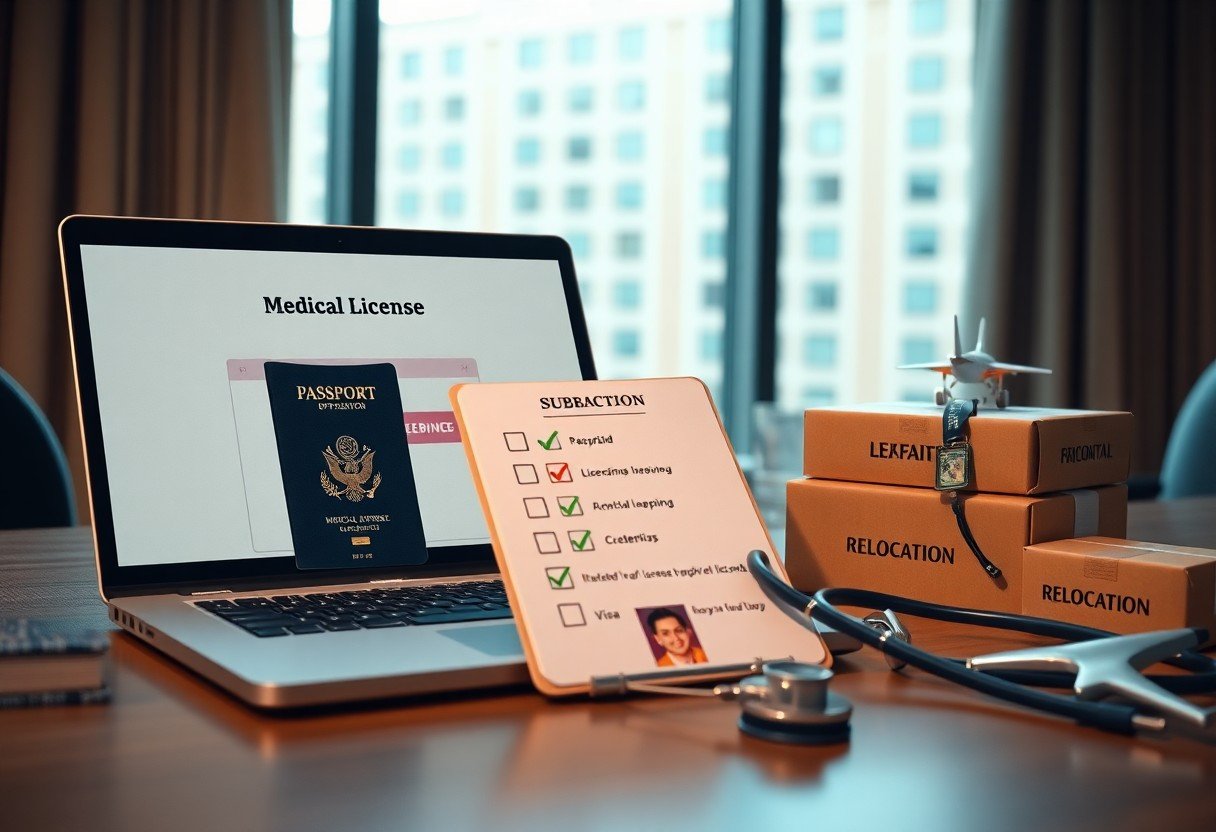
Accelerating Licensing and Credentialing
Licensing timelines shorten when you centralize applications, verify documents early, and use tracking systems to avoid delays that push back start dates.
Utilizing administrative support for state boards
Administrative support handles board communications, credential verifications, and submission nuances so you can focus on patient care and quick onboarding.
Minimizing clinical downtime through proactive filing
Filing key licenses and payer enrollments ahead of deadlines reduces gaps in your clinical schedule and preserves income while credentialing completes.
Plan a timeline that maps license expirations, hospital privileging steps, and payer requirements; assign an administrator to track forms, secure notarizations and originals, submit early, and conduct timely follow-ups so you avoid last-minute holds and keep your schedule productive.
Navigating Physician-Centric Real Estate
You should prioritize proximity to hospitals, commute flexibility, and resale potential when evaluating physician-focused properties, balancing practice demands with personal life to protect your time and investment.
Accessing specialized medical mortgage products
Access lenders offering physician mortgage programs that consider residency status, student debt, and signing bonuses so you can secure favorable terms, lower down payments, and smoother qualification.
Targeted neighborhood and education analysis
Evaluate school performance, commute times, and local medical amenities to align family needs with your practice schedule and long-term resale prospects.
Compare micro-neighborhoods, school district boundaries, projected development, and traffic patterns; use enrollment trends, school ratings, commute analytics, and crime statistics so you can forecast demand, prioritize suitable routes to work, and estimate resale value with greater confidence.
Optimizing Relocation Financials and Benefits
You should consolidate moving allowances, sign-on incentives and temporary housing into a single budget, confirm taxable components, and set clear reimbursement timelines to protect your net compensation during transition.
Negotiating comprehensive transition packages
When evaluating offers, prioritize items that increase your take-home pay and long-term stability, request written details for relocation, housing, and CME allowances, and secure flexible repayment terms if a short-tenure clause exists.
Managing tax liabilities and expense tracking
Track reimbursed expenses, fringe benefits and moving deductions separately, retain receipts and employer statements, and consult tax guidance early to avoid unexpected taxable income eroding your relocation value.
Work with a tax advisor to classify costs, distinguish deductible moving expenses from taxable reimbursements, maintain a dated spreadsheet for per-diem, mileage and temporary housing, and confirm employer reports align with what you claim; verify state residency rules and file the appropriate forms to minimize surprises.
Enhancing Long-Term Physician Retention
Retention depends on targeted support that increases physician satisfaction and reduces turnover; you should prioritize career development, housing assistance, and follow-up check-ins to keep clinicians engaged long-term.
Implementing spouse and family integration programs
Spouses and families influence retention; you should offer job-search help, school information, social introductions, and relocation counseling so partners feel supported and settle quickly.
Establishing local community and peer connections
Colleagues and community links shorten isolation; you should coordinate mentorship, peer groups, and neighborhood orientations so doctors build professional and social bonds that increase commitment.
Offering regular social events, specialty-specific case rounds, and online forums helps you integrate physicians quickly; schedule introductions with local leaders, alumni, and allied staff, and track engagement to measure connection strength and adjust programs.
To wrap up
Presently you must assess service credentials, align relocation plans with clinical schedules, secure transparent cost and timeline commitments, coordinate licensing and credential transfers, and require post-move follow-up to protect continuity of care and maximize return on investment.