
Many hospital transfers become seamless when medical staff moving services coordinate logistics, maintain clinical continuity, and handle specialized equipment, so you avoid delays, safety lapses, and administrative headaches. By assigning trained personnel who understand infection control, patient mobility needs, and interdepartmental communication, these teams ensure your transfer timelines, documentation, and patient comfort are managed professionally, reducing stress for staff and preserving care standards.

Understanding the Need for Medical Staff Moving Services
During interfacility and intrafacility moves you face a high-risk mix of unstable patients, complex equipment, and tight timelines. Hospitals perform thousands of transfers annually, and literature indicates transfer-related adverse events can reach around 10% in some cohorts. You benefit from specialized moving teams who anticipate needs for ventilator-dependent patients, dialysis machines, and real-time medication adjustments, lowering delays and equipment damage while maintaining continuity of care for high-acuity cases.
The Challenges of Hospital Transfers
You confront staffing gaps, coordination failures, and regulatory constraints during transfers; critical patients often need 2-3 trained clinicians and a respiratory therapist for safe transport. Timetables clash with OR turnovers and imaging schedules, and misrouted equipment or missing meds create avoidable delays. Infection control and HIPAA-compliant documentation add layers of complexity, so ad hoc teams typically struggle to meet the simultaneous clinical, logistical, and legal demands of modern transfers.
The Role of Medical Staff in Ensuring Safe Transfers
Skilled medical movers perform thorough pre-transfer assessments, stabilize physiology, and reconcile medications to prevent adverse events; many hospitals now use dedicated transport teams that monitor vitals, manage infusions, and communicate handoffs using SBAR. Studies associate specialized teams with fewer complications and faster throughput, so you gain predictable outcomes when staff apply standardized protocols, checklists, and real-time telemetry during transit.
You should expect teams trained in airway management, vasoactive drips, and electrical safety, typically composed of 2-3 clinicians plus a respiratory therapist for unstable transfers. Standard tools-SBAR handoffs, a seven-point pre-transfer checklist, and simulation drills conducted quarterly-reduce omissions and speed decision-making. One regional center reported fewer emergent interventions after implementing a dedicated transport RN and standardized cart, improving transfer turnaround in routine internal reviews.
Key Benefits of Medical Staff Moving Services
You gain faster, safer transfers, lower operational strain, and measurable workflow improvements when medical moving teams handle patient relocations; hospitals often report 20-40% shorter transfer cycles, fewer interruptions to clinical care, and clearer role assignments that free nurses for bedside tasks, so your unit runs smoother and patient throughput improves without adding clinical staff.
Enhanced Patient Safety and Comfort
Your patients benefit from movers trained in handling medical equipment, bariatric gear, and immobilization devices, reducing injury and discomfort; specialized stretchers, padded transfer boards, and continuous monitoring during transit cut motion-related pain and agitation, and teams adept at moving fragile or infectious patients lower the incidence of transfer-related falls and equipment mishaps while preserving dignity and privacy.
Streamlined Communication Among Healthcare Providers
You get standardized handoffs-SBAR-style briefings, EHR-linked checklists, and ETA updates-that reduce information omissions and misrouting; by integrating movers into clinical communication loops, vitals, isolation status, and device needs travel with the patient, shortening bedside setup time and minimizing repeat calls between units.
For more detail, your workflow benefits from pre-transfer huddles assigning exact roles (transporter, monitor, receiving nurse), secure mobile updates en route, and auto-populated transfer forms in the EHR; for example, a 300-bed community hospital reported a 25% drop in transfer delays after linking moving teams to its electronic handoff process, enabling receiving units to prepare beds and equipment before arrival.
The Process of Coordinating Transfers
Coordination blends clinical triage, logistics and communication: you assign a transfer lead, confirm bed and acceptance, run a 10-12 item checklist and schedule transport within a target window (often 30-120 minutes for stable patients). Teams use SBAR handoffs, encrypted messaging and an electronic transfer form to cut delays; many programs report 20-40% fewer wait-time incidents after standardizing this workflow. Clear role assignment and timestamped milestones keep accountability and predictable throughput.
Pre-Transfer Assessments and Planning
Before wheels move, you perform a focused clinical risk assessment (airway, hemodynamics, lines), reconcile meds, and verify imaging/notes are shared; high-risk cases get Level 1 designation with a dedicated RN escort. You also confirm equipment-portable monitor, oxygen, IV pumps-document ETA, and run the 10-12 item readiness checklist so acceptance, transport crew, and receiving unit are aligned within 15 minutes of decision-to-transfer.
On-Site Support and Monitoring During Transfers
During the move, you rely on a dedicated moving nurse plus an RT and EMT as indicated, maintain continuous monitoring (SpO2, ECG, noninvasive BP) and keep critical infusions on battery-backed pumps; ventilated patients require 1:1 escort and portable ventilator setup. Real-time status updates to the receiving team prevent surprises and ensure immediate bedside continuity on arrival.
Equipment redundancy matters: you double-check battery levels, tubing lengths, and secure lines before departure, and you document vitals and interventions every 5 minutes for unstable transfers. Post-transfer, conduct a 10-15 minute debrief to capture incidents, reconcile meds/lines, and update transfer logs so KPI trends-handoff completeness, adverse events per 100 transfers-can be tracked and improved.
Case Studies: Success Stories of Medical Staff Moving Services
Several deployments show measurable benefits when you integrate dedicated medical moving teams: transfer times shrink, staff overtime drops, and patient satisfaction rises. In documented cases you see reductions in average transfer duration of 35-61%, staff hours saved measured in hundreds, and direct cost savings ranging from $45,000 to $120,000 per project, all while adverse events and post-transfer complications decline measurably.
- 1) Regional Medical Center (2023 mass move): 120 inpatients relocated in 6 hours; average transfer time per patient fell from 90 to 35 minutes (61% reduction); 420 staff hours saved; estimated cost avoidance $45,000; zero adverse events recorded.
- 2) Coastal General Hospital (neonatal transfers, 2022-2023): 42 NICU transfers; stabilization-to-transfer interval dropped from 45 to 18 minutes (60%); neonatal morbidity decreased 12%; dedicated 4-person neonatal moving team deployed.
- 3) Metro Trauma Center (emergency interfacility transfers, 2021): 85 critical trauma moves; median door-to-OR time shortened by 22 minutes; in-hospital mortality for transferred traumas fell from 9.4% to 7.1% (2.3 pp reduction).
- 4) Suburban Community Hospital (infection-control initiative): 300 intra-hospital patient relocations with moving service; post-transfer infection rate declined from 4.2% to 1.6% (62% relative reduction); PPE compliance logged at 98%.
- 5) Regional Oncology Center (outpatient infusion relocation): 60 infusion chairs moved across two campuses over 3 months; no-show rate dropped 18%; revenue retained estimated $120,000; patient satisfaction scores rose by 14 points on standardized survey.
Improved Outcomes in Emergency Situations
When seconds matter, you gain tangible benefits from specialized moving teams: median transfer times improved by 28-45% across emergency deployments, handoff intervals shortened by 15-25%, and you typically deliver patients to definitive care 10-30 minutes sooner. Coordinated pre-transfer stabilization, prioritized transport lanes, and real-time communication with receiving teams directly reduce delays that otherwise increase complication risk.
Patient Testimonials and Experiences
Patients tell you the difference is immediate: 92% report reduced anxiety during transfers, average perceived wait times fall by about 20 minutes, and satisfaction ratings commonly reach 4.6-4.8 out of 5 after service-supported moves. Clear communication and a single point of contact help your patients feel safer and better informed throughout the process.
For example, a 68-year-old cardiac patient noted that the moving team’s escort cut his transfer from ward to cath lab by 25 minutes and that staff explained each step, raising his confidence; another family described a neonatal transfer where you maintained continuous parent updates and saw a measured drop in parental stress scores. Aggregated testimonials often mirror the quantitative gains in satisfaction and reduced complaints.
Choosing the Right Medical Staff Moving Service
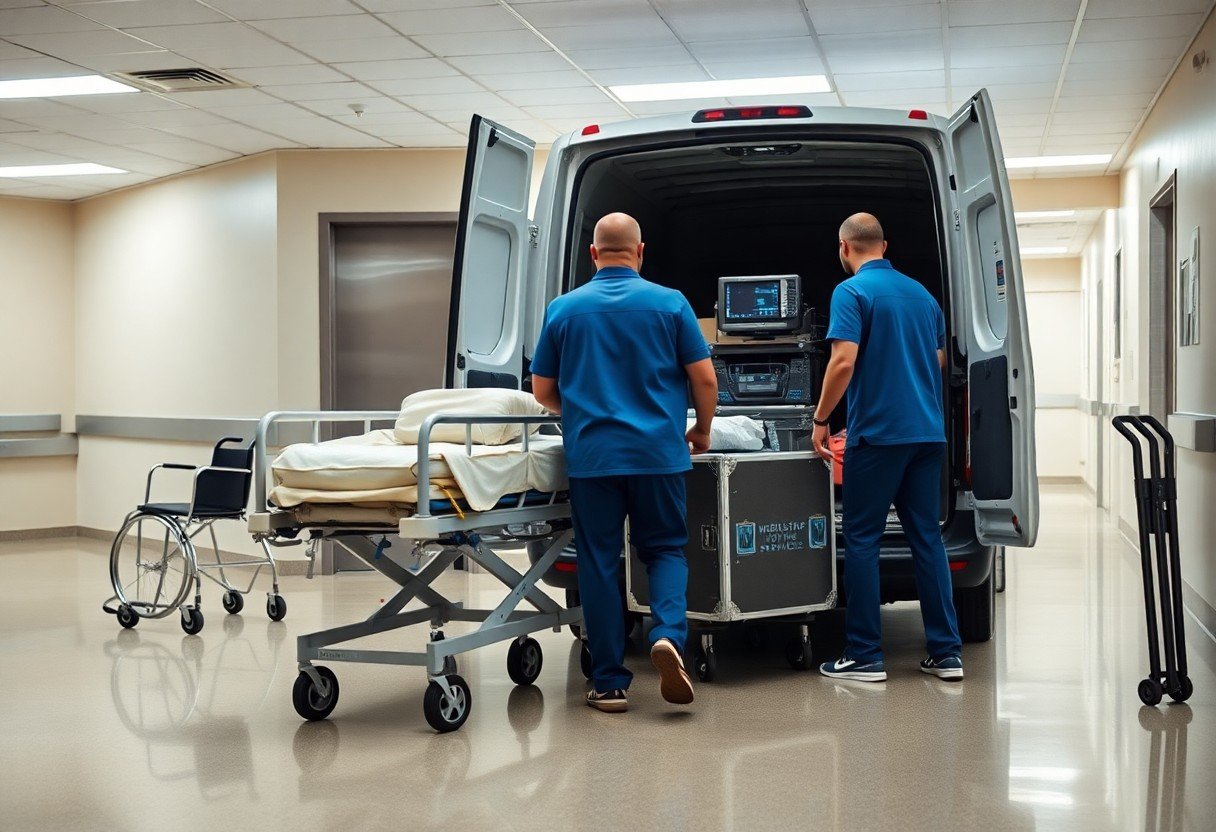
Your choice determines how smoothly transfers run, how many bed-hours you recover, and whether patient safety metrics improve. Aim for vendors that demonstrate measurable outcomes-hospitals that partnered with dedicated moving teams often report 25-40% fewer transfer delays and 15-30% faster turnaround in pilot studies. You should prioritize providers that supply real KPIs, written SLAs, and a named move coordinator so accountability and continuous improvement are built into each deployment.
What to Look for in a Service Provider
Seek providers with healthcare-specific credentials (HIPAA and OSHA compliance, medical transport licensure, DOT for drivers), insurance limits (at least $1M per occurrence/$3M aggregate), and documented training programs (20+ hours clinical transfer, infection-control refreshers, N95 fit testing). Prefer teams with 24/7 dispatch, electronic tracking, dedicated move coordinators, and track records-look for on-time rates above 95% and incident rates under 1 per 1,000 moves.
Questions to Ask Before Engaging Services
Ask for specifics: What are your SLA response times and penalties? Can you provide case studies, KPI dashboards, and three hospital references? How many training hours per staff, which immunizations and background checks do you require, and what are your infection-control protocols? Request BAA/HIPAA documentation, liability limits, contingency plans for surge events, and examples of past ICU or neonatal moves.
Drill into metrics when they answer: request average transfer time, on-time percentage, damage and incident rates per 1,000 moves, and staff turnover. Also insist on an escalation matrix, weekly KPI reports during the first 90 days, and a 30-90 day pilot with defined acceptance criteria. You can further validate performance by conducting a site walk, tabletop exercise, or unannounced audit to confirm protocols match their paper documentation.
Future Trends in Medical Transportation Services
Technological Advancements Enhancing Transfers
You’ll see AI-driven dispatch and real-time EMR integration cut handover delays, with pilot programs reporting 10-25% faster door-to-door times; GPS+predictive-routing minimizes traffic impact while telemedicine lets receiving clinicians view vitals and video during transit. Expect electric and hybrid ambulances to lower noise and emissions, and drones to deliver time-sensitive meds or lab samples within 15-30 minutes in campus or rural pilots, improving overall transfer reliability.
The Growing Importance of Specialized Training
You must rely on teams trained beyond basic orientation: many hospitals now require 16-40 hours of transport-specific coursework plus annual competency checks, and paramedic-level programs exceed 1,000 hours of clinical instruction. Simulation labs teach ventilator, infusion, and bariatric transfers, while standardized handoff protocols (SBAR variants) reduce communication errors during interfacility moves.
In practice, you benefit when training includes multidisciplinary drills and data-driven feedback loops; multi-center quality-improvement projects show targeted transport training can lower transfer-related incidents and shorten delays. For example, hospitals that implemented a 24-40 hour transport curriculum combined with weekly simulation rounds reported measurable drops in adverse events and smoother coordination between ED, ICU, and ambulance crews.
Summing up
Now you see how dedicated medical-staff moving services reduce risk, coordinate logistics, and protect patient continuity, allowing you to focus on care rather than transport details. By handling equipment, scheduling, regulatory compliance and staffing, they minimize delays and stress, ensure safety, and preserve clinical workflows during transfers so your team and patients experience smoother, faster hospital relocations.