
You deserve a seamless transition when moving to a new practice or location. This ultimate guide is designed to provide you with practical tips and insights on how to streamline your moving process, ensuring your focus remains on your patients and career. From planning logistics to addressing unique challenges faced by medical professionals, we’ll cover everything you need to facilitate a smooth move. Get ready to begin on this new chapter with confidence and ease!
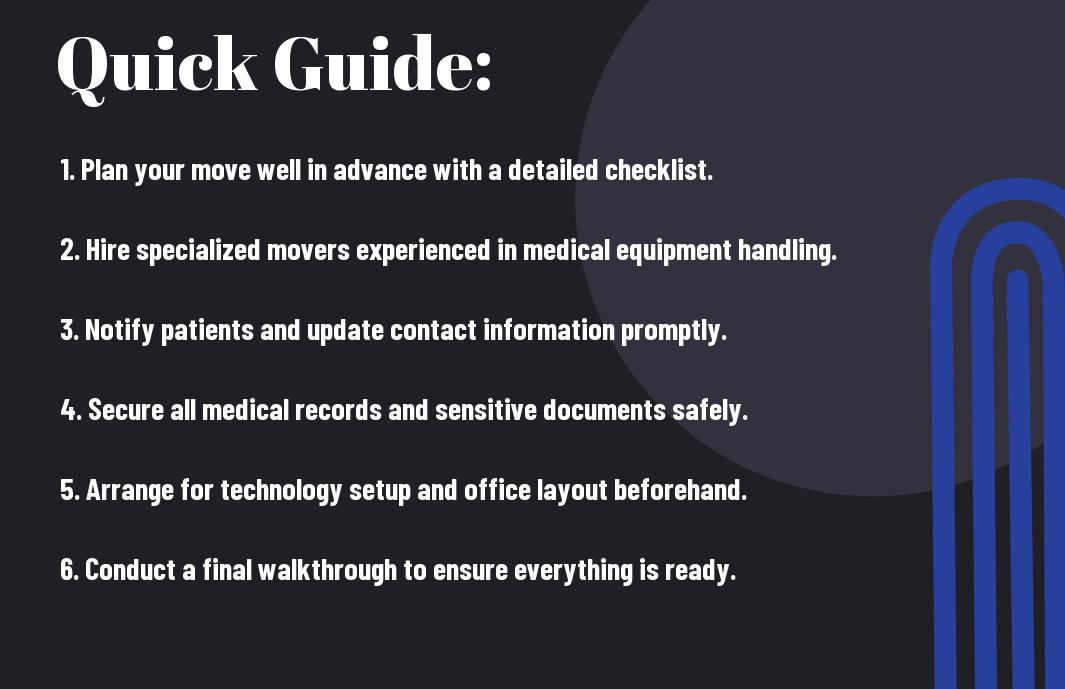
Types of Doctor Moving Assistance
Your transition can greatly benefit from different types of doctor moving assistance tailored to your needs. Consider the following options to ensure your relocation is seamless:
- Full-service Moving Companies
- Packing and Unpacking Services
- Specialized Medical Equipment Movers
- Storage Solutions
- Consultation Services
Any of these services can significantly lighten your load while guaranteeing that your move is executed professionally.
| Full-service Moving Companies | Provides all-inclusive services from packing to transportation. |
| Packing and Unpacking Services | Helps in packing your items efficiently and unpacking them at your new location. |
| Specialized Medical Equipment Movers | Focuses on transporting sensitive medical equipment safely. |
| Storage Solutions | Offers temporary storage for your belongings during the transition. |
| Consultation Services | Provides expert advice on the logistics of your move. |
Professional Moving Services
On your moving day, professional moving services can be a game-changer. These experts manage every aspect of the move, from packing to unloading, ensuring your valuable items remain secure. They come equipped with the right tools and expertise required for a smooth transition. Opting for this service allows you to concentrate on your practice and patients while they handle the heavy lifting.
DIY Moving Solutions
To cut costs and have more control over your move, DIY moving solutions are a viable option. You can organize your resources and enlist help from friends or staff to assist in packing and transporting your belongings. This approach allows you to tailor the moving process to your specific needs and schedule.
Assistance from colleagues or a trusted support network can make DIY moving easier. Create a detailed plan that outlines each step, from gathering packing materials to scheduling a moving day. By coordinating efforts and using available resources, you can successfully manage the transition while minimizing expenses and maintaining control over the process.

Tips for a Smooth Transition
Some key strategies can help you ensure a seamless transition during your move. Consider the following tips:
- Plan your timeline to avoid last-minute issues.
- Set up your new space before relocating equipment.
- Inform your staff about the move in advance.
- Label boxes clearly for easy unpacking.
- Keep imperative documents easily accessible.
Knowing these tips will help you maintain efficiency throughout the moving process.
Planning and Organization
One of the first steps in achieving a smooth transition is thorough planning and organization. Start by creating a moving checklist that outlines tasks, deadlines, and responsibilities. Assign roles to your team members to divide the workload and ensure everything is addressed on time. Setting clear timelines will help you track progress and reduce stress, making your move more manageable.
Communicating with Patients
The communication process with your patients is vital during your move. It helps maintain trust and keeps them informed about any changes or disruptions in their care.
Plus, being transparent about your transition dates, new address, and any potential impact on appointments will reassure your patients. Consider sending out emails or newsletters to keep them updated and encourage them to ask questions. This proactive approach demonstrates your commitment to their care and supports a more seamless experience as you transition to your new location.
The Step-by-Step Moving Guide for Doctors
Unlike other professions, moving as a doctor requires careful planning and organization. Ensuring a seamless transition to your new location involves a systematic approach to managing both your personal and professional responsibilities.
Pre-Move Checklist
| 1. Create a timeline for your move. | 2. Notify your current employer and patients. |
| 3. Research your new location’s facilities. | 4. Arrange for insurance and licensure updates. |
| 5. Set up your new practice space. | 6. Sort and pack your medical equipment. |
Pre-Move Checklist
On creating your pre-move checklist, begin by outlining tasks that need to be accomplished before your moving date. This list will help you manage your time effectively and ensure nothing important is overlooked during the transition.
During the Move
With the moving day upon you, it’s important to stay organized and stick to your checklist. Ensure that your medical equipment is handled with care, and consider having a trusted colleague help oversee the logistics.
Plus, coordinating with your moving company can alleviate stress during this busy time. Ensure that all vital documents and medical files are securely packed and accessible, as you may need them for your new practice immediately following the move.
Post-Move Setup
Moving into your new space can feel overwhelming, but establishing an organized post-move setup will allow you to settle in quickly. Prioritize unpacking important medical equipment and supplies so you can resume patient care without delay.
During the post-move setup, take the opportunity to familiarize yourself with your new environment. Connect with local healthcare facilities and set up appointments to build relationships, which will ultimately enhance your transition into the new community and ensure a smooth re-establishment of your practice.
Factors to Consider Before Moving
After deciding to transition your medical practice, it’s crucial to contemplate various factors to ensure a seamless move. Consider the following points:
- Your current patient base and demographics
- New location’s proximity to hospitals and specialists
- Accessibility for patients and staff
- Lease terms and building suitability
Any oversight in these elements could lead to challenges during your transition.
Location and Facility Selection
Now that you are preparing for your move, the selection of your new location and facility is paramount. Analyze the surrounding community, as it has a significant impact on patient flow and retention. Ensure that the new facility is equipped with modern amenities and meets your practice’s specific needs, such as adequate space for exams, consultations, and any specialized equipment you may require.
Financial Implications
Facility costs and associated fees are vital aspects that can influence your decision. You must evaluate potential costs such as rent, utilities, renovation expenses, and equipment purchases. Understanding these financial factors will help you formulate a budget that accommodates both immediate expenditures and long-term investments.
Moving your practice involves not just logistics but also a thorough examination of your finances. You will need to account for various expenses like moving fees, staffing adjustments, and adjustments to your practice’s billing structure in the new location. Additionally, consider any potential dips in revenue during the transition period, as this may affect your financial stability. Planning effectively will set you up for ongoing success in your new facility.
Pros and Cons of Moving Assistance Options
Despite the variety of moving assistance options available, each comes with its own set of pros and cons that you should carefully evaluate before making a decision. Consider the aspects that best suit your needs to ensure a smooth transition.
Pros and Cons of Moving Assistance Options
| Pros | Cons |
|---|---|
| Less physical strain on you. | Higher costs than DIY moves. |
| Professional handling of delicate items. | Scheduling may not align with your timeline. |
| Access to specialized equipment and expertise. | Less control over the moving process. |
| Time-efficient, allowing you to focus on other tasks. | Potential for hidden fees or charges. |
| Insurance coverage for damages. | Dependency on service availability in your area. |
Advantages of Professional Services
Services that offer professional moving assistance provide an array of benefits, including trained personnel who can efficiently manage your relocation. You can enjoy peace of mind knowing your belongings are in capable hands, reducing the risk of damage during transit. The convenience and time savings they offer allow you to focus on other important tasks related to your move.
Drawbacks of DIY Moves
While DIY moves may seem like a cost-effective option, they can lead to unexpected challenges that might outweigh your savings.
Advantages of moving yourself include significant savings on professional fees and the flexibility to pack and transport items at your own pace. However, unforeseen issues like injuries from heavy lifting, equipment rentals, or delays can arise. This may lead to additional stress and chaos during an already demanding time. Furthermore, without professional handling, your valuable items might be at risk of damage, resulting in added costs for replacements.
Common Challenges and Solutions
Once again, navigating a move as a doctor presents various challenges that can disrupt your practice and affect patient care. Common issues include managing logistics, maintaining patient relationships, and ensuring a seamless transition for staff and services. By anticipating these hurdles and implementing effective strategies, you can streamline the moving process and minimize disruptions to your practice. Utilizing professional moving assistance and communication techniques can significantly ease these challenges.
Time Management
On moving day, effective time management is vital to ensure everything proceeds smoothly. You can create a detailed schedule outlining tasks and responsibilities, allowing you and your team to stay organized and efficient. Prioritizing crucial duties ensures you meet deadlines while minimizing the chaos of disorganization during the transition.
Patient Retention
While relocating your practice, keeping your existing patients engaged and informed is crucial for retaining their loyalty. Clear communication about your new location, services, and any changes in your schedule fosters trust and reassures patients that their care won’t be compromised during the transition.
The key to maintaining patient retention lies in proactive communication. Consider sending personalized letters or newsletters to inform your patients about your move well in advance. Offering flexible appointment options during the transition period can also alleviate their concerns. Additionally, showcasing your commitment to their well-being by providing updates on how your services will be enhanced post-move can help reinforce their loyalty to your practice.
Conclusion
Following this guide, you are equipped with the imperative tips and strategies to facilitate a seamless transition in your medical practice relocation. By planning ahead, organizing your resources, and utilizing the right moving assistance, you can ensure that your move is efficient and minimizes disruption to your services. Embracing these steps will help you maintain focus on your patients and your practice, allowing you to settle in confidently and effectively.