

Most healthcare providers face the challenge of relocating either for a new job opportunity or a shift in practice setting. Understanding the relocation benefits available to you can significantly ease this transition and enhance your overall experience. This comprehensive guide will highlight important factors to consider, from financial assistance to housing options, and provide strategic tips on how to maximize your move. By taking the right steps, you can ensure that your relocation is not only smooth but also beneficial for your professional growth.
Understanding Relocation Benefits
Your understanding of relocation benefits can significantly enhance your move as a healthcare provider. These benefits, offered by employer organizations and institutions, can ease financial burdens and ensure a smoother transition. By familiarizing yourself with the various types of benefits available and being aware of your eligibility, you can strategically plan your relocation for optimal advantages.
Types of Relocation Benefits
Your relocation may come with several types of benefits that can ease the transition process. These include:
- Moving expenses reimbursement
- Temporary housing assistance
- Travel expenses for house-hunting
- Home sale support
- Orientation programs for new community
Recognizing these options can help you choose what best fits your situation.
| Benefit Type | Description |
| Moving expenses reimbursement | Covers packing, transportation, and delivery costs. |
| Temporary housing assistance | Helps with short-term lodging while relocating. |
| Travel expenses for house-hunting | Reimburses costs incurred during your search for a new home. |
| Home sale support | Aids in selling your current home, possibly offering commission assistance. |
| Orientation programs | Guides you through your new community, simplifying your adjustment. |
Eligibility for Benefits
Even if relocation benefits sound appealing, you need to verify your eligibility. Each employer may have different criteria based on your role and situation, making it necessary to clarify beforehand your standing regarding these offers.
Relocation benefits often hinge on factors such as your work contract, the distance of your move, and whether you are a full-time or part-time employee. Some organizations provide benefits to new hires while others offer them to existing staff looking to transfer. Consulting your HR department can provide you with specific guidelines related to your case, ensuring you fully understand all available benefits.
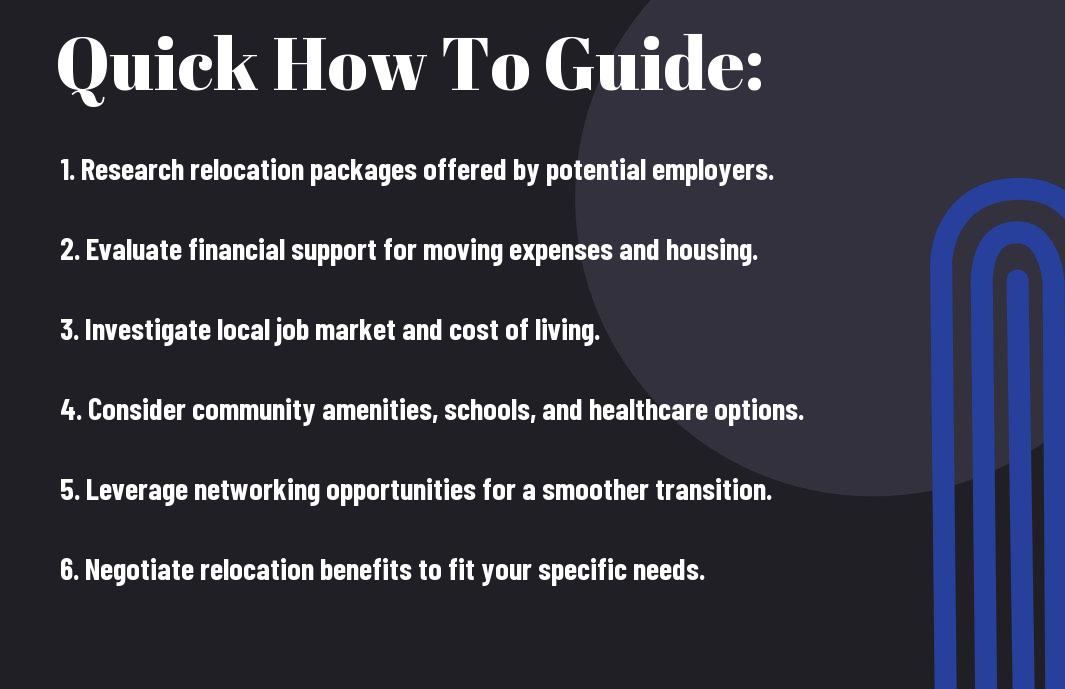
Key Factors to Consider
You should take several key factors into account when contemplating your relocation as a healthcare provider. These factors can significantly influence your experience and career success in the new location:
- Job Opportunities
- Healthcare Facilities
- Community Fit
- Professional Networking
Perceiving the importance of these elements can lead to a smoother transition and a more fulfilling career.
Cost of Living Adjustments
The cost of living in your new location can significantly impact your financial situation. It’s vital to compare living expenses, housing costs, and local taxes to ensure your compensation package aligns with the expenses you will incur. A high salary can quickly lose value if the cost of basic necessities is higher than you anticipated.
Local Healthcare Demands
Local healthcare demands play a vital role in your relocation decision. Understanding the specific healthcare needs of the community will help you gauge job stability and potential career growth.
Factors such as population demographics, prevalence of chronic diseases, and existing healthcare infrastructure significantly influence local healthcare demands. Higher demand for specific specialties can lead to more job opportunities and job security. Exploring community needs can guide you in tailoring your services and enhancing your professional satisfaction in your new role.

How to Negotiate Relocation Benefits
After evaluating your relocation options, it’s important to approach negotiations with confidence. Be prepared to discuss what you need to make your transition smooth while showcasing your unique qualifications. Employers often expect candidates to negotiate, so don’t hesitate to ask for what you deserve. This includes discussing financial assistance, moving services, and additional perks that can facilitate your relocation.
Researching Market Standards
There’s no shortage of resources to help you understand what relocation packages typically look like in your industry. Researching market standards will provide you with invaluable insight, allowing you to establish a baseline for your negotiations. Utilize online salary databases and forums to gather details on what other healthcare providers are receiving in similar positions, equipping you with the knowledge needed for effective discussions.
Presenting Your Value
Assuming you have done your research and identified the appropriate relocation benefits, the next step involves convincing your employer of your worth. Articulate your skills, qualifications, and experiences that make you a valuable addition to their team. Highlight how your presence will enhance their organization, which can further justify your request for relocation assistance.
Negotiate effectively by timing your discussions well and aligning your value with the needs of the employer. Use concrete examples from your past experiences to demonstrate how you have positively impacted previous workplaces. A well-articulated case not only helps you justify your request for relocation benefits but also reinforces why the employer should invest in you during your transition.
Tips for a Smooth Transition
For a seamless relocation to your new position, focusing on detailed planning can ease the process. Consider these imperative tips:
- Create a timeline to manage your tasks.
- Communicate with your new employer about any assistance they offer.
- Involve family members in discussions about the move.
- Research local amenities and community resources ahead of time.
Perceiving the upcoming changes as an opportunity rather than a challenge will foster a positive mindset throughout your transition.
Organizing Your Move
Clearly outlining your moving strategy helps streamline the entire process. Begin by listing tasks and organizing items for packing. Consider hiring professional movers to simplify the logistics, ensuring valuable time is not wasted. Also, label boxes according to their designated area in your new home to expedite unpacking.
Finding Housing and Schools
Your relocation experience heavily depends on securing suitable housing and educational facilities for your family. Conduct thorough research to identify neighborhoods that fit your lifestyle and have access to quality schools. Websites and local community forums can be invaluable resources as you investigate your options, allowing you to make informed choices.
Organizing your search for housing and schools requires careful consideration of your family’s needs. Prioritize proximity to work, schools, and amenities while evaluating neighborhoods. Assess school rankings, extracurricular activities, and community resources to ensure a smooth educational transition for your children. Engaging with local parents in online forums can provide insights about the area’s schooling options, making it easier for you to make confident decisions.
Maximizing Your Relocation Package
Not all relocation packages are created equal, and many aspects can be negotiated to suit your needs better. Review your offer thoroughly and don’t hesitate to ask your employer for additional benefits such as coverage for moving expenses, temporary housing allowances, or assistance in job placement for your partner. By being proactive and negotiating elements of your relocation package, you can enhance the overall value and ensure a smoother transition during your move.
Utilizing Available Resources
Relocation benefits often come with various resources that can help you throughout the moving process. Research programs and services your employer offers, such as relocation counseling, cost-of-living analyses, and connections with local real estate services. Taking full advantage of these resources can streamline your move, making it less stressful and more efficient.
Leveraging Professional Networks
Assuming you have cultivated a professional network, now is the time to leverage those connections as you prepare to relocate. Reaching out to colleagues and industry contacts in your new area can provide valuable insights and assistance to ease your transition.
Professional networks can serve as a foundational support system during your relocation. They may offer recommendations for local housing, schools, and healthcare facilities, or even help you find prospective job opportunities for family members. Engage actively with your network, attend local events, or participate in online forums related to your field to cultivate relationships that will serve you well in your new location.
Long-term Considerations
Despite the excitement of relocating, it’s important to think about the long-term implications of your move. Consider how your transition will affect your career trajectory, personal life, and future opportunities. Evaluating your decision with a broader perspective can help you avoid potential pitfalls and ensure that your new location aligns with your long-term goals.
Assessing Job Stability
One key element to evaluate is the job stability offered by your new role. Research the healthcare market and the reputation of the employer in the area. Understanding the organization’s long-term plans and financial health can give you better insight into your job security after the move.
Benefits Beyond the Initial Move
Assessing the benefits beyond the initial move is vital for your long-term satisfaction in your new position. Consider aspects such as career advancement opportunities, continuing education resources, and the support available for professional development. These factors can significantly enhance your career growth and overall job satisfaction in the years to come.
Long-term, the rewards of a successful relocation can significantly outweigh the initial challenges. Beyond the immediate benefits of a new position, you may find opportunities for mentorship, skill enhancement, and networking that enrich your professional life. By looking at your relocation as a stepping stone towards your career aspirations, you’ll better position yourself for a fulfilling and prosperous future in healthcare.
To wrap up
Summing up, evaluating relocation benefits as a healthcare provider requires careful consideration of various factors, from financial assistance to local support. By understanding your options and leveraging them effectively, you can make your transition smoother and more beneficial. Be proactive in discussing your needs with prospective employers, and ensure that you have a comprehensive understanding of what is available to you. This informed approach will help you maximize your move and ultimately enhance both your professional and personal life in a new environment.