
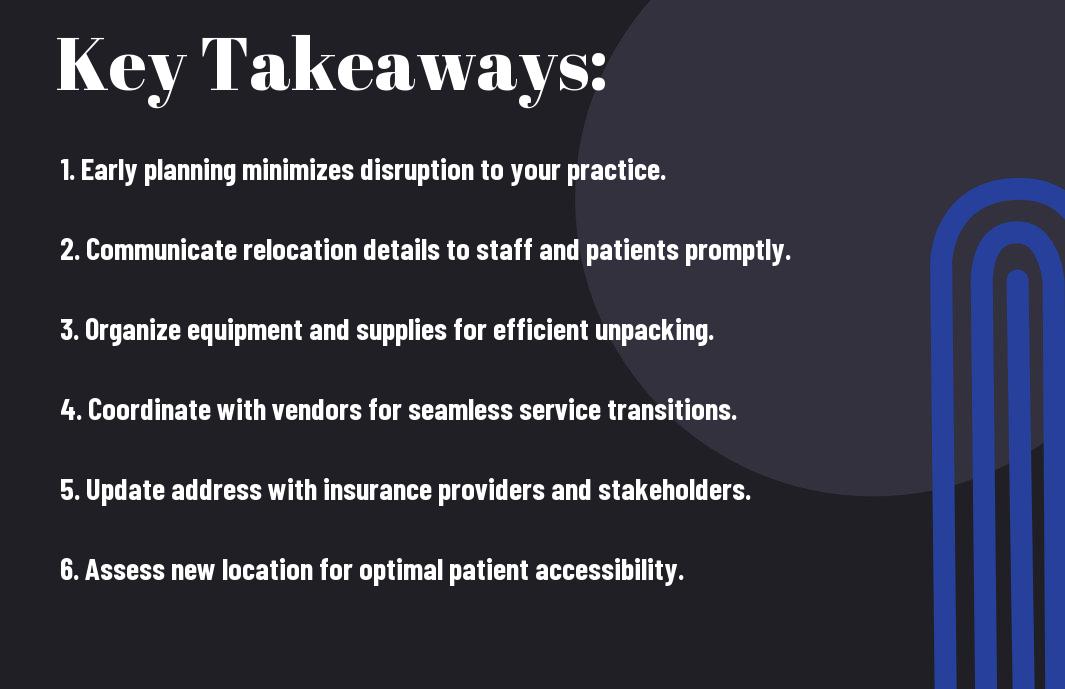
Many physicians face the daunting task of relocating their medical offices at some point in their careers. Whether you’re moving to a larger space or a more convenient location for your patients, having a clear plan is vital for a seamless transition. In this post, you’ll discover five imperative steps that will guide you through the relocation process, ensuring that your practice runs smoothly and efficiently. By following these insights, you can minimize disruptions and maintain your focus on providing excellent patient care during this significant change.
Planning Your Relocation
A well-structured plan sets the foundation for a successful medical office relocation. Begin by evaluating your current setup and identifying the needs of your practice in the new location. Consider factors such as space, access for patients, and proximity to other healthcare services. Collaborate with your team and outline a strategy that addresses logistics, patient care continuity, and communication with staff and patients throughout the transition. Taking the time to meticulously plan will help ensure a seamless move and minimize disruptions to your practice.
Setting a Timeline
Behind every successful relocation is a detailed timeline that keeps your move on track. Start by establishing a kickoff date, then work backward to identify key milestones such as securing the new space, completing renovations, and notifying patients. Assign specific tasks to team members and regularly review the timeline to accommodate any changes. By maintaining a thorough timeline, you can manage your time effectively and ensure that nothing is overlooked during the moving process.
Budgeting for the Move
Budgeting for your move is a fundamental aspect of the planning process. Allocate funds for moving expenses, renovations, new furniture, and technology as necessary. It’s advisable to create a detailed budget that encompasses all potential costs, including unexpected expenses which often arise during relocations. By assessing all financial aspects upfront, you can avoid surprises and ensure that your move aligns with your financial constraints.
A comprehensive budget not only helps you track how your resources are used but also aids in making informed decisions about any sacrifices or adjustments you might need to consider. Be sure to include items such as moving equipment, installation fees, and any downtime expenses you might encounter while transitioning to your new space. With a clear budget in mind, you can navigate the relocation with greater confidence and financial oversight.
Choosing the Right Location
You need to consider a location that enhances patient experience and aligns with your practice’s goals. Key factors include proximity to hospitals and other healthcare services, visibility, and the community’s demographics. Ensure the new site caters to the needs of your patient base while offering adequate space for future growth. This proactive approach helps create a nurturing environment for your patients and staff alike.
Assessing Patient Accessibility
Around your potential new location, evaluate public transportation options, parking availability, and proximity to main roads. Accessibility directly impacts patient attendance and satisfaction, making it crucial for you to ensure that your new office is easy to reach. Gather feedback from your current patients regarding their preferences to better inform your decision-making process.
Evaluating Facility Requirements
Choosing the right facility involves more than just square footage; it requires thoughtful consideration of the specific needs for your practice. Factors like the number of exam rooms, waiting areas, and administrative space should align with your operational requirements, while also accommodating any special equipment or technology you may need. It’s crucial to think ahead, ensuring that your new office can adapt to evolving healthcare standards and patient expectations.
But evaluating facility requirements also means understanding local regulations, compliance codes, and potential renovations that may be needed. Engaging with architects or facility planners early can help you identify the best layout and design. Assess the needs of your staff as well, ensuring that there are appropriate spaces for collaboration and patient interaction while maximizing efficiency. This strategic planning will set the foundation for a successful transition and a thriving practice in your new location.

Compliance and Legal Considerations
Your office relocation requires careful attention to compliance and legal aspects to avoid costly pitfalls. Ensuring that all regulatory standards are met not only safeguards your practice but also maintains patient trust. Consider contacting legal professionals who specialize in healthcare to guide you through this complex landscape as you transition to your new location.
Understanding Licensing Requirements
To ensure a seamless transition, familiarize yourself with the licensing requirements for your new location. Each state has specific regulations that may differ significantly from those in your current locale. This may involve updating your medical licenses, facility registrations, and any additional permits necessary to operate your practice legally.
Addressing HIPAA Compliance
Any medical office relocation will necessitate a thorough evaluation of your HIPAA compliance strategies. This means examining how you safeguard patient information during the move and ensuring that all data remains secure during the transition.
In fact, a lack of attention to HIPAA regulations during your relocation can lead to serious penalties. You must implement measures like secure data encryption, restricting access to sensitive information, and training your staff on privacy protocols at the new site. Developing a comprehensive plan that encompasses these elements will help you maintain compliance and protect patient confidentiality, thus reinforcing your commitment to ethical medical practice.
Communication Strategy
Keep your patients and staff informed throughout the relocation process to ensure a smooth transition. Establishing a well-structured communication strategy can alleviate anxiety and build trust. Use various channels, such as emails, newsletters, and staff meetings, to share updates and address concerns. This transparency not only helps in maintaining relationships but also strengthens your practice’s reputation during this change.
Informing Staff and Patients
Against all odds, clear communication with your staff and patients can pave the way for a successful relocation. Keeping everyone informed about timelines, locations, and changes in protocols mitigates confusion and reinforces their confidence in your practice. Regular updates through meetings, emails, or your website will ensure that everyone is aligned and prepared for the transition, ultimately fostering a supportive environment.
Marketing the New Location
Staff will play a vital role in promoting your new location to patients and the community. Begin your marketing effort as soon as the new space is confirmed, featuring the benefits of the new site, such as increased accessibility, modern facilities, and improved patient care options.
It’s crucial to utilize both online and offline marketing strategies when promoting your new location. Leverage social media, email newsletters, and your website to inform your audience, showcasing the transition’s benefits. Additionally, consider local advertising or hosting an open house to introduce your practice in the new space. Engaging your community can foster excitement and attract new patients while ensuring existing patients feel welcome and valued at the new site.
Logistics of the Move
Despite the excitement of a new space, the logistics of your office relocation require careful planning to ensure a seamless transition. You need to coordinate timelines, inventory equipment, and ensure that all aspects of your practice are addressed. Timely notifications to staff and patients, as well as communication with service providers, will play a vital role in making this process smoother. By organizing each phase of the move systematically, you can minimize disruptions and focus on providing uninterrupted care during this period.
Hiring Professional Movers
Movers specializing in medical office relocations can simplify the process significantly. They understand the sensitive nature of medical equipment and records, allowing you to focus on your patients while they handle the heavy lifting. By choosing experienced professionals, you can ensure your office’s contents are securely transported and set up in the new location without unnecessary stress or delays.
Organizing Office Layout
Layout is a key element in optimizing your new medical office space for efficiency. You should strategically plan the arrangement of equipment, furniture, and workstations to align with both workflow and patient comfort. This will help facilitate effective communication among staff and enhance the patient experience from the moment they step into your practice.
Hence, consider factors such as traffic flow, accessibility, and the positioning of key areas like waiting rooms, examination rooms, and reception. Utilizing software or consultations with design experts can aid in visualizing the best setup for your space. Anticipating needs for future expansion can also be beneficial as you design your layout, ensuring your practice can grow without additional major relocations.
IT and Technology Setup
Now that you’re preparing for your medical office relocation, addressing IT and technology setup is vital for maintaining productivity. Ensure that your technological infrastructure is not only in place but also tailored to the demands of your new location. This means assessing existing equipment, networks, and software systems while planning for any upgrades needed to enhance performance and security during this transition.
Ensuring Seamless Data Migration
Seamless data migration is imperative to prevent any disruptions in your patient services. You will want to back up all critical data ahead of the move and work closely with your IT team or service provider to manage the migration process effectively. Verify that all patient records and imperative data are not only transferred but also accessible post-move to maintain your workflow uninterrupted.
Setting Up New Equipment
At your new location, setting up new equipment is an important task that requires careful planning. You should coordinate the installation of computers, servers, and specialized medical devices to ensure they function harmoniously within your new IT framework.
Equipment setup involves much more than just plugging in devices; it requires a strategic approach to ensure that all components are integrated properly. Test each piece of equipment after installation to confirm that it is functioning correctly and is compatible with your existing software. Providing training for your team on the new systems will also enhance efficiency and minimize the learning curve associated with new technology. Prioritizing this step will lead to a smoother transition and uninterrupted patient care.
Summing up
Presently, as you prepare for your medical office relocation, following these five necessary steps will help ensure a seamless transition. By thoroughly planning, communicating with your staff, addressing patient needs, organizing logistics, and evaluating the new space, you can minimize disruptions and maintain a high level of service. Keeping these insights in mind will help you navigate the challenges of moving while focusing on providing quality care to your patients. Your successful relocation will ultimately enhance your practice and patient experience.