As you consider a move to a new location, you may wonder how it will impact your medical practice and personal beliefs. Your career as a physician is built on a foundation of education, training, and experience, but a new environment can introduce fresh challenges and perspectives. You will encounter different patient populations, healthcare systems, and cultural norms, which can influence your approach to medicine and shape your ideology as a physician.
Psychological Impact
While translocating to a new locale, you will experience significant psychological effects that can impact your ideology and practice as a physician. Your new environment may challenge your existing beliefs and values, leading to personal and professional growth.
Cultural Shock and Adaptation
Along with the initial excitement of a new location, you may encounter cultural differences that can cause discomfort and stress, affecting your ability to adapt to the new healthcare system and patient population.
Identity Formation and Professional Development
About the time you start to feel settled, your sense of identity as a physician may evolve, influenced by the new cultural and professional context, leading to a reevaluation of your values and practice style.
Plus, as you navigate your new environment, you will have opportunities to develop new skills, build your professional network, and enhance your expertise, ultimately shaping your identity as a physician and informing your approach to patient care, allowing you to grow both personally and professionally.
Medical Practice Adjustments
There’s a need to adapt your medical practice when translocating to a new locale, as you’ll encounter different patient needs and healthcare expectations.
Familiarization with Local Healthcare Systems
Medically, you must understand the local healthcare landscape, including available resources and common health issues, to provide effective care.
Compliance with New Regulations and Guidelines
The regulatory framework of your new location will impact your practice, and you must familiarize yourself with these rules to avoid any issues.
But as you explore deeper into compliance with new regulations and guidelines, you’ll find that it’s not just about following rules, it’s also about understanding the nuances of your new environment and how they shape your practice, and you’ll need to invest time and effort into staying up-to-date with the latest developments to ensure your practice remains compliant and effective.
Patient Interaction Dynamics
The way you interact with patients can be significantly impacted by a change in locale. Your communication style, bedside manner, and ability to build trust may need to be adapted to meet the unique needs of your new patient population.
Communication Barriers and Solutions
Similarly, dynamics of language and cultural differences can pose challenges in your new practice. You will need to find ways to overcome these barriers, such as learning key phrases in a new language or working with interpreters, to ensure effective communication with your patients.
Building Trust and Rapport in a New Environment
Beyond the initial introduction, you will need to work to establish a strong rapport with your patients in your new locale. Your ability to understand and respond to their unique needs and concerns will be imperative in building trust and establishing a positive doctor-patient relationship.
Interaction with your patients is key to understanding their needs and preferences. You will need to be mindful of the cultural and social nuances that may influence their health beliefs and behaviors, and be willing to adapt your approach to meet their individual needs. As you navigate your new practice, you will find that building trust and rapport with your patients is an ongoing process that requires effort, empathy, and a commitment to understanding their perspectives.

Continuous Learning and Professional Growth
After relocating to a new locale, you will encounter new medical practices and ideologies that can enhance your professional growth. You will have the opportunity to learn from colleagues and patients, broadening your understanding of diverse healthcare systems.
Staying Updated on Local Medical Advances
Learning about the latest medical advancements in your new location is imperative for your professional development. You can attend conferences, workshops, and seminars to stay informed about local medical breakthroughs and best practices.
Networking and Collaboration Opportunities
Below the surface of your new work environment, you will find numerous opportunities to connect with fellow physicians and healthcare professionals. You can join local medical associations, participate in online forums, and engage in peer discussions to expand your network.
It is through these networking opportunities that you can share your expertise, learn from others, and collaborate on projects that can benefit your patients and the broader medical community. You can also develop lasting relationships with colleagues who can provide support and guidance as you navigate your new practice.
Personal and Professional Trade-Offs
Despite the excitement of a new locale, you will face challenges in balancing your personal and professional life, affecting your ideology and practice as a physician.
Work-Life Balance in a New Setting
Besides the initial adjustment period, you will need to navigate new work environments, colleagues, and patient populations, all while maintaining your physical and mental well-being.
Managing Stress and Burnout
Alongside the demands of your new role, you will encounter unique stressors that can lead to burnout if not properly managed, affecting your overall job satisfaction and patient care.
This phenomenon is particularly significant for you as a physician, as it can impact your ability to provide high-quality care and maintain a healthy work-life balance, making it crucial to develop effective coping strategies and seek support when needed to mitigate the risks of burnout and maintain your well-being in your new setting.
Social and Cultural Integration
Many physicians face challenges when adapting to a new locale, and social and cultural integration plays a significant role in this process. You will encounter different customs, norms, and values that may impact your practice and ideology as a physician.
Navigating Local Customs and Norms
The transition to a new locale requires you to be aware of local customs and norms, which can affect your interactions with patients and colleagues, influencing your approach to healthcare delivery.
Building a Support Network and Community
Beneath the surface of adapting to a new locale, you will find that building a support network and community is important for your well-being and professional growth as a physician.
Building on this concept, you should prioritize establishing relationships with colleagues, joining local medical associations, and engaging with your community to foster a sense of belonging and connection, which can positively impact your practice and ideology as a physician, allowing you to better serve your patients and navigate the local healthcare system.
Final Words
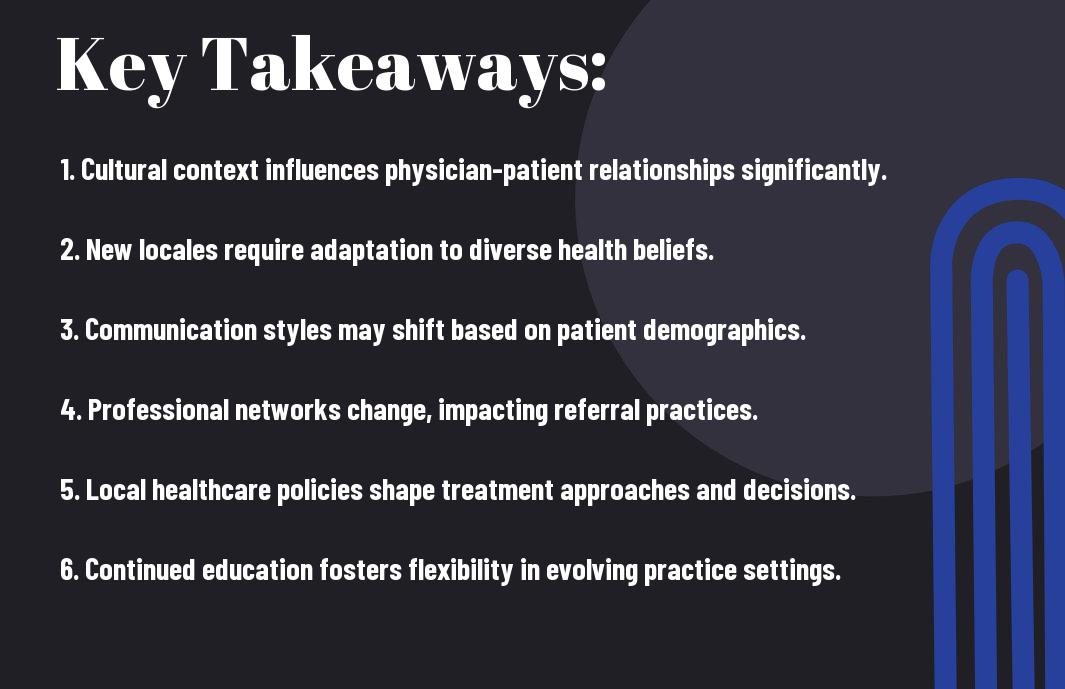
Now, as you conclude your exploration of how translocating to a new locale affects a physician’s ideology and practice, you will notice that your perspective has broadened. You understand that your approach to medicine is influenced by your surroundings, and adapting to a new environment can refine your skills and shape your professional identity. As you settle into your new practice, you will find that your experiences continue to inform your ideology, allowing you to provide better care to your patients. Your growth as a physician is ongoing.
FAQ
Q: How does translocating to a new locale initially impact a physician’s medical practice and ideology?
A: Translocating to a new locale can significantly impact a physician’s medical practice and ideology. Upon arrival, a physician may encounter different healthcare systems, regulations, and patient demographics, which can influence their approach to medicine. For instance, variations in disease prevalence, healthcare policies, and available resources may require adjustments in diagnosis, treatment, and patient management strategies. Moreover, cultural differences can affect patient-physician interactions, with diverse patient expectations and communication styles potentially altering a physician’s bedside manner and practice style. As a result, physicians must be adaptable and willing to learn and integrate into the new healthcare environment to provide optimal care.
Q: What role does cultural adaptation play in shaping a physician’s ideology and practice after relocation?
A: Cultural adaptation plays a significant role in shaping a physician’s ideology and practice after relocating to a new locale. Physicians must navigate cultural nuances that affect patient-physician relationships, such as differing values, beliefs, and health behaviors. By embracing cultural competence, physicians can enhance patient trust, improve health outcomes, and deliver care that is tailored to the unique needs of their new patient population. This may involve learning about local customs, traditions, and language to effectively communicate with patients and their families. Furthermore, cultural adaptation can lead to a broader perspective on healthcare, encouraging physicians to question their existing ideologies and incorporate new approaches into their practice, ultimately enriching their professional growth and development.
Q: How can physicians maintain their professional integrity and ideology while adapting to the demands of a new practice location?
A: Physicians can maintain their professional integrity and ideology while adapting to a new practice location by staying grounded in their core values and principles. This involves reflecting on their personal and professional mission, staying updated with the latest medical evidence and guidelines, and engaging in continuous professional development. Networking with colleagues and joining local medical societies can also provide support and facilitate integration into the new medical community. Moreover, setting clear boundaries and being mindful of potential burnout are crucial for preserving one’s physical and mental well-being. By balancing adaptability with a strong sense of professional identity, physicians can navigate the challenges of a new locale while upholding their commitment to delivering high-quality, patient-centered care that aligns with their ideology and values.