
Just when you think your medical career is taking off, a relocation can bring both excitement and uncertainty. This comprehensive guide will arm you with the necessary knowledge needed to navigate physician relocation services effectively. You’ll learn which resources are available, how to make informed decisions, and what steps are vital for a smooth transition in your professional journey. Whether you’re moving for a new opportunity or personal reasons, understanding the ins and outs of relocation services can significantly enhance your experience.
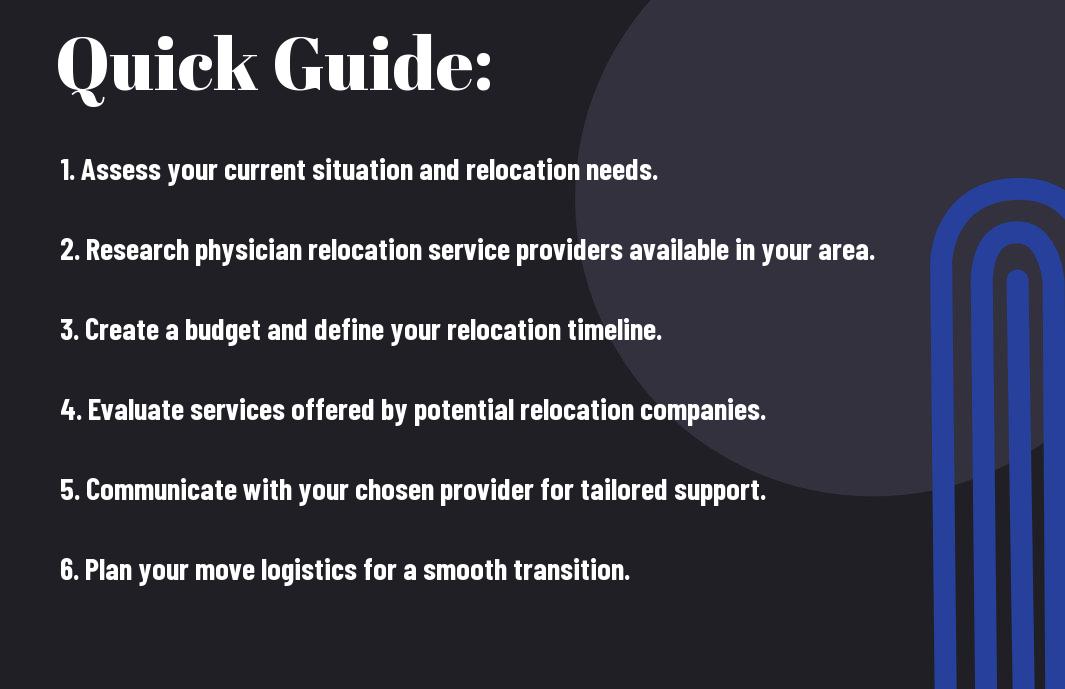

Understanding Physician Relocation Services
To ease the transition for healthcare professionals, physician relocation services provide tailored support to meet your specific needs. These services encompass various aspects of moving, from logistics and housing to career transition and integration into new communities. The breadth of services can greatly influence how smoothly you adjust to your new environment, ultimately impacting your professional satisfaction and personal life.
Types of Relocation Services
To ensure a seamless transition, various types of relocation services can be offered to you:
- Home finding assistance
- Temporary housing arrangements
- Community orientation and resources
- School search for children
- Visa and immigration assistance
Thou can choose the services that align best with your circumstances and preferences.
| Service Type | Description |
| Home Finding Assistance | Support in locating a suitable residence in the new city. |
| Temporary Housing | Options for short-term stays while you search for a permanent home. |
| Community Orientation | Information about local amenities, healthcare facilities, and services. |
| School Search | Help in finding quality educational institutions for your children. |
| Visa Assistance | Guidance on administrative processes related to relocation. |
Factors Influencing Relocation Decisions
Even making the decision to relocate can lead to various considerations that shape your path forward. Many different factors may impact your decision-making process, from personal and family needs to professional requirements. Understanding these elements allows you to make informed choices that resonate with your overall satisfaction and career ambitions.
- Career advancement opportunities
- Work-life balance considerations
- Proximity to family and friends
- Cost of living adjustments
- Cultural fit of the new location
Thou should assess these influences before finalizing your decision.
Factors driving your relocation choices vary from job promotion potentials to lifestyle quality. You may pay attention to aspects like the availability of professional networks, educational options for your kids, and the overall atmosphere of the new city. By evaluating these elements, you can make a well-rounded decision that aligns with both your personal and professional aspirations.
- Job security and stability
- Quality of healthcare provisions
- Local social and recreational opportunities
- Potential for career growth
- Peer support within the new environment
Thou must weigh these factors to ensure a fulfilling relocation experience.
Tips for a Successful Relocation
Even the most meticulous plans can benefit from a few practical tips. To ensure a smoother transition during your relocation, consider the following:
- Start planning early
- Create a detailed timeline
- Communicate openly with family and colleagues
- Stay organized with checklists
- Be flexible with your expectations
The right preparation will make your relocation experience much more manageable.
Researching Potential Locations
An crucial part of your relocation journey involves thorough research on potential locations. Evaluate aspects like local healthcare facilities, community amenities, and lifestyle compatibility to ensure the new environment aligns with your professional and personal needs.
Engaging with Relocation Experts
Tips for connecting with relocation experts can significantly ease your transition. Seek specialists who understand the healthcare field and can provide tailored guidance through each step of the relocation process.
Relocation experts can offer invaluable insights about housing options, local schools, and even cultural aspects of your new area. They will assist you in navigating logistics, ensuring paperwork is completed, and connecting you with local amenities, thereby making your move much smoother. Their expertise can also help you uncover hidden gems that could enhance your overall experience in your new location.
Step-by-Step Guide to the Relocation Process
Unlike many relocation services, a structured approach ensures that you minimize stress and maximize effectiveness during your move. The following table outlines the key stages in the relocation process.
| Stage | Description |
|---|---|
| Initial Consultation | Discuss your needs and preferences with a relocation specialist. |
| Home Search | Explore potential neighborhoods and housing options that fit your lifestyle. |
| Logistics Planning | Coordinate moving dates, transport, and necessary supplies. |
| Transition Assistance | Receive support during your actual move to ensure everything is on track. |
| Settling In | Focus on integrating into your new community and practice. |
Preparing for Your Move
Even a well-planned move can feel overwhelming, so it’s important to break down tasks into manageable steps. Start by decluttering your space, making a detailed inventory of your belongings, and gathering necessary documents. Preparing early allows you to streamline the logistics and reduce last-minute surprises.
Settling into Your New Practice
Your transition into a new practice is an opportunity to build meaningful connections and establish your professional identity. Engaging with colleagues and staff can facilitate a smoother adaptation process, enhancing your comfort and effectiveness in your new role.
Into this new environment, immersing yourself in both professional and community activities is necessary. Attend staff meetings, join local medical associations, and explore networking events to foster relationships and gain insights about your new workplace. Not only will this help you to transition better, but it will also allow you to contribute positively to your new practice from the start.

Pros and Cons of Relocating as a Physician
After evaluating your options, understanding the pros and cons of relocating as a physician can help you make an informed decision. The decision to move can significantly impact your personal and professional life, making it imperative to weigh these factors carefully.
Pros and Cons of Relocating
| Pros | Cons |
|---|---|
| Better career opportunities | Emotional stress of moving |
| Higher salary potential | Adapting to new environments |
| Improved work-life balance | Leaving established support networks |
| Access to advanced training programs | Changes in lifestyle and routine |
| Exposure to diverse patient populations | Potentially higher cost of living |
Advantages of Relocation
Now, relocating as a physician can open doors to new career opportunities, often accompanied by better salary packages and benefits. You may find that new locations offer a wider variety of specialized roles or access to advanced training programs, making it an appealing choice for professional growth. Additionally, relocating can lead to improved work-life balance and exposure to diverse patient populations, enriching your experience as a healthcare provider.
Challenges to Consider
One of the most significant challenges you may face when relocating is the emotional and logistical stress of moving. Adjusting to a new city or state, developing new routines, and finding suitable housing can be overwhelming.
Relocation can present a host of challenges beyond just the logistics of moving. You may initially miss the comfort of your established support networks, including friends, family, and professional colleagues. Finding new social connections can take time, which may contribute to feelings of isolation. Moreover, you might experience difficulty adjusting to differences in healthcare systems, patient demographics, and even practice styles in a new region. Be prepared to adapt and embrace these changes as you navigate your relocation journey.
Resources for Physicians Considering Relocation
Not overlooking the right resources can significantly ease your relocation process. As you consider moving, various tools and networks are available to assist you. From comprehensive guides to supportive communities, leveraging these resources will empower your decision-making and help you adapt to your new environment effectively.
Helpful Tools and Websites
Physicians can find valuable online resources tailored to relocation needs. Websites that provide relocation assistance, job listings, and community insights can streamline your search and ensure you have the most relevant information at your fingertips.
Networking Opportunities
To enhance your relocation experience, participating in networking opportunities can be incredibly beneficial. Connecting with fellow physicians in your target area can provide insights, support, and potential job leads that may not be publicly advertised.
With numerous online platforms and local meet-ups available, you can easily engage with other healthcare professionals who have successfully navigated similar transitions. Joining specialty-specific forums, attending conferences, or utilizing social media groups can allow you to build invaluable connections before your move. Engaging with these communities not only broadens your network but also helps you gather insights on local practices, living conditions, and other relevant matters that can aid in a smooth relocation.
Frequently Asked Questions About Relocation
For many physicians considering relocation, questions abound about the process, costs, and best practices. This section addresses common inquiries, such as what to expect during the transition, how to choose the right relocation service, and the resources available to ease your move. By providing clear answers, you can approach your relocation journey with confidence and clarity.
Common Concerns and Misconceptions
You might believe that relocation services are only for high-level positions or that they add excessive costs to your move. However, many services cater to all stages of your career, offering tailored solutions to meet your specific needs. Understanding their value can alleviate concerns and streamline your journey.
Clarifying the Relocation Timeline
Relocation processes can seem overly complicated, especially when faced with unfamiliar timelines and planning. By understanding the various stages involved, you can better prepare for each phase of your move, ensuring a smoother transition to your new position.
Misconceptions often arise about how long the relocation process takes. Typically, preparing for a move can take anywhere from 3 to 6 months, depending on factors like the distance, your personal schedule, and the complexity of the services required. Early planning and clear communication with your relocation service can significantly enhance this timeline, allowing for a seamless transition as you begin on this exciting new chapter.
Final Words
Conclusively, as you navigate the shift in your medical career through relocation, utilizing comprehensive physician relocation services can significantly ease the transition. With tailored support at every step, from finding the perfect location to securing your new practice, you can focus on what matters most—your patients and your professional growth. By understanding the intricacies involved and leveraging the resources available, you position yourself for a seamless move that enhances your career and quality of life.