
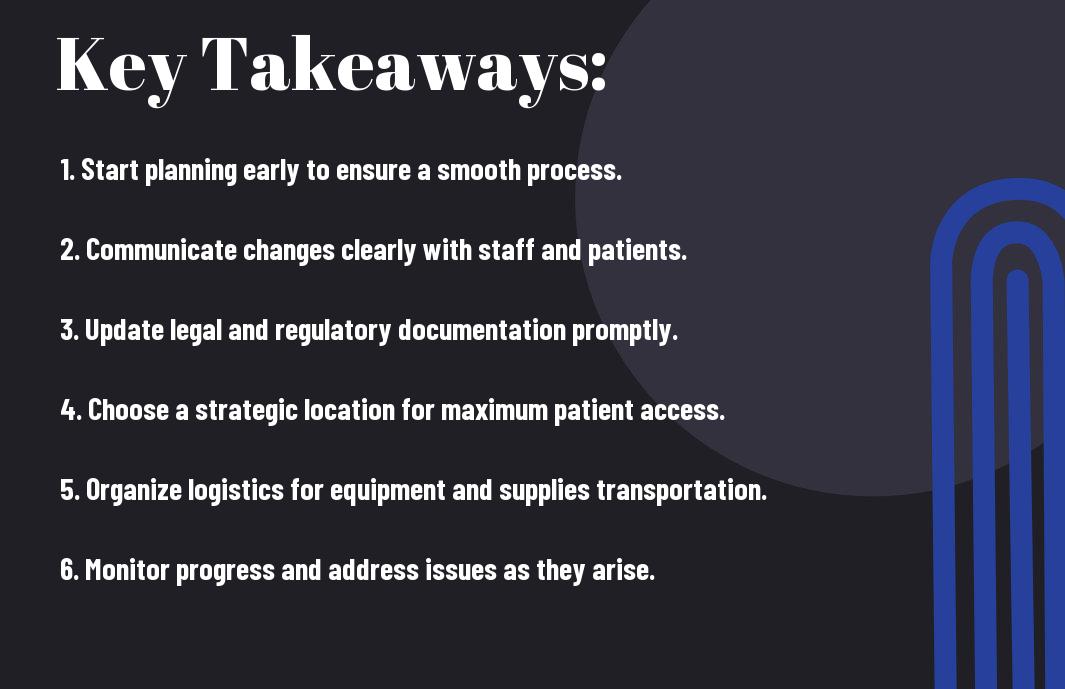
Most healthcare professionals will find that relocating their medical practice can be a complex and daunting challenge. However, with the right strategies in place, you can ensure a smooth transition that minimizes disruption to your services and patient care. In this blog post, we’ll explore effective approaches to help you navigate logistics, patient communication, and the often-overlooked legal considerations involved in moving your practice. By following these guidelines, you can make your relocation a success and maintain the trust and satisfaction of your patients throughout the process.
Assessing Your Current Practice
Before initiating the move to a new location, it’s crucial to conduct a thorough assessment of your current practice. This evaluation will help you identify strengths, weaknesses, and areas that require improvement, ensuring that your transition is based on informed decisions. By understanding the current state of your practice, you will be better equipped to make necessary adjustments that will facilitate a smoother transition.
Evaluating Patient Demographics
The evaluation of patient demographics plays a significant role in planning your move. Analyzing the age, gender, and health needs of your patient base will enable you to determine whether the new location will still cater effectively to their requirements. This insight will help you maintain a loyal patient population post-move.
Understanding Financial Implications
On the other hand, it’s crucial to assess the financial implications of moving your practice. This includes considering the costs of relocation, renovations, potential loss of income during the transition, and ongoing operational expenses in the new location.
But understanding financial implications goes beyond initial costs. You should also evaluate potential changes in patient volume, impact on revenue, and how the new location might affect your practice’s overall profitability. Conducting a thorough financial analysis will help you devise a budget and create a strategic plan that aligns with your long-term goals, ensuring that your new practice thrives. Consulting with financial advisors or specialists can provide additional insights into navigating the financial facets of your transition effectively.

Choosing the Right Location
You must evaluate various factors to determine the best location for your medical practice. A strategic site can enhance patient accessibility and optimize your services. Consider the demographics of the area, competition with other practices, and proximity to hospitals or specialty clinics to create a thriving environment for your practice.
Factors to Consider in a New Location
Beside evaluating demographics, consider these imperative factors:
- Accessibility and parking availability
- Visibility and foot traffic
- Proximity to existing patients and referral sources
- Cost of real estate and leasing agreements
- Future growth potential of the area
Thou should prioritize these elements to ensure your practice meets the needs of both you and your patients.
Legal Considerations for Relocation
For relocating your medical practice, it’s imperative to navigate legal requirements, including local regulations, zoning laws, and licensing updates. Ensure you have the proper permissions and that your new location complies with health codes and standards.
But, make sure to consult with a legal professional specializing in health care to thoroughly review and address any contracts related to your lease, services, and patient rights. This will mitigate potential liabilities and ensure your move complies with healthcare regulations, ensuring a smooth transition without unexpected legal complications.
Developing a Transition Plan
To ensure a smooth transition for your medical practice, developing a comprehensive transition plan is necessary. This plan should outline all the steps required for the move, including logistics, timelines, and resource allocation. By creating a detailed blueprint of your relocation process, you enable your team to effectively manage the various aspects of moving while minimizing disruption to patient care and office operations.
Creating a Timeline for the Move
Creating a timeline for your move helps you stay organized and on track throughout the transition process. By establishing key milestones and deadlines, you can prioritize tasks, coordinate with vendors, and ensure that everything is completed in a timely manner. This will not only help streamline the moving process but also ensure that your practice can resume normal operations as soon as possible.
Assigning Responsibilities to Staff
Any effective transition plan involves assigning specific responsibilities to your staff members. Clear role delineation will help your team stay focused and accountable during the move, ensuring that no task falls through the cracks. By announcing who is responsible for each aspect of the move, you empower employees to take ownership and contribute to a smoother transition.
Considering the diverse skills and strengths of your team, it’s beneficial to match responsibilities to specific staff members. For instance, designate a point person for logistics, another for patient communication, and someone to oversee IT transitions. This strategic delegation not only fosters teamwork but also allows staff to leverage their expertise, facilitating a more efficient and less stressful relocation. Regular check-ins will help keep everyone aligned and address any challenges that may arise during the moving process.
Communicating with Patients
Many patients may feel anxious or concerned when they learn about your medical practice’s move. It’s crucial for you to maintain clear and open communication during this transition to reassure them and provide necessary information. Keep your patients informed about the why and when of your relocation, as well as any changes they may encounter, such as new contact details or office hours. Transparency can help foster trust and ensure that patients feel supported throughout the moving process.
Strategies for Patient Notification
With effective communication in mind, utilize multiple channels to notify your patients about the move. Consider sending personalized letters or emails detailing your new location and any relevant changes. Additionally, take advantage of social media platforms and your practice’s website to post updates and reminders. You may also want to place signage in your current office well in advance of the move to capture your patients’ attention and encourage them to stay informed.
Managing Patient Expectations
Across this transition, it’s vital for you to manage your patients’ expectations regarding any potential disruptions in service. Clear communication about what they can anticipate, such as potential delays, changes in appointment availability, or new procedures, will make them feel more secure and involved. Continue to reassure them of your commitment to their care, and be proactive in addressing any concerns they may have about the transition.
Patient experiences during your practice’s move largely hinge on how well you set expectations. You can do this effectively by communicating upfront about potential challenges they may face, such as delays in scheduling due to the relocation. By providing a timeline for the move and explaining how you will minimize disruptions, you build confidence in your ability to manage their care. Additionally, inviting feedback and questions will help you gauge their concerns and adjust your communication strategy accordingly.

Legal and Regulatory Compliance
After deciding to move your medical practice, it’s imperative to ensure that you comply with all legal and regulatory requirements. This involves understanding local laws, federal regulations, and industry standards that pertain to your practice. A thorough review of your current compliance status, along with updates needed for the new location, will facilitate a smoother transition and safeguard your practice against potential legal issues.
Licensing and Permits Required
Behind every successful relocation are the necessary licenses and permits needed to operate in your new location. Verify that your medical license remains valid in the new state, and check if additional permits are required. This ensures that your practice remains compliant and avoids interruptions during the transition.
Understanding HIPAA and Patient Privacy
HIPAA sets the standard for protecting sensitive patient information. As you relocate, you must ensure that all processes surrounding patient data comply with HIPAA regulations. This includes maintaining confidentiality during the physical move and securing electronic records to prevent unauthorized access.
Also, consider reevaluating your patient privacy policies to reflect any changes in your practice setting. This may involve updating privacy notices and ensuring staff are trained on these updates. By prioritizing HIPAA compliance, you not only protect your patients’ information but also uphold the integrity of your medical practice during the transition.
Minimizing Disruptions During the Move
Once again, effective planning is your best ally when it comes to minimizing disruptions during your medical practice move. Establishing a detailed timeline and assigning specific tasks to your team can streamline the process. Keep your patients informed about the transition dates and any potential changes in services. Ensuring your staff is well-prepared to handle any inquiries will also help mitigate disruptions and maintain a smooth workflow throughout the move.
Ensuring Continuity of Care
Any interruptions in patient care can lead to dissatisfaction and loss of trust. Therefore, it’s imperative to strategize how you’ll continue serving your patients during the transition. Schedule appointments in a way that prioritizes ongoing treatments and ensure that patient records are readily accessible. Communicate any changes clearly to your patients to help them feel reassured and supported throughout the process.
Utilizing Technology for a Smooth Transition
Disruptions can be significantly reduced with the effective use of technology during your practice move. Leverage digital tools for patient scheduling, communication, and data management to keep services running smoothly. Cloud-based systems allow for easy access to patient records, eliminating delays and ensuring that you can meet patient needs seamlessly.
It is imperative to integrate technology into your move planning to enhance efficiency. Utilizing project management software can help you track milestones and delegate tasks effectively, while secure communication platforms keep your team aligned. Implementing an online patient portal allows for continued engagement and access to important information, which can help you maintain trust and continuity of care. By harnessing these tools, you can create a more organized and streamlined transitioning process, setting the stage for a successful relocation.
Conclusion
With these considerations in mind, you can successfully navigate the complexities of moving your medical practice. By carefully planning your transition, communicating with your team and patients, and ensuring all logistical aspects are handled, you can create a seamless experience that minimizes disruption. Prioritizing organization and utilizing effective strategies will empower you to maintain high-quality care during and after the move, ultimately helping you thrive in your new environment.