
Many physicians face unique challenges when it comes to securing housing that meets their professional and personal needs. This guide is designed to help you navigate the various housing support options available, ensuring you find the perfect fit for your lifestyle and career. From understanding the different types of assistance programs to exploring tips for effective housing searches, this comprehensive resource will empower you to make informed decisions tailored specifically to your situation. Dive in and discover how to secure a comfortable and convenient living arrangement that suits your individual requirements.
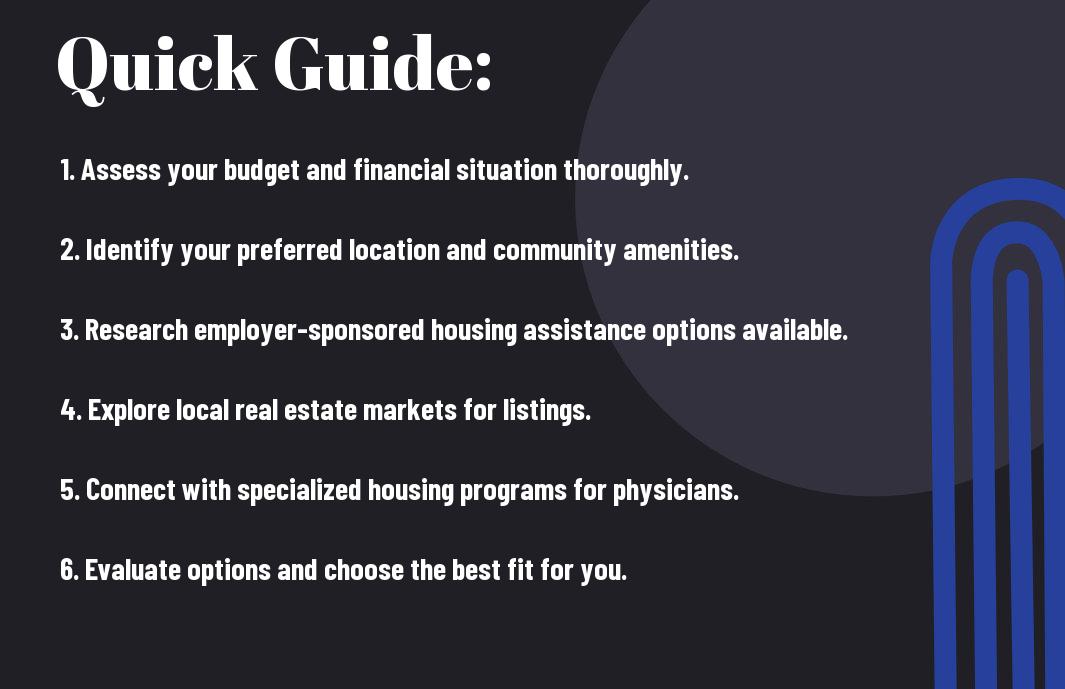

Understanding the Types of Physician Housing Support
A variety of housing support options are available to meet the unique needs of physicians. Understanding these types can guide you in finding the best fit for your situation:
| Employer-Sponsored Housing Options | Government Assistance Programs |
| Relocation Packages | Subsidized Housing |
| Temporary Accommodations | Low-Interest Loans |
| Signing Bonuses | Grants for Healthcare Professionals |
| Rental Assistance | Local Housing Initiatives |
This understanding of options not only helps you evaluate what is available but also enables you to tailor your housing solution to best fit your personal and professional circumstances.
Employer-Sponsored Housing Options
Even with the variety of options available, employer-sponsored housing can significantly alleviate the stress of relocation. Many healthcare organizations offer tailored packages that include relocation bonuses, temporary housing during your move, and long-term rental assistance to help you settle in comfortably.
Government Assistance Programs
On the other hand, government assistance can provide valuable resources for physicians seeking housing support. Programs at local, state, and federal levels often offer various benefits aimed at making housing more accessible.
Types of government assistance programs include subsidized housing options that reduce overall rental costs, low-interest loans to help you purchase a home, and grants specifically designed for healthcare professionals. Additionally, many communities have local initiatives to support physicians in finding affordable housing, making it important for you to explore these resources as part of your housing journey.
Essential Tips for Finding the Right Fit
The journey to finding the ideal physician housing can be overwhelming, but following a few important tips can streamline the process. Consider the following:
- Identify your budget and preferences.
- Know your commute requirements.
- List must-have amenities.
- Explore various neighborhoods.
- Be open to different housing types.
Thou will discover your perfect living space with careful consideration and research.
Assessing Your Housing Needs
On your quest to find the right housing, start by assessing your unique needs. This includes evaluating your lifestyle, family requirements, and professional commitments. Consider factors like proximity to work and schools, as well as your preference for urban or suburban environments. Listing these requirements will make narrowing down options more manageable.
Researching Available Resources
With a multitude of resources at your disposal, be sure to utilize online platforms and local networks to gather information on housing options. Explore housing websites dedicated to physicians, connect with real estate agents who specialize in medical professionals, and reach out to your colleagues for recommendations. The more resources you tap into, the better equipped you’ll be to make an informed choice.
Right now, many websites cater specifically to the needs of medical professionals seeking housing. Local listings often feature properties close to hospitals and clinics, making your commute easier. Additionally, social media groups and forums can be invaluable for gaining insights into hidden gems and off-market opportunities. Engaging with these resources can transform your search into a more successful and efficient experience.
Step-by-Step Process to Secure Housing Support
For those seeking housing support, it’s imperative to follow a systematic approach. This table outlines the primary steps involved in securing assistance tailored for physicians:
| Step | Description |
| 1. Research | Investigate available housing support options specific to physicians. |
| 2. Identify | Determine your eligibility based on specific criteria. |
| 3. Apply | Complete necessary application forms and gather required documents. |
| 4. Follow-Up | Check the application status and provide any additional information if required. |
| 5. Secure | Finalize your housing arrangement upon approval. |
Identifying Eligibility Criteria
Even as you research housing support, it’s important to identify eligibility criteria specific to your situation. Many programs cater to various specialties, residency stages, and geographic locations. Understanding these parameters will help you determine the best options available to you, ensuring your efforts are well-aligned with the programs that fit your needs.
Completing the Application Process
Process your applications accurately and comprehensively to avoid delays. This often involves gathering necessary documents, such as proof of employment and financial records, and filling out detailed application forms. Each housing support program may have specific requirements, so be thorough to ensure compliance with their guidelines.
Support is available throughout this process, with many organizations offering resources to assist you in completing your application. You can reach out to program representatives for clarification on requirements, or access online tutorials provided by housing support initiatives. Engaging with these resources will further enhance your chances of securing the housing assistance that meets your needs.
Key Factors to Consider When Choosing Housing
Once again, selecting the right housing is important for your well-being and comfort. Consider the following key factors:
- Location
- Budget
- Safety
- Community Amenities
- Commute Time
Thou deserve a living space that matches both your professional and personal needs.
Location Proximity to Workplace
Proximity to your workplace is a fundamental aspect of your housing decision. A shorter commute can significantly improve your work-life balance, allowing you more time to relax or engage in personal activities. Consider the traffic patterns and public transport options available to ensure you minimize travel time, which can enhance your overall satisfaction with your housing choice.
Budgeting for Housing Costs
With housing costs varying widely, it’s important to set a realistic budget that accommodates your financial situation. Understanding your limits will help narrow down your options and prevent future financial strain.
Factors influencing your housing budget may include monthly rent or mortgage payments, utilities, maintenance costs, and any other associated fees. Evaluating your total compensation package may also reveal additional resources available for housing support. Create detailed plans that align your housing choice with your financial goals, ensuring that you make a well-informed decision that promotes both stability and fulfillment.

Pros and Cons of Different Housing Support Options
Not all housing support options are created equal; each comes with its own set of advantages and disadvantages, tailored to different needs and circumstances. Below is a brief overview to help you evaluate what might work best for you.
| Pros | Cons |
|---|---|
| Employer sponsorship often offers convenience and quick turnaround. | Limited flexibility in housing choices might be an issue. |
| Government programs may provide substantial financial assistance. | Application processes can be complex and time-consuming. |
| Private rental options allow for greater autonomy. | Higher costs may come with private rentals. |
| Shared housing fosters community engagement. | Lack of privacy might not suit everyone. |
| Temporary housing can ease transition times. | Short-term solutions often lack stability. |
Advantages of Employer Sponsorship
Sponsorship from your employer can significantly streamline your housing process. It often provides you with quick access to housing that meets specific standards, creating a supportive environment as you transition into your new role. Additionally, it can alleviate some of the financial burdens associated with moving by covering costs that you would otherwise need to manage entirely yourself.
Disadvantages of Government Programs
Different government housing programs can present their own challenges. While these programs aim to assist, they often come with intricate guidelines, eligibility requirements, and lengthy approval processes that can delay your housing situation. Additionally, the options available may not fully align with your specific needs or preferences, potentially forcing you to compromise on key aspects of your living situation.
This can also lead to frustration, especially when you are aiming to secure a home quickly. You may find that the government assistance is not adequately tailored to the unique circumstances of your move or doesn’t provide you with the level of support you expected. Understanding these limitations is important in making an informed decision about your housing support options.
Navigating Common Challenges in Housing Support
Now that you’ve explored the various options available for physician housing support, it’s important to recognize the common challenges you might face. Whether it’s navigating the application process or understanding your specific needs, being aware of these obstacles can help you make informed decisions. By addressing misunderstandings and overcoming financial barriers, you’ll be better equipped to find the ideal housing solution tailored to your unique situation.
Addressing Misunderstandings
Assuming that all housing support programs are the same can lead to confusion in choosing the right one for your circumstances. Different programs offer varying levels of assistance and eligibility requirements, so it’s vital to thoroughly research and ask specific questions that pertain to your situation. Clear communication with program administrators can help clarify any uncertainties you may have, ensuring you receive the support you need.
Overcoming Financial Barriers
Little do many realize that financial barriers can often be mitigated through various assistance programs. Understanding your borrowing capacity and exploring grants, low-interest loans, or housing stipends may help alleviate some of the financial pressures associated with finding a home. Knowing these resources empowers you to make smarter financial choices during your housing search.
Housing support options often include financial assistance that aims to ease your burden. Explore available grants that specifically target healthcare professionals, and investigate whether your employer provides any relocation support or housing stipends. Additionally, consider government programs designed to make homeownership more accessible for physicians. Being proactive about these resources can significantly help you navigate the financial landscape, allowing you to focus on what truly matters—your practice and well-being.
Conclusion
Considering all points, finding your perfect fit in physician housing support can significantly enhance your professional journey. By understanding your needs and leveraging tailored resources, you can navigate the complexities of housing options that best suit your lifestyle and career goals. With the right guidance and personalized approach, you can secure a living environment that allows you to thrive both personally and professionally, ensuring a satisfying transition into your new role.