
As you consider relocating your medical practice, you face a multitude of decisions that will impact your career and personal life. Your relocation requires careful thought and planning to ensure a smooth transition. You need to consider various factors, from licensure and certification to family and lifestyle adjustments. By understanding your options and priorities, you can make informed decisions that meet your unique needs and goals, setting yourself up for success in your new location.
Career Impact
For doctors, relocating can have a significant impact on your career. You will need to consider how your move will affect your job prospects, salary, and opportunities for advancement.
Specialty Demand
Fortunately, certain specialties are in high demand, regardless of location. You should research the demand for your specialty in the area you are considering moving to, to ensure a smooth transition.
License and Certification
One of the most important considerations is ensuring your license and certification are transferable. You will need to check the specific requirements for the state or country you are moving to.
Due to the varying requirements across different regions, it is crucial that you thoroughly investigate the licensing and certification process to avoid any potential issues or delays in your career. You should contact the relevant medical board to confirm the specific requirements and procedures for obtaining a license in your new location, allowing you to continue practicing with ease.
Personal Considerations
You will need to think about how relocation will affect your personal life, including your relationships, lifestyle, and overall well-being. This involves considering your family, support system, and quality of life in your new location.
Family and Support System
Alongside your career, your family and support system play a significant role in your decision to relocate, and you should consider how they will adjust to the new location.
Quality of Life
Similarly, the quality of life in your new location is vital, and you should evaluate factors such as cost of living, housing, and access to amenities that will impact your daily life.
Family dynamics and your personal preferences will greatly influence your perception of quality of life in your new location, so it’s vital to consider what matters most to you and your loved ones when evaluating potential locations for your relocation.
Financial Implications
One of the most significant aspects to consider when relocating as a doctor is the financial implications. You will need to think about how your move will affect your salary, benefits, and overall cost of living.
Salary and Benefits
Benefits such as health insurance, retirement plans, and paid time off can vary significantly depending on your new location and employer, so you should carefully consider what you will be offered and how it will impact your overall compensation package.
Cost of Living
An adjustment to a new cost of living can be challenging, and you should factor in expenses such as housing, transportation, and food when considering your relocation.
In fact, your cost of living can vary greatly depending on the location you choose, and you will need to consider factors such as state and local taxes, housing costs, and access to affordable healthcare, to ensure that you are making an informed decision about your relocation.
Research and Planning
Keep in mind that thorough research and planning are important when relocating as a doctor. You need to consider various factors, including your career goals, personal preferences, and financial situation, to ensure a smooth transition.
Location Selection
Before making a decision, you should consider factors such as cost of living, climate, and access to amenities in your desired location. Your personal preferences and priorities will play a significant role in selecting the ideal location for your relocation.
Job Opportunities
Between the various options available, you need to evaluate the job opportunities in your chosen location. You should consider factors such as job security, career advancement opportunities, and work-life balance to ensure that you make an informed decision.
In fact, your job opportunities will be a significant factor in determining the success of your relocation. You should research the local healthcare system, job market trends, and growth opportunities in your specialty to make an informed decision about your career. Your research will help you identify the best job opportunities that align with your career goals and provide you with a sense of fulfillment and satisfaction.

Logistics and Timing
To ensure a smooth relocation, you need to consider the logistics and timing of your move. This includes finding a new home, arranging transportation, and setting up healthcare and other necessary services in your new location.
Relocation Process
With careful planning, you can navigate the relocation process efficiently. You will need to research your new location, plan your move, and complete any necessary paperwork and administrative tasks.
Transitioning to a New Role
Transitioning to a new role in a different location can be challenging. You will need to adapt to a new work environment, get familiar with new colleagues and systems, and adjust to a new patient population and local healthcare landscape.
Another aspect of transitioning to a new role is getting accustomed to the local medical community and building relationships with other healthcare professionals. You will need to learn about the local medical culture, understand the specific needs of your new patient population, and develop a network of contacts and colleagues who can support you in your new role.
Cultural Adaptation
Despite the excitement of relocating, you will face cultural differences that impact your personal and professional life. You must be prepared to adapt to a new environment, customs, and ways of communicating.
Adapting to a New Environment
Accommodation to a new setting takes time, and you will need to be patient as you navigate unfamiliar surroundings, colleagues, and patients. You will learn to appreciate the local culture and develop strategies to overcome any challenges you encounter.
Building a Professional Network
Constructing a strong professional network is vital for your career growth and success. You will need to attend conferences, join medical associations, and engage with colleagues to build relationships and stay updated on industry developments.
Cultural sensitivity and awareness are key when building your professional network. You will encounter diverse perspectives and approaches to healthcare, and being open-minded and respectful will help you establish strong connections with your peers and patients, ultimately enhancing your career and personal growth as a doctor in a new location.
Conclusion
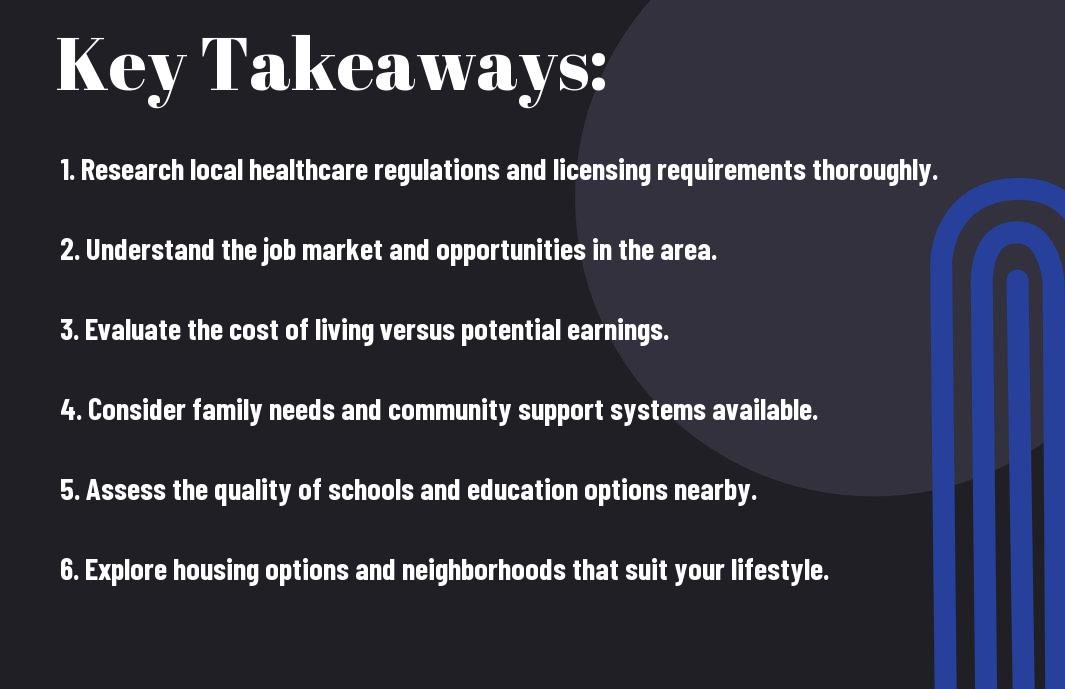
From above, you now have a better understanding of the top considerations when relocating as a doctor. You can make a well-informed decision about your move by considering your career goals, family needs, and financial situation. Your relocation will be successful if you prioritize these factors and plan carefully, ensuring a smooth transition for you and your loved ones.
FAQ
Q: What are the key factors to consider when relocating as a doctor to ensure a smooth transition in my medical career?
A: When relocating as a doctor, it’s imperative to consider several factors to ensure a smooth transition. Firstly, you should investigate the local healthcare system, including the types of medical facilities available, the prevalent health issues in the area, and the demand for your specialty. Secondly, consider the licensure and certification requirements in the new location, as these can vary significantly. Lastly, think about the quality of life, including housing, education, and recreational opportunities, to ensure the move is beneficial for both your career and personal life.
Q: How do I handle the logistics of relocating my medical practice, including transferring patient records and notifying my current patients?
A: Handling the logistics of relocating your medical practice requires meticulous planning. Start by notifying your current patients well in advance, providing them with your new contact information and ensuring continuity of care. You’ll also need to transfer patient records securely, complying with all relevant data protection regulations. Additionally, notify your professional network, including colleagues, hospitals, and insurance providers, of your relocation. It’s also advisable to establish relationships with new colleagues and healthcare providers in your destination to facilitate a seamless transition for your patients.
Q: What are the financial implications of relocating as a doctor, and how can I plan for them effectively?
A: The financial implications of relocating as a doctor can be significant and should be carefully considered. These include the costs of relocation itself, potential changes in your income level, differences in the cost of living, and variations in malpractice insurance rates. To plan effectively, research the cost of living in your destination, including housing, taxes, and other expenses, to understand how your relocation might affect your lifestyle. You should also investigate potential salary changes and benefits packages in your new role. Creating a detailed budget that accounts for these factors will help you navigate the financial aspects of your relocation successfully.